Verifiziertes Schädlingsprofil
How to Identify Mice
Geprüft July 2026
Small rodents that enter through very small gaps and leave droppings, gnaw marks, urine odor, and nesting material near food or shelter.
Dies ist ein verifiziertes Schädlingsprofil. KI-Upload-Ergebnisse werden separat angezeigt.
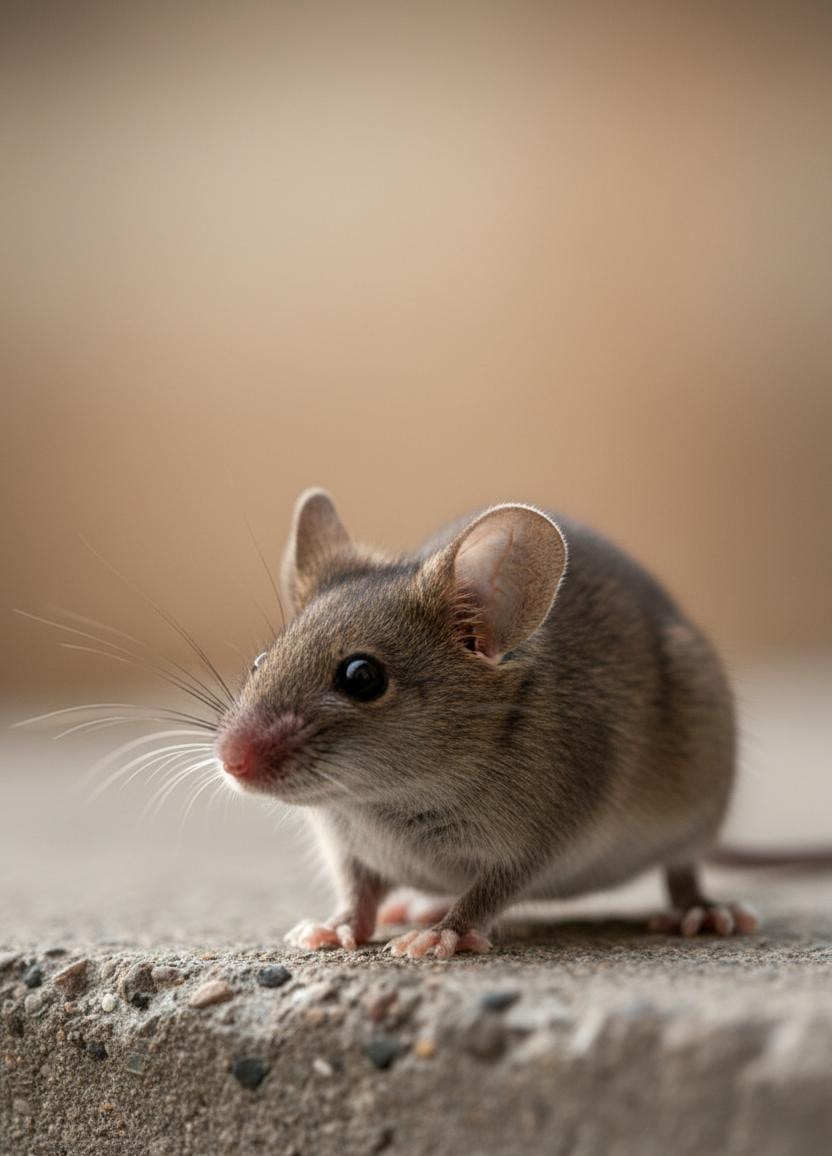
Mice
Mus musculus
Small rodents that enter through very small gaps and leave droppings, gnaw marks, urine odor, and nesting material near food or shelter.
Also known as mice.
Visual Confirmation Checklist
Use several clues together before confirming this pest. One photo or one sign can be misleading.
- Small body with large ears, pointed nose, and long thin tail
- Droppings are small, dark, pointed pellets often found along walls or in drawers
- Gnaw marks, shredded paper, insulation, fabric, or food packaging may be present
Signs of Infestation
- Droppings under sinks, behind appliances, in pantries, drawers, garages, or attic edges
- Gnawed food packaging, chewed wires, rub marks, and shredded nesting material
- Scratching sounds in walls or ceilings, especially at night
Habitat
- wall voids
- kitchens
- pantries
- garages
- attics
- basements
Health Risk
Mice can contaminate food and surfaces with urine, droppings, and nesting material, and may carry pathogens or trigger allergies.
First Steps
- Put on gloves and inspect along walls, under sinks, behind appliances, and in the garage for droppings
- Place multiple traps perpendicular to walls where travel marks or droppings are present
- Seal food, pet food, and bird seed in hard containers
- Identify and mark exterior gaps before sealing them after trapping starts
Treatment Methods
- Place snap traps or enclosed traps along walls where droppings and rub marks are found
- Use many traps at once rather than one or two, especially near kitchens and garages
- Remove food, pet food, bird seed, and nesting material from accessible areas
- Seal gaps after trapping begins, including holes around pipes, garage doors, vents, and sill plates
- Wear gloves and a mask when cleaning droppings; do not sweep or vacuum dry droppings without precautions
Professional Treatment Options
- Interior trapping program with monitoring
- Exterior exclusion inspection and sealing plan
- Sanitation and contaminated insulation recommendations
- Tamper-resistant exterior stations when appropriate
Call a professional if activity continues after one week of trapping, droppings appear in living areas, wiring is chewed, or entry points are hard to locate.
Prevention Tips
- Seal openings larger than about 1/4 inch with durable materials
- Store pantry food, pet food, and bird seed in hard sealed containers
- Keep garage and storage clutter off the floor where possible
- Trim vegetation and remove debris against the foundation
- Check doors, vents, and utility penetrations before cold weather
Evidence and Comparison
Evidence to Compare
- Check for evidence such as droppings.
- Check for evidence such as gnaw marks.
- Check for evidence such as nesting material.
- Check for evidence such as urine odor.
- Check for evidence such as night noises.
Commonly Confused With
- Compare carefully with rats.
- Compare carefully with voles.
- Compare carefully with shrews.
Life Cycle
Mice mature quickly and can reproduce indoors throughout the year when food and shelter are available.
FAQ
How small of a gap can a mouse enter?
A mouse can squeeze through a gap roughly 1/4 inch wide, especially around pipes, doors, vents, and foundation edges.
Geprüfte Schädlingshinweise
Dieses Schädlingsprofil stammt aus der geprüften Pest-Or-Not-Datenbank und unterstützt den visuellen Vergleich, die Risikoeinordnung und nächste Schritte.
Zuletzt geprüft July 2026
Pest Or Not dient der Information und ersetzt bei erhöhtem Risiko weder medizinischen Rat noch Produktetiketten, örtliche Vorschriften oder eine Fachinspektion.
KI kann hochgeladene Bilder einordnen und Informationen strukturieren. Öffentliche Hinweise werden vor der Veröffentlichung mit der geprüften Schädlingsdatenbank und Fachquellen abgeglichen.
So prüfen wir Inhalte