Quick answer
How to read this evidence
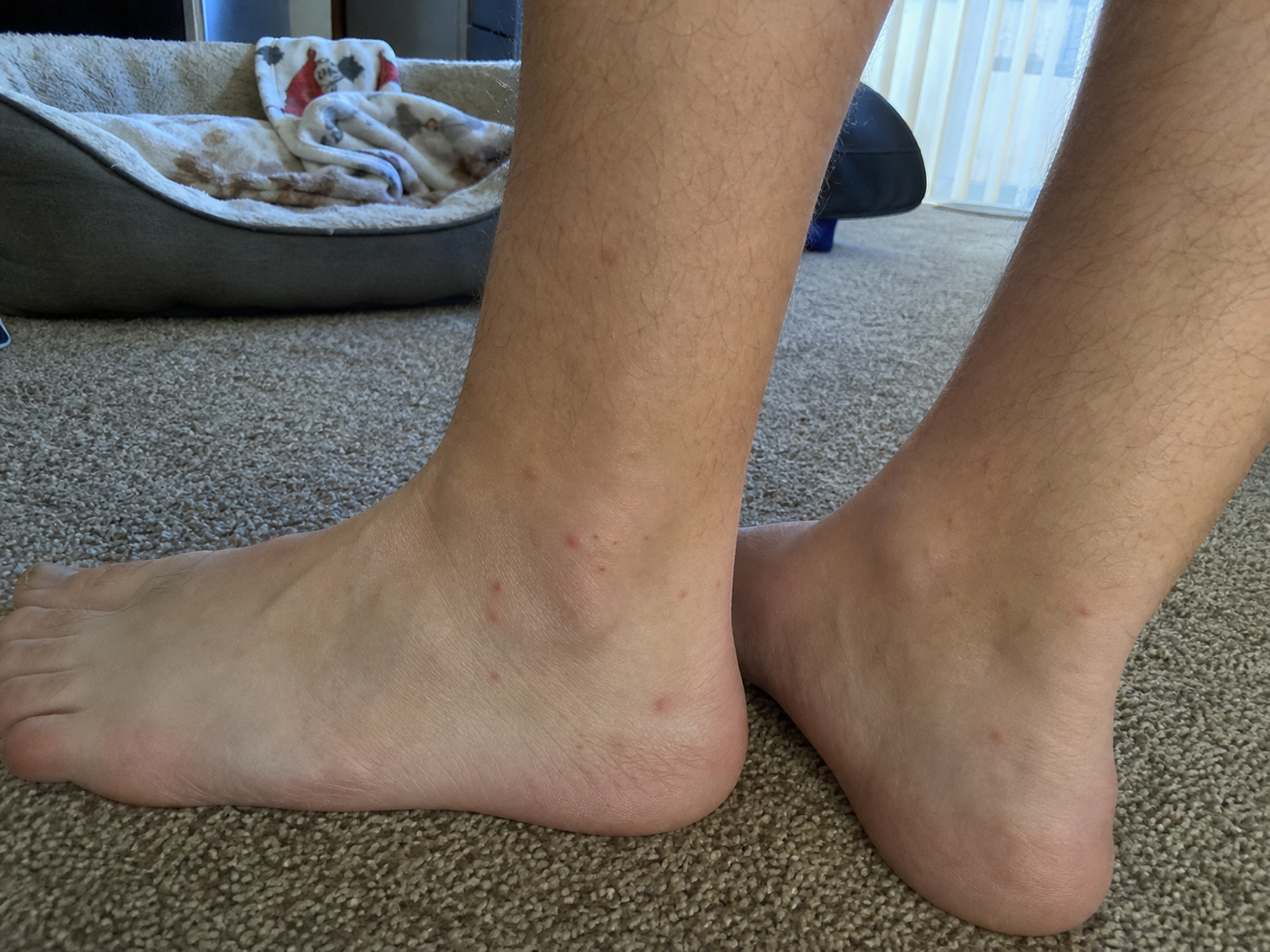
Flea bites often appear as small itchy clusters around ankles or lower legs, especially when pets, carpets, sofas, or wildlife resting areas are involved. Confirm by checking for flea dirt or live fleas.
Confirm by checking
- Clusters of itchy bites around ankles or exposed lower legs
- Pets scratching, licking, or showing flea dirt in the coat
- Bites after sitting on carpets, sofas, or pet bedding
- Jumping insects or black specks that turn reddish when wet
Do not confuse with
- Bed bug bites are more tied to sleeping areas and bedding evidence
- Mosquito bites often follow outdoor exposure
- Skin allergy can look similar but will not produce flea dirt or jumping insects
Practical identification guidance
What this flea bites evidence can tell you
Flea bites are commonly small, very itchy bumps around ankles or lower legs, especially where pets rest.
Check these details
- Check pet bedding and carpets for flea dirt or small jumping insects.
- Use a flea comb on pets and place findings on a damp white tissue to check for reddish staining.
Avoid a false match
Bites alone do not distinguish fleas from mosquitoes, mites, or other causes of irritation.
Best next step
Confirm activity on the pet or in its resting area before treating the home.
How to use this evidence
A clear photo can support a visual comparison with known pest evidence.
Skin marks alone cannot identify the cause or provide a medical diagnosis. Check for physical pest evidence and seek medical advice for concerning symptoms.
What you found
Flea bites usually appear as small itchy bumps, often around ankles or lower legs. They are most meaningful when paired with pet scratching, flea dirt, jumping insects, or wildlife nesting near the home.
Common places to check
- Inspect ankles and nearby hiding spots for matching evidence.
- Inspect lower legs and nearby hiding spots for matching evidence.
- Inspect pet bedding and nearby hiding spots for matching evidence.
- Inspect carpets and nearby hiding spots for matching evidence.
- Inspect sofas and nearby hiding spots for matching evidence.
How to identify it
What it may indicate
Health context
Bites can cause itching, irritation, and allergic reactions.
Infestation context
Repeated bites suggest fleas are emerging from carpets, bedding, or host resting areas.
Recommended actions
- 1Check pets with a flea comb
- 2Wash pet bedding and vacuum resting areas
- 3Use veterinarian-approved flea prevention for pets
- 4Vacuum carpets and dispose of contents outside
Prevention and monitoring
Professional options
- Interior treatment for carpets and resting zones
- Yard hotspot assessment
- Wildlife source evaluation if pets are not present
FAQ
How are flea bites different from bed bug bites?
Flea bites often concentrate around ankles and lower legs, especially near pets or carpets. Bed bug bites are more tied to sleeping areas and bedding evidence.
Can a home have fleas without pets?
Yes. Wildlife, previous pets, or animals nesting under decks and crawl spaces can introduce fleas even when no pets live in the home.
Explore pages related to Flea Bites
Follow the cluster from this evidence page to matching pest profiles and practical guides.
Guides using this evidence
Practical treatment and prevention pages where this sign matters.
General Prevention
Flea Control: Pets, Carpets, Bedding, and Yard Steps
A flea control plan for pet treatment, vacuuming, washing bedding, yard hotspots, and follow-up timing.
Bed Bugs
Flea Bites vs Bed Bug Bites: What to Check Before Treating
Compare flea bites and bed bug bites using bite location, pet activity, carpets, bedding evidence, and repeated night symptoms.
Pest profiles to compare
Likely pests connected to this evidence type.