Perfil verificado de plaga
How to Identify Carpenter Ants
Revisado July 2026
Large ants that excavate galleries in damp or damaged wood. They do not eat wood, but active colonies can weaken structural areas over time.
Este es un perfil verificado. Los resultados de imágenes con IA se muestran en una página separada.
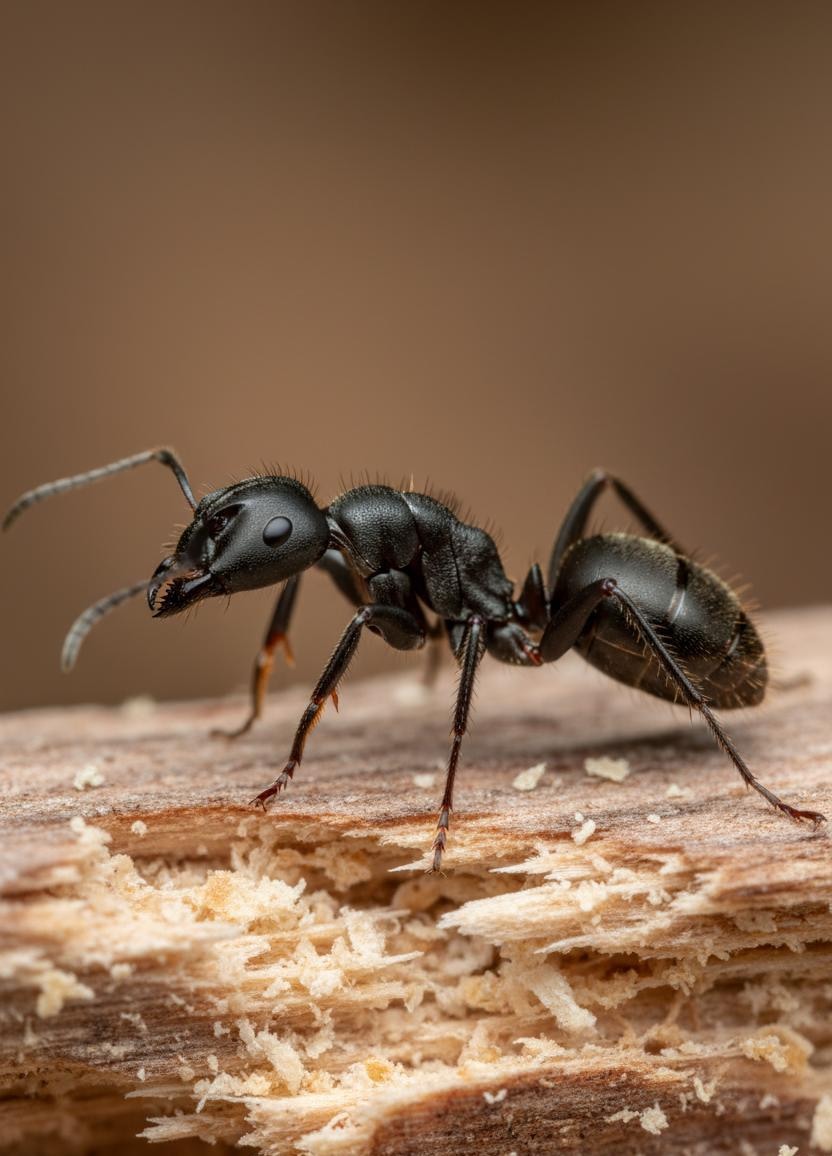
Carpenter Ants
Camponotus spp.
Large ants that excavate galleries in damp or damaged wood. They do not eat wood, but active colonies can weaken structural areas over time.
Also known as carpenter ant, carpenter ants.
Visual Confirmation Checklist
Use several clues together before confirming this pest. One photo or one sign can be misleading.
- Large black or dark ants, often 6-13 mm long, with a single-node waist
- Workers vary in size within the same colony
- May produce coarse sawdust-like frass with insect parts near galleries
Signs of Infestation
- Large ants indoors, especially at night or near windows, kitchens, bathrooms, or rooflines
- Frass piles below trim, window frames, decks, or damaged wood
- Rustling sounds in wall voids and activity near moisture-damaged wood
Habitat
- moist wood
- wall voids
- window frames
- roof leaks
- decks
- tree stumps
Health Risk
Carpenter ants are not a major disease risk, but workers can bite if handled. The main concern is hidden wood excavation and moisture damage.
First Steps
- Inspect wet or damaged wood around windows, roofs, decks, bathrooms, and kitchens
- Look for coarse frass piles below trim, beams, or wall openings
- Track ant trails at night to locate the nest direction
- Avoid sealing damaged wood before confirming whether ants are active inside
Treatment Methods
- Look for moisture sources such as leaks, condensation, roof damage, or wet trim
- Track workers at night to locate indoor or outdoor nest direction
- Remove or repair damaged wood when the nest is controlled
- Use bait or targeted dust into confirmed galleries rather than spraying random surfaces
- Treat satellite nests and nearby parent colonies when found
Professional Treatment Options
- Moisture and structural inspection
- Targeted treatment of galleries or voids
- Exterior parent-colony inspection and treatment
- Repair and exclusion recommendations after activity is controlled
Call a professional when frass, indoor winged ants, structural wood activity, or roof/wall void nests are suspected.
Prevention Tips
- Repair roof, plumbing, and window leaks quickly
- Keep wood trim, siding, and deck supports dry and sealed
- Remove stumps, dead limbs, and wood piles close to the structure
- Trim branches touching the roof or siding
- Maintain clearance between soil, mulch, and wood elements
Evidence and Comparison
Evidence to Compare
- Check for evidence such as large ants.
- Check for evidence such as frass.
- Check for evidence such as wood galleries.
- Check for evidence such as night trails.
- Check for evidence such as rustling sounds.
Commonly Confused With
- Compare carefully with ants.
- Compare carefully with termites.
- Compare carefully with powderpost beetles.
Life Cycle
Colonies may form a parent nest outdoors and satellite nests indoors, especially in moist damaged wood. Winged reproductives appear when colonies mature.
FAQ
Do carpenter ants eat wood like termites?
No. Carpenter ants excavate wood to make galleries, leaving it smooth and clean, while termites eat cellulose and often leave mud-lined damage.
Orientación sobre plagas revisada
Este perfil procede de la biblioteca verificada de Pest Or Not y ayuda a comparar rasgos, entender riesgos y decidir los siguientes pasos.
Última revisión July 2026
Pest Or Not es informativo y no sustituye el consejo médico, las etiquetas de pesticidas, las normas locales ni una inspección profesional cuando existe riesgo.
La IA puede ayudar a clasificar imágenes y organizar información. La orientación pública se contrasta con la base verificada y fuentes de referencia antes de publicarse.
Cómo revisamos el contenido