Quick answer
How to read this evidence
Look for a pattern of tubes, wings, pellets, or internal wood damage rather than relying on one isolated speck.
Confirm by checking
- Recurring evidence
- Small openings in wood
- Moisture or soil contact
Do not confuse with
- Ant debris
- Sawdust
- Moisture damage
How to use this evidence
A clear photo can support a visual comparison with known pest evidence.
A photo alone cannot confirm the source or extent of an infestation. Check for matching physical evidence nearby.
What you found
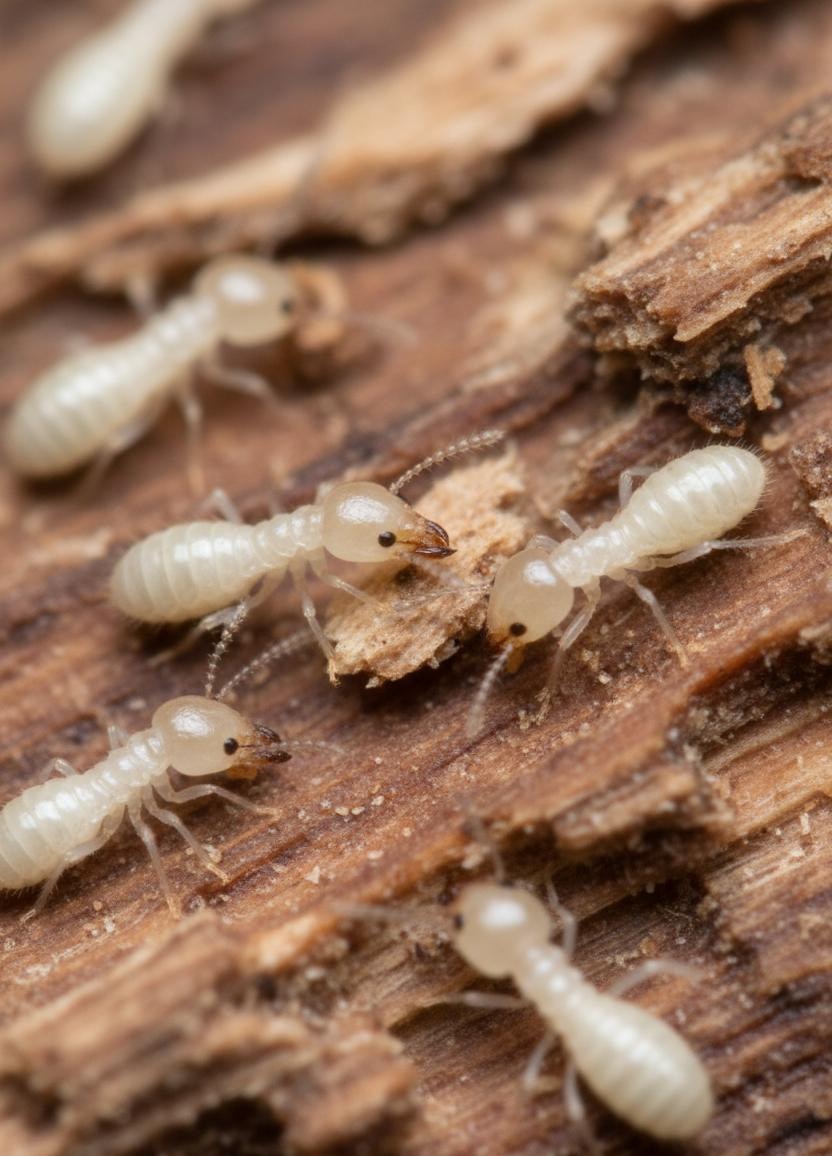
Different termite groups leave different evidence. Subterranean termites commonly build mud tubes, while drywood termites may eject hard pellets from small openings. Swarmers and matching discarded wings can occur near windows and lights.
Common places to check
- Inspect foundations and nearby hiding spots for matching evidence.
- Inspect window sills and nearby hiding spots for matching evidence.
- Inspect wood trim and nearby hiding spots for matching evidence.
- Inspect crawl spaces and nearby hiding spots for matching evidence.
How to identify it
What it may indicate
Structural context
Hidden feeding can weaken structural or finish wood before surface damage becomes obvious.
Infestation context
One sign does not show the colony's size or location, but recurring evidence warrants inspection.
Recommended actions
- 1Photograph evidence before cleaning or opening the wood
- 2Mark the location and check nearby moisture sources
- 3Keep wings, pellets, or a damaged wood sample in a sealed container for inspection
Prevention and monitoring
Professional options
- Termite species and extent inspection
- Moisture and structural assessment where wood is damaged
- Treatment selected for the confirmed termite group and building conditions
FAQ
Do discarded wings always mean an active termite infestation?
They show that winged insects were present, but the source may be indoors or nearby. Save a sample and inspect the surrounding structure before drawing a conclusion.