Quick Answer
A clearly visible nest structure is strong evidence that a nest was built, but it does not by itself identify the wasp, show whether the nest is occupied, predict sting risk, or establish that removal is safe. Observe only from a safe distance and use location, structure, and traffic as separate clues.
Evidence strength
Strong for nest presence; context-dependent for identity, occupancy, and risk
A clear structure supports nest presence, while species, current activity, and danger require additional context.
- Exposed open comb, an enclosed aerial envelope, a cavity entrance, and an underground or ground-level entrance are different structural contexts.
- Insect traffic observed from a safe distance can support occupancy, but no visible traffic during a short observation does not prove inactivity.
- Location near people, pets, doors, paths, or maintenance work affects practical risk without revealing aggression from a photo.
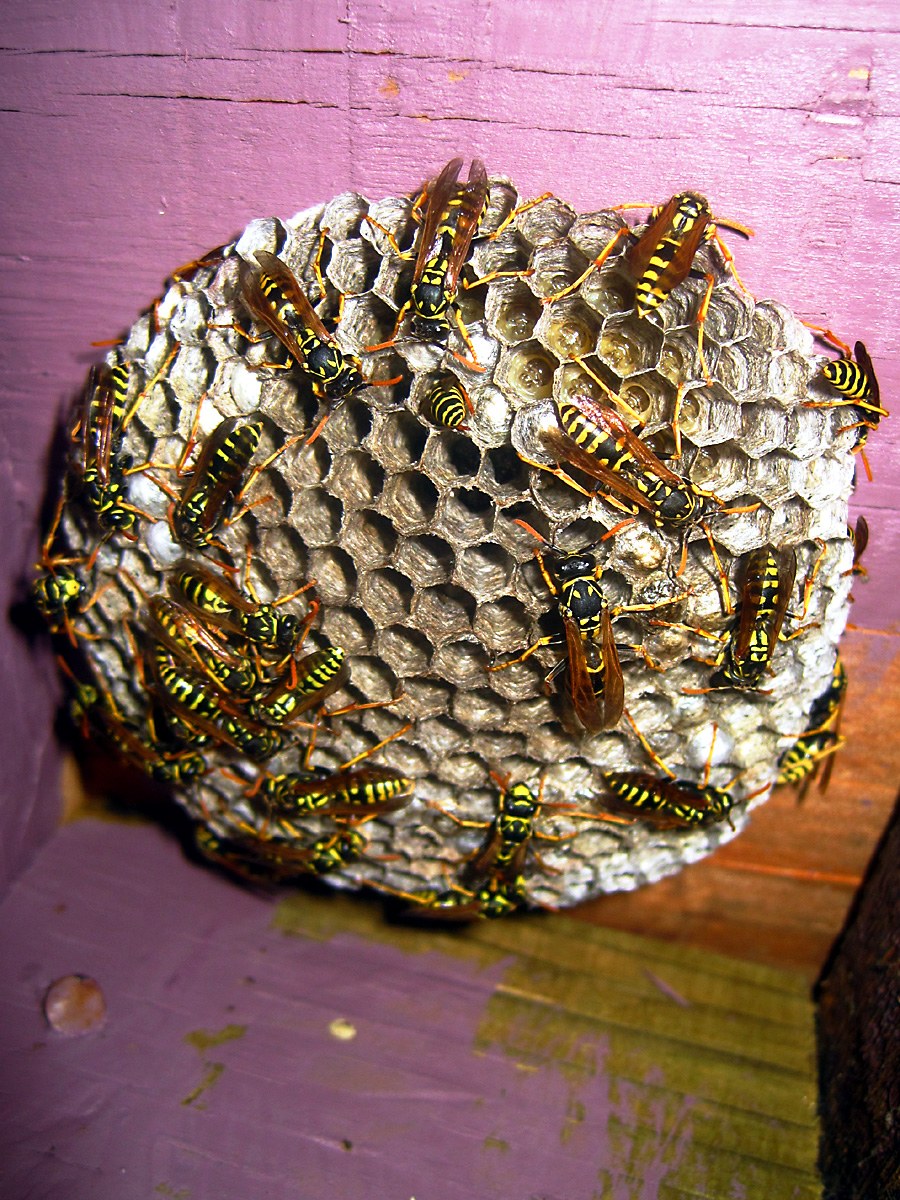
Verified open-comb paper-wasp nest reference. It does not represent every wasp nest, ground or cavity nests, occupancy, colony size, or a safe approach distance.
- Source
- Wikimedia Commons
- Creator
- Angrylambie
- License
- Public domain
- Reference context
- Paper wasp nest — Angrylambie / Wikimedia Commons; public-domain photograph resized and recompressed without generative alteration.
What it may indicate
- An exposed open-comb structure associated with some paper wasps.
- An enclosed aerial nest, cavity nest, or ground-entry nesting site that needs a different identification and management approach.
- Past construction rather than current occupancy when no other evidence of activity is available.
Other explanations
- A bee nest, mud-dauber structure, abandoned nest, bird nest, fungus, plant growth, or damaged building material.
- A simple opening or insect traffic route without a visible nest structure.
What this evidence cannot prove
- The wasp species or broader stinging-insect group from the structure alone.
- Whether the nest is occupied, colony size, or how individual insects will respond.
- A person's allergy risk, likely sting severity, or that approaching the site is safe.
- That DIY removal or a particular pesticide is appropriate for the location and nest type.
Where to check next
- From a safe distance, photograph the full structure or entry area and its position on the building, tree, ground, or landscape.
- Without approaching, record visible insect traffic, approximate height, nearby doors or paths, and proximity to people, pets, or necessary work.
- Use a qualified local professional when the nest is active, concealed, high, near routine activity, or difficult to assess safely.
Additional evidence to collect
- A zoomed photograph of an insect taken from a safe distance, separate from the nest overview.
- A wider image showing whether the structure is exposed, enclosed, in a cavity, or associated with a ground entrance.
- Dated observations of traffic made without blocking, knocking, spraying, or disturbing the site.
Do not test or disturb the nest
A photo cannot establish a safe approach distance, allergy risk, or removal method.
- Do not knock, block, shake, probe, spray, or approach the nest to collect a specimen or trigger activity.
- Keep children and pets away and avoid mowing, trimming, repairs, or vibration near a suspected ground or concealed nest.
- Seek emergency help for trouble breathing, swelling of the face or throat, faintness, or other signs of a severe sting reaction.
Pests associated with similar signs
Relevant Guides
Not sure what you found?
Upload the evidence and its surrounding context. The result supports comparison; it does not create certainty.
Identify a photoExplore next
Reviewed guidance
Last reviewed August 2026. This content supports evidence interpretation and does not replace medical diagnosis, structural inspection, product labels, or local rules.