Profil de nuisible vérifié
How to Identify Ants
Révisé August 2026
Social insects that form trails to food or moisture. Correct control depends on finding whether they are nesting indoors, outdoors, or inside wall voids.
Ceci est un profil vérifié. Les résultats d’image par IA sont affichés sur une page séparée.
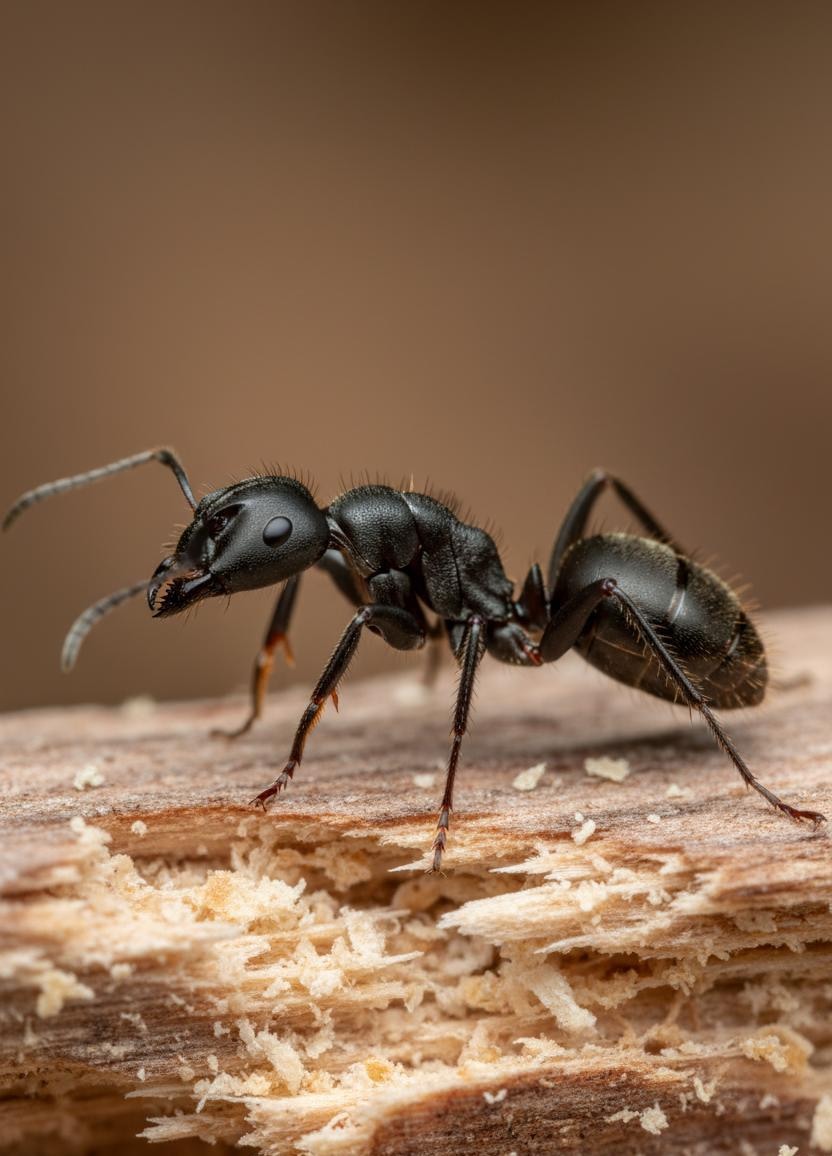
Ants
Formicidae
Social insects that form trails to food or moisture. Correct control depends on finding whether they are nesting indoors, outdoors, or inside wall voids.
Also known as ant, ants.
Visual Confirmation Checklist
Use several clues together before confirming this pest. One photo or one sign can be misleading.
- Elbowed antennae, narrow waist, and workers moving in organized trails
- Workers may be very small to medium-sized depending on species
- Trails often lead to sweet foods, grease, pet food, water, or exterior cracks
Signs of Infestation
- Ant trails along counters, baseboards, windows, pipes, or foundation edges
- Small soil piles, nest openings, or debris near cracks and patios
- Repeated sightings after cleaning, suggesting a nearby colony or moisture source
Habitat
- kitchens
- bathrooms
- wall voids
- soil
- foundation cracks
- patios
Health Risk
Most household ants are nuisance pests, but they can contaminate food. Some species bite or sting, and species identification affects treatment.
First Steps
- Follow the ant trail to find where workers enter and what they are feeding on
- Place slow-acting bait beside active trails, not directly on wet or dirty surfaces
- Remove competing food sources after bait is accepted
- Seal obvious gaps only after activity starts declining
Treatment Methods
- Follow the trail to locate entry points and likely nest direction
- Use slow-acting ant bait near trails so workers carry it back to the colony
- Clean competing food residue after bait placement, but avoid wiping away every active trail immediately
- Seal entry points after the colony is suppressed
- Avoid repellent sprays on trails because they can split colonies or move activity elsewhere
Professional Treatment Options
- Species identification and bait selection
- Interior and exterior baiting program
- Perimeter crack and entry treatment where appropriate
- Moisture and exclusion recommendations
Call a professional when ants appear from multiple walls, bait is ignored, winged ants appear indoors, or carpenter ants or fire ants are suspected.
Prevention Tips
- Store sweets, pet food, and grease-prone items in sealed containers
- Wipe spills and crumbs promptly, especially at night
- Fix leaks and remove damp wood or standing water
- Trim vegetation and branches touching the building
- Seal gaps around windows, pipes, doors, and foundation cracks
Evidence and Comparison
Evidence to Compare
- Check for evidence such as trails.
- Check for evidence such as nest openings.
- Check for evidence such as soil piles.
- Check for evidence such as food contamination.
Commonly Confused With
- Compare carefully with termites.
- Compare carefully with carpenter ants.
- Compare carefully with fire ants.
Life Cycle
Ant colonies contain queens, workers, brood, and sometimes winged reproductives. Control works best when bait reaches the colony, not just visible workers.
FAQ
Why do ants keep coming back after I spray them?
Sprays may kill visible workers without reaching the colony. Slow-acting bait is often better for trail-forming household ants.
Conseils antiparasitaires vérifiés
Cette fiche provient de la base vérifiée de Pest Or Not et facilite la comparaison visuelle, l’évaluation des risques et les prochaines étapes.
Dernière vérification August 2026
Pest Or Not fournit des informations et ne remplace pas un avis médical, l’étiquette d’un pesticide, la réglementation locale ou une inspection professionnelle.
L’IA peut aider à classer les images envoyées et à structurer l’information. Les conseils publics sont vérifiés avec la base validée et des sources de référence avant publication.
Comment nous vérifions le contenu