Quick answer
What to know first
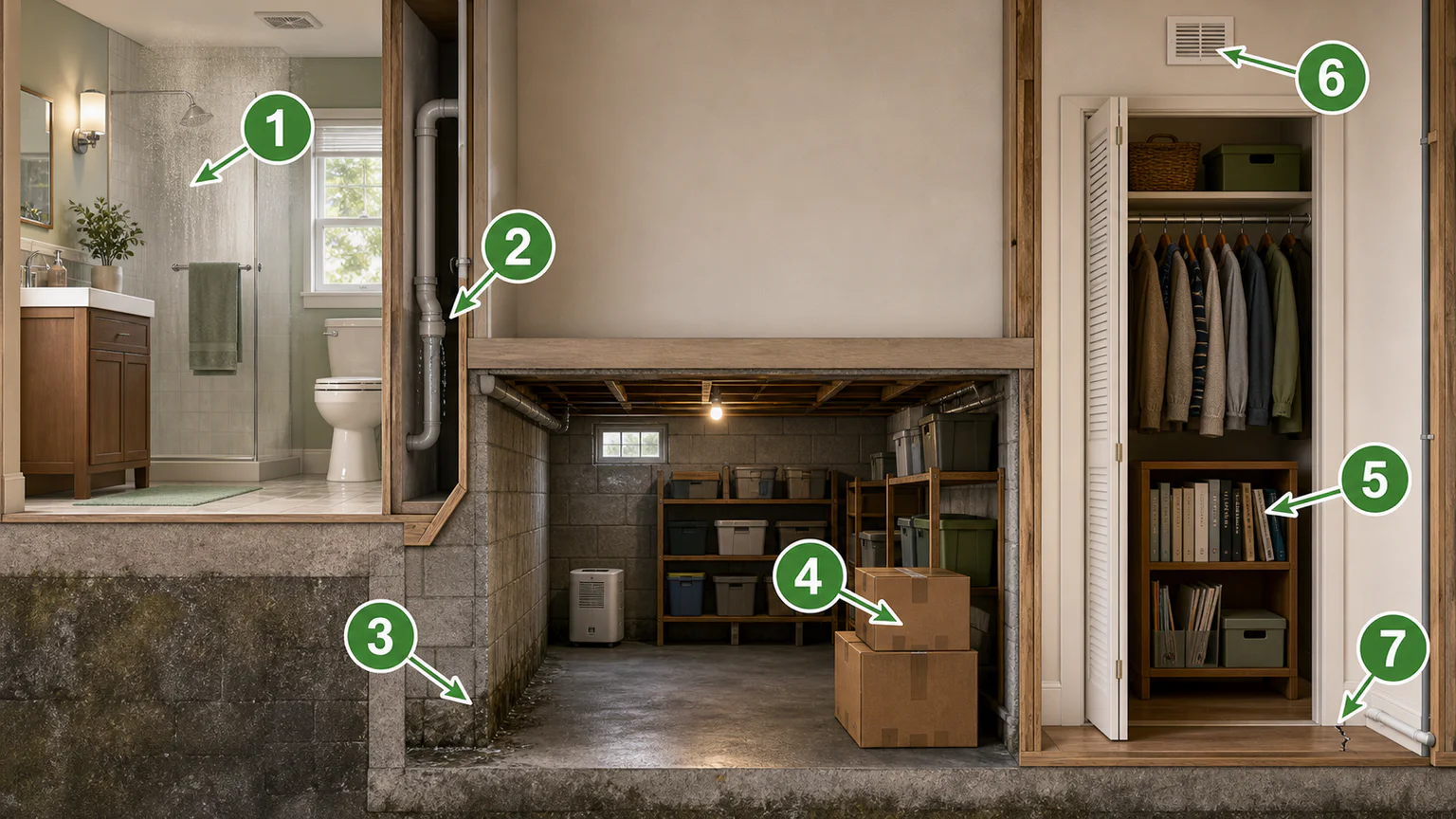
Silverfish prefer damp, dark areas and feed on starches, paper glue, and some stored fabrics. They do not bite; the practical concerns are moisture, nuisance activity, and damage to vulnerable materials.
Start here
- Fast silver insects in bathrooms, basements, or closets
- Irregular feeding marks on paper, books, or cardboard
- Activity near leaks, condensation, or high humidity
Before you act
Silverfish prefer damp, dark areas and feed on starches, paper glue, and some stored fabrics. They do not bite; the practical concerns are moisture, nuisance activity, and damage to vulnerable materials.
- Fast silver insects in bathrooms, basements, or closets
- Irregular feeding marks on paper, books, or cardboard
- Activity near leaks, condensation, or high humidity
Action plan
4-Step Treatment Plan
- 1
Check for leaks, condensation, and persistently damp storage areas
Check for leaks, condensation, and persistently damp storage areas.
- 2
Reduce humidity with ventilation or a dehumidifier after correcting the source.
Reduce humidity with ventilation or a dehumidifier after correcting the source.
- 3
Vacuum cracks, baseboards, pipe openings, and storage corners
Vacuum cracks, baseboards, pipe openings, and storage corners.
- 4
Store paper goods, photos, and fabrics dry in sealed containers
Store paper goods, photos, and fabrics dry in sealed containers.
What not to do
Applying pesticides before identifying the pest or evidence
Applying pesticides before identifying the pest or evidence
Treating one symptom while moisture, food, or entry sources remain
Treating one symptom while moisture, food, or entry sources remain
Skipping monitoring after the first cleanup or treatment
Skipping monitoring after the first cleanup or treatment
How to judge progress
Recheck the same locations and evidence types instead of judging the result from one quiet interval.
- Track whether this clue persists, returns, or spreads: Fast silver insects in bathrooms, basements, or closets
- Track whether this clue persists, returns, or spreads: Irregular feeding marks on paper, books, or cardboard
- Track whether this clue persists, returns, or spreads: Activity near leaks, condensation, or high humidity
- Track whether this clue persists, returns, or spreads: Shed skins in storage areas
Signs the treatment is not working
- Fresh evidence continues to appear in the same inspected locations.
- Activity spreads to new rooms, materials, or monitoring points.
- The suspected source remains active after the action plan has been followed and reassessed.
After treatment and reducing recurrence
- Keep relative humidity lower in basements and bathrooms.
- Avoid storing valuable papers in cardboard boxes.
- Seal cracks around baseboards and pipe openings.
- Improve airflow in closets and storage rooms.
When to call a professional
Professional help is useful when silverfish are widespread or moisture correction does not reduce activity.
Safety notes
- Confirm the pest or evidence before applying a control product.
- Use pesticides only where the product label permits, and follow the full label.
- Do not mix products or improvise heat, electrical, or chemical treatments.
FAQ
Do silverfish bite?
No. They do not bite people, but they can damage paper and some stored materials.
Are silverfish a sign of water damage?
Not automatically. Repeated activity can indicate excess humidity, condensation, or a leak, so those conditions should be checked.
Not sure the pest is correctly identified?
Upload a clear photo before choosing a treatment path.
Identify from photoExplore next
Continue with verified context
Related pest profiles
Related evidence
Reviewed guidance · Last reviewed August 2026
Based on Pest Or Not verified knowledge and authoritative pest-management references.
How we review content