Entity scope
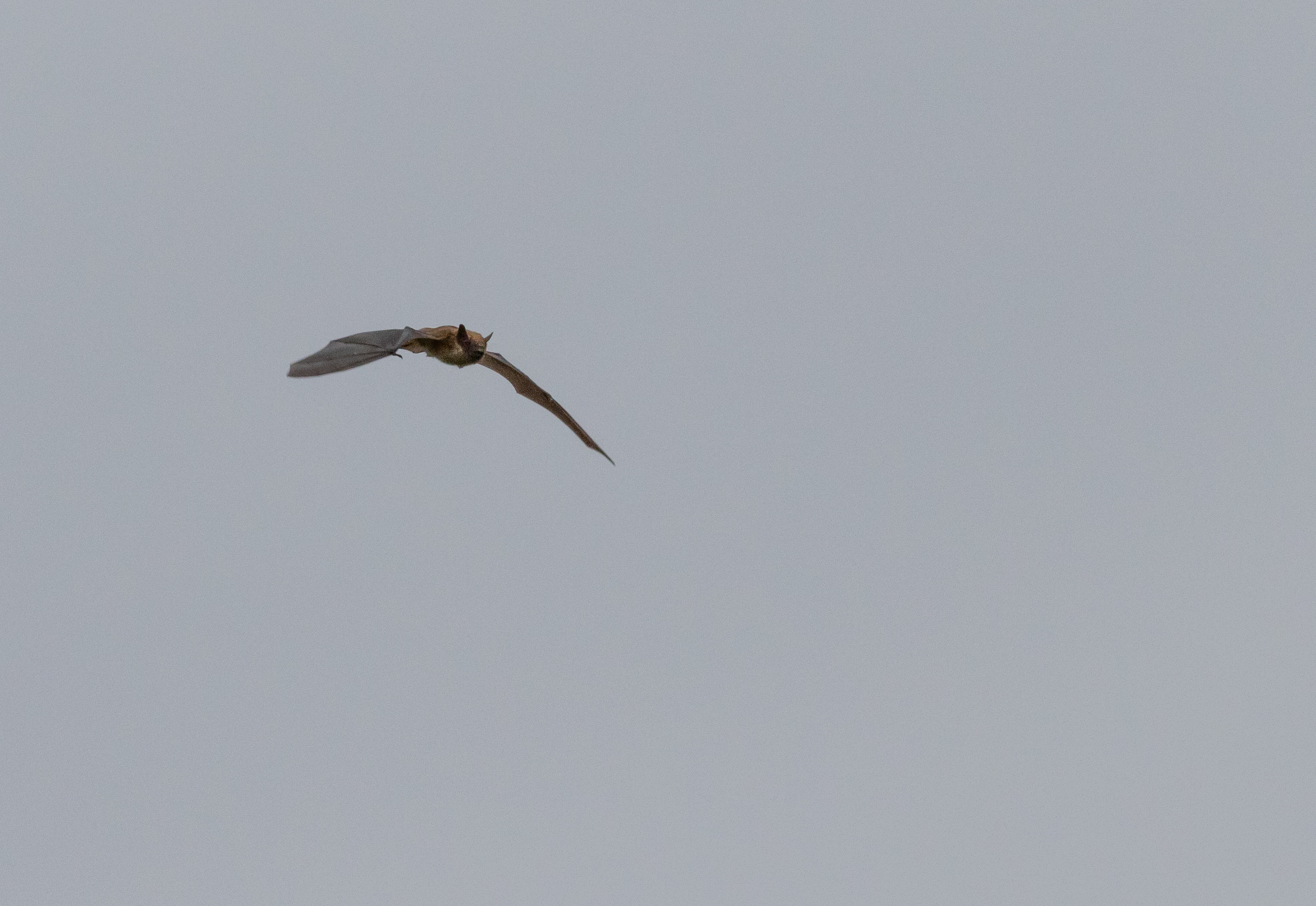
Bats are mammals in the order Chiroptera. Species vary widely in size, ears, face, coloration, habitat, roosting behavior, and legal status.
Quick identity
- Taxonomic order
- Chiroptera
- Entity scope
- A diverse order of flying mammals
- Broad body form
- Forelimbs support a wing membrane for powered flight
- Size and color
- Highly variable among species
- Observation context
- Flight, resting, entry, or repeated emergence provide different information
- Identification limit
- Many species require geography, measurements, calls, or expert examination
Key characteristics
- Bats are mammals capable of sustained powered flight, with elongated fingers supporting a skin membrane.
- Ear shape, face, tail membrane, body size, fur color, and wing proportions vary widely.
- A flight photograph or silhouette often supports only a broad bat-level identification.
- Do not handle or closely approach a bat to obtain a better identification image.
Where it is found
- Natural roosts such as trees, caves, rock crevices, and foliage, depending on species.
- Buildings, bridges, shutters, attics, wall gaps, or other structures can be used by some species.
- A bat seen flying or briefly indoors does not automatically prove a colony, maternity roost, or building infestation.
Behavior and activity
- Many species are active around dusk or at night, but timing alone does not indicate rabies or identify a species.
- Repeated emergence from the same opening supports a roost question more than one passing observation.
- Season, weather, migration, maternity periods, and local species affect what an observation means.
Diet and resources
- Diet varies greatly across Chiroptera; many temperate species eat insects, while other bats may use fruit, nectar, fish, or small animals.
- Diet cannot be inferred from a silhouette or one building observation.
Associated signs
Repeated use of one opening can support a roost question; it does not identify a species or prove a maternity colony.
Possible droppings below a roostDroppings may accompany repeated activity, but material identity, contamination, and cleanup require separate evidence and guidance.
Common lookalikes
Small birds at dusk may be confused with bats in distant or blurred views.
Gliding mammals do not use sustained powered flight and have a different body and tail outline.
Near lights, large moths can appear bat-like in low-detail images but have insect anatomy.
Why it matters
Presence is not the same as contact or rabies
Seeing a bat does not show that it has rabies or that exposure occurred. Possible direct contact—especially a bite, scratch, bat touching bare skin, or a situation where contact cannot be reliably ruled out—is a separate public-health assessment question.
- Do not infer rabies from appearance, flight time, behavior in one photo, or droppings.
- Do not handle or capture a bat for identification. Follow current local public-health guidance when contact may have occurred.
Management direction
- Avoid direct handling and document observations from a safe distance.
- Separate a single entry from repeated emergence or other roost activity.
- Possible human or pet contact calls for appropriate medical, veterinary, or public-health advice.
- Building exclusion may depend on jurisdiction, species, season, maternity period, and building context; seek qualified wildlife/building guidance and check applicable local rules.
Have a pest photo to check?
Start a new photo identification. This Profile gives comparison context; it does not transfer certainty or diagnose your image.
Identify a photoReviewed guidance and sources
Last reviewed August 2026. Sources support the claims listed with them; their limits remain part of the review.
- University of Glasgow — Chiroptera
Supports: Order-level mammalian taxonomy and broad body-plan context.
Does not support: Species identity from a distant observation.
- CDC — Preventing Rabies from Bats
Supports: Contact/exposure boundary, handling precautions, and public-health escalation.
Does not support: Rabies inference from appearance, daytime activity, or guano.
Scope note: United States public-health guidance; local pathways vary.
- U.S. Fish & Wildlife Service — Bat boxes and exclusion context
Supports: High-level exclusion timing, roost, and wildlife-context cautions.
Does not support: A universal legal rule or complete exclusion procedure.
Scope note: U.S. federal guidance; state, local, species, and seasonal rules may differ.
- USFWS — verified bat-in-flight context image
Supports: Authenticity and context of the pictured bat in flight.
Does not support: Species identity or universal Chiroptera morphology.