Verifierad skadedjursprofil
How to Identify Wasps
Granskad July 2026
Stinging insects that may build paper nests under eaves, in wall voids, trees, shrubs, or ground cavities depending on species.
Detta är en verifierad profil. AI-resultat från uppladdade bilder visas på en separat resultatsida.
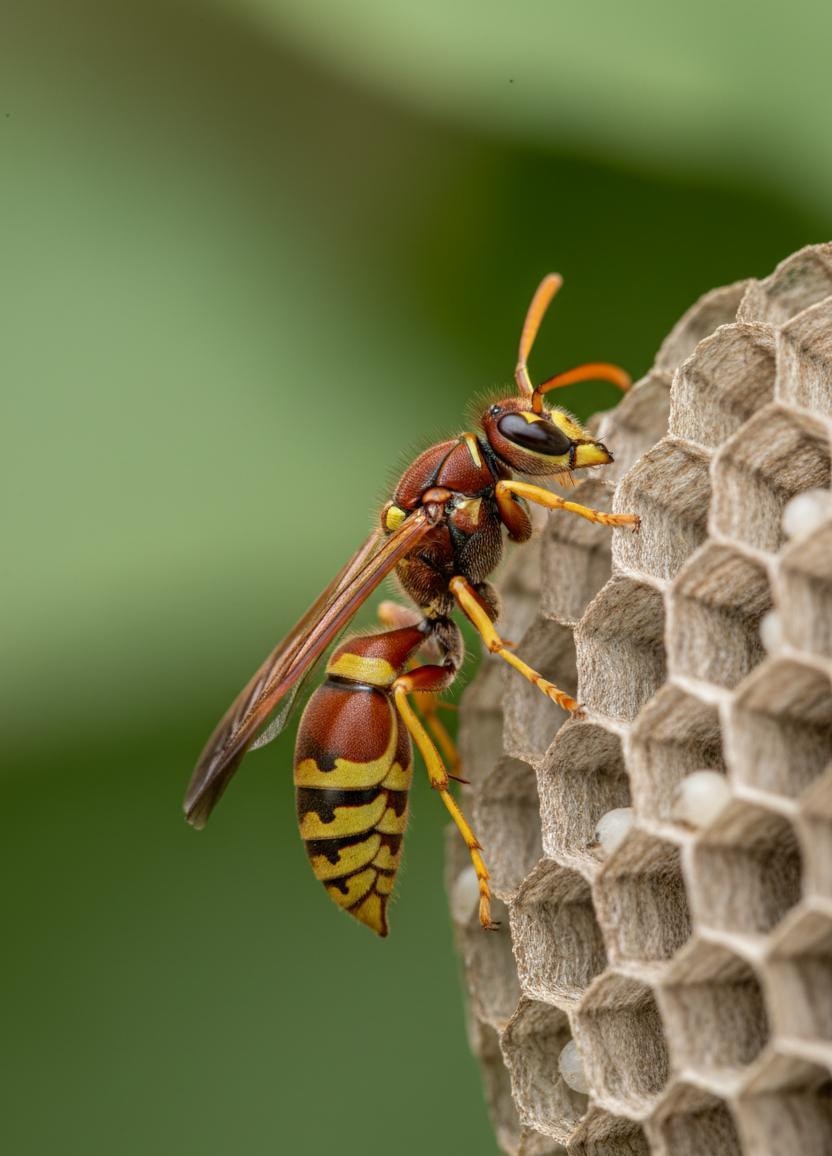
Wasps
Vespidae
Stinging insects that may build paper nests under eaves, in wall voids, trees, shrubs, or ground cavities depending on species.
Also known as wasp, wasps.
Visual Confirmation Checklist
Use several clues together before confirming this pest. One photo or one sign can be misleading.
- Narrow waist, smooth body, and folded wings at rest
- Repeated flight to one opening often marks the nest entrance
- Paper nests may be umbrella-shaped, enclosed, or hidden inside voids
Signs of Infestation
- Frequent wasp traffic around eaves, soffits, sheds, shrubs, or ground openings
- Visible paper nest, comb, or nest fragments
- Aggressive defense near a nest, especially late summer and fall
Habitat
- eaves
- soffits
- wall voids
- shrubs
- trees
- ground cavities
Health Risk
Wasp stings are painful and can cause serious allergic reactions in sensitive people. Multiple stings are possible near nests.
First Steps
- Watch from a safe distance to locate the exact nest entrance and flight path
- Keep children, pets, and foot traffic away from the nest area
- Do not plug an active wall or ground entrance
- If anyone has allergy risk or the nest is near an entrance, use professional help
Treatment Methods
- Identify the nest entrance from a safe distance during daylight; do not block an active void entrance
- Avoid swatting or disturbing the nest, especially near children, pets, or doorways
- Treat small exposed nests at night only if safe and label directions can be followed
- Keep people and pets away from the flight path until the nest is inactive
- Use professional removal for high, hidden, large, or aggressive nests
Professional Treatment Options
- Nest identification and targeted treatment
- Void or ground nest treatment without forcing insects indoors
- Nest removal after activity stops when accessible
- Entry sealing recommendations after control
Call a professional for nests inside walls, ground nests, large colonies, high rooflines, aggressive activity, or any allergy concern.
Prevention Tips
- Seal small exterior gaps before nest-building season
- Keep outdoor food and sweet drinks covered
- Use tight-fitting lids on trash and recycling bins
- Remove abandoned nests after they are inactive
- Inspect eaves, sheds, and play structures in spring
Evidence and Comparison
Evidence to Compare
- Check for evidence such as nest.
- Check for evidence such as flight path.
- Check for evidence such as stings.
- Check for evidence such as paper comb.
Commonly Confused With
- Compare carefully with yellow jackets.
- Compare carefully with paper wasps.
- Compare carefully with hornets.
- Compare carefully with honey bees.
Life Cycle
Queens start nests in spring, worker populations grow through summer, and colonies decline after cold weather in most regions.
FAQ
Should I plug a wasp hole in the wall?
No. Blocking an active entrance can force wasps into living spaces. Treat or remove the nest first.
Granskad skadedjursvägledning
Den här profilen kommer från Pest Or Nots verifierade bibliotek och stödjer visuell jämförelse, riskbedömning och praktiska nästa steg.
Senast granskad July 2026
Pest Or Not är avsett som information och ersätter inte medicinsk rådgivning, produktetiketter, lokala regler eller en professionell inspektion vid hög risk.
AI kan hjälpa till att klassificera uppladdade bilder och strukturera information. Offentlig vägledning kontrolleras mot den verifierade databasen och referenskällor före publicering.
Så granskar vi innehåll