Quick answer
How to read this evidence
Bed bug bites can be a clue, but bites alone cannot confirm bed bugs. Treat them as a signal to inspect sleeping areas for physical evidence such as live bugs, dark stains, eggs, or shed skins.
Confirm by checking
- Bites that appear after sleeping or resting
- Dark fecal spots, shed skins, eggs, or live bugs near beds
- Evidence in mattress seams, headboards, bed frames, or nearby cracks
- Repeated bite patterns over several nights
Do not confuse with
- Flea bites often cluster around ankles and are linked to pets or carpets
- Mosquito bites usually follow outdoor exposure or open windows
- Skin irritation or allergies can mimic bite reactions
Practical identification guidance
What this bed bug bites evidence can tell you
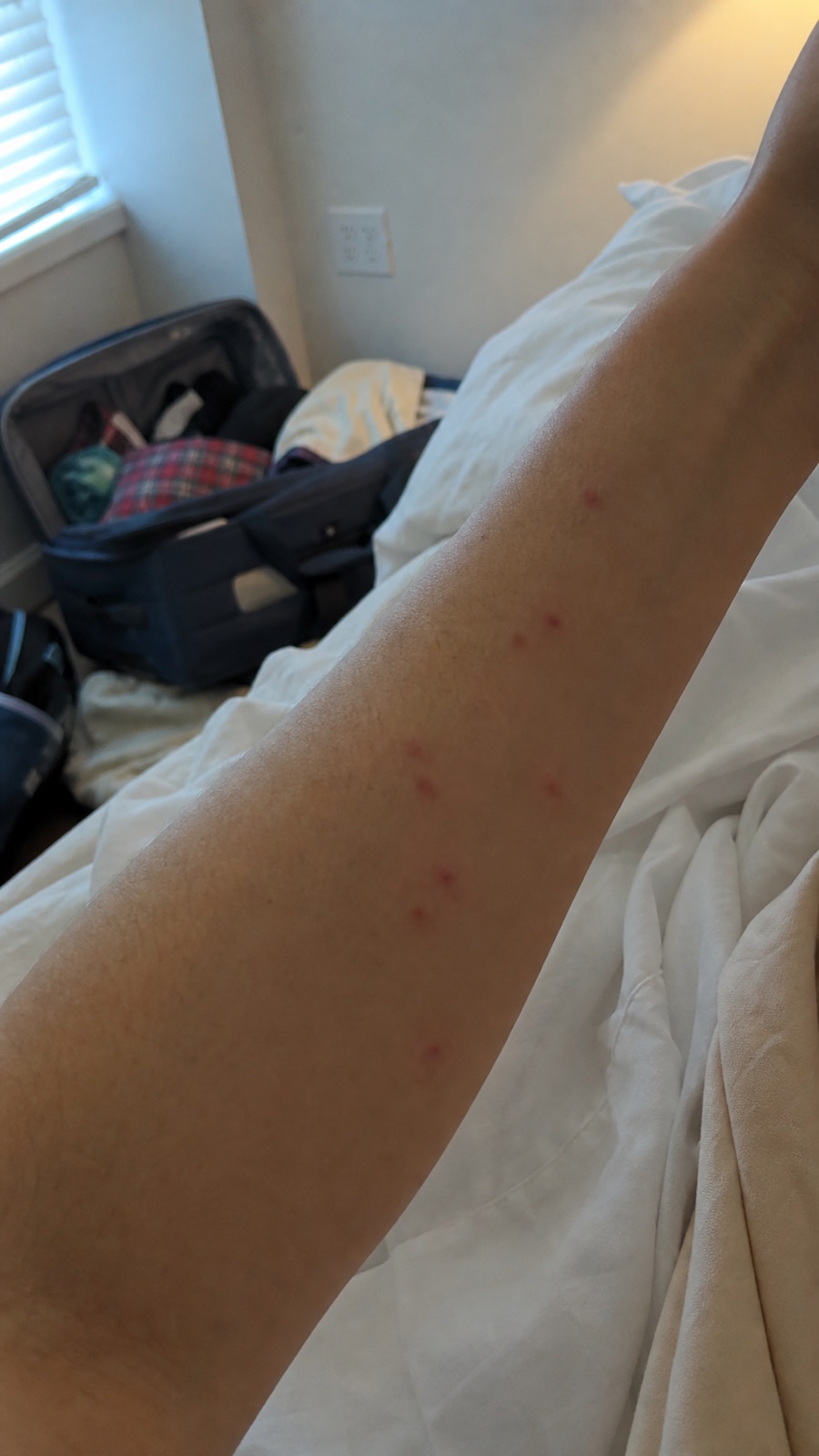
Bed bug bites often appear as itchy red bumps after sleep, but skin marks alone cannot confirm bed bugs.
Check these details
- Inspect mattress seams and the bed frame for dark spotting, shed skins, eggs, or live bugs.
- Compare when new marks appear with recent travel, used furniture, or overnight stays.
Avoid a false match
Flea bites, mosquitoes, contact dermatitis, and other skin conditions can look similar.
Best next step
Document the marks and inspect the sleeping area before starting pest treatment.
How to use this evidence
A clear photo can support a visual comparison with known pest evidence.
Skin marks alone cannot identify the cause or provide a medical diagnosis. Check for physical pest evidence and seek medical advice for concerning symptoms.
What you found
Bed bug bites can appear as itchy red marks, often on exposed skin after sleeping. Bite reactions vary widely, so the marks should be interpreted with other evidence such as fecal spots, shed skins, eggs, or live bed bugs near sleeping areas.
Common places to check
- Inspect arms and nearby hiding spots for matching evidence.
- Inspect legs and nearby hiding spots for matching evidence.
- Inspect neck and nearby hiding spots for matching evidence.
- Inspect shoulders and nearby hiding spots for matching evidence.
- Inspect bedding and nearby hiding spots for matching evidence.
How to identify it
What it may indicate
Health context
Bites may cause itching, allergic reactions, and secondary skin irritation from scratching.
Infestation context
Repeated bites after sleeping can indicate bed bug activity when physical evidence is also present.
Recommended actions
- 1Inspect mattress seams, headboards, bed frames, and nearby furniture
- 2Photograph bite marks and any physical evidence before cleaning
- 3Wash and dry bedding on high heat
- 4Use interceptors or monitors near bed legs
Prevention and monitoring
Professional options
- Bed bug inspection focused on sleeping and resting areas
- Canine or visual confirmation when evidence is difficult to find
- Heat or targeted treatment if live activity is confirmed
FAQ
Can you identify bed bugs from bites alone?
No. Bites vary by person and can look like other skin reactions. Physical evidence such as live bugs, dark fecal spots, eggs, or shed skins is needed.
Where should I check after waking up with possible bed bug bites?
Inspect mattress seams, box spring edges, headboards, bed frames, nearby furniture, luggage, and cracks close to sleeping areas.
Explore pages related to Bed Bug Bites
Follow the cluster from this evidence page to matching pest profiles and practical guides.
Guides using this evidence
Practical treatment and prevention pages where this sign matters.
Bed Bugs
Bed Bug Prevention: How to Avoid Bringing Bed Bugs Home
Learn how to prevent bed bugs after travel, second-hand furniture, shared housing, and overnight guests with practical inspection steps.
Bed Bugs
Bed Bug Treatment Steps for a Confirmed Infestation
A practical bed bug treatment checklist covering heat, vacuuming, encasements, monitoring, and when professional treatment is needed.
Bed Bugs
Bed Bug Bites vs Mosquito Bites: How to Compare the Clues
Compare bed bug bites and mosquito bites by timing, location, exposure history, and the physical evidence needed for confirmation.
Bed Bugs
Flea Bites vs Bed Bug Bites: What to Check Before Treating
Compare flea bites and bed bug bites using bite location, pet activity, carpets, bedding evidence, and repeated night symptoms.
Pest profiles to compare
Likely pests connected to this evidence type.