Quick answer
What to know first
Successful bed bug control usually combines inspection, containment, physical removal, monitoring, and an appropriate treatment plan. Heat for suitable washable or dryable items, labeled pesticide products, and professional structural heat are options in specific situations—not automatic requirements or one-step guarantees.
Start here
- Confirm physical evidence and map every affected resting area.
- Keep suspect fabrics and furniture from spreading bugs into unaffected rooms.
- Choose follow-up methods you can repeat and monitor safely.
Before you treat
Treatment is easier to evaluate when you know where activity is concentrated. Bites alone are not confirmation.
- Photograph live bugs, eggs, cast skins, or fecal spotting before cleaning.
- Inspect beds, headboards, nearby furniture, sofas, and adjoining sleeping areas.
- Note which rooms have physical evidence; do not move loose items between rooms.
Treatment plan
7-Step Treatment Plan
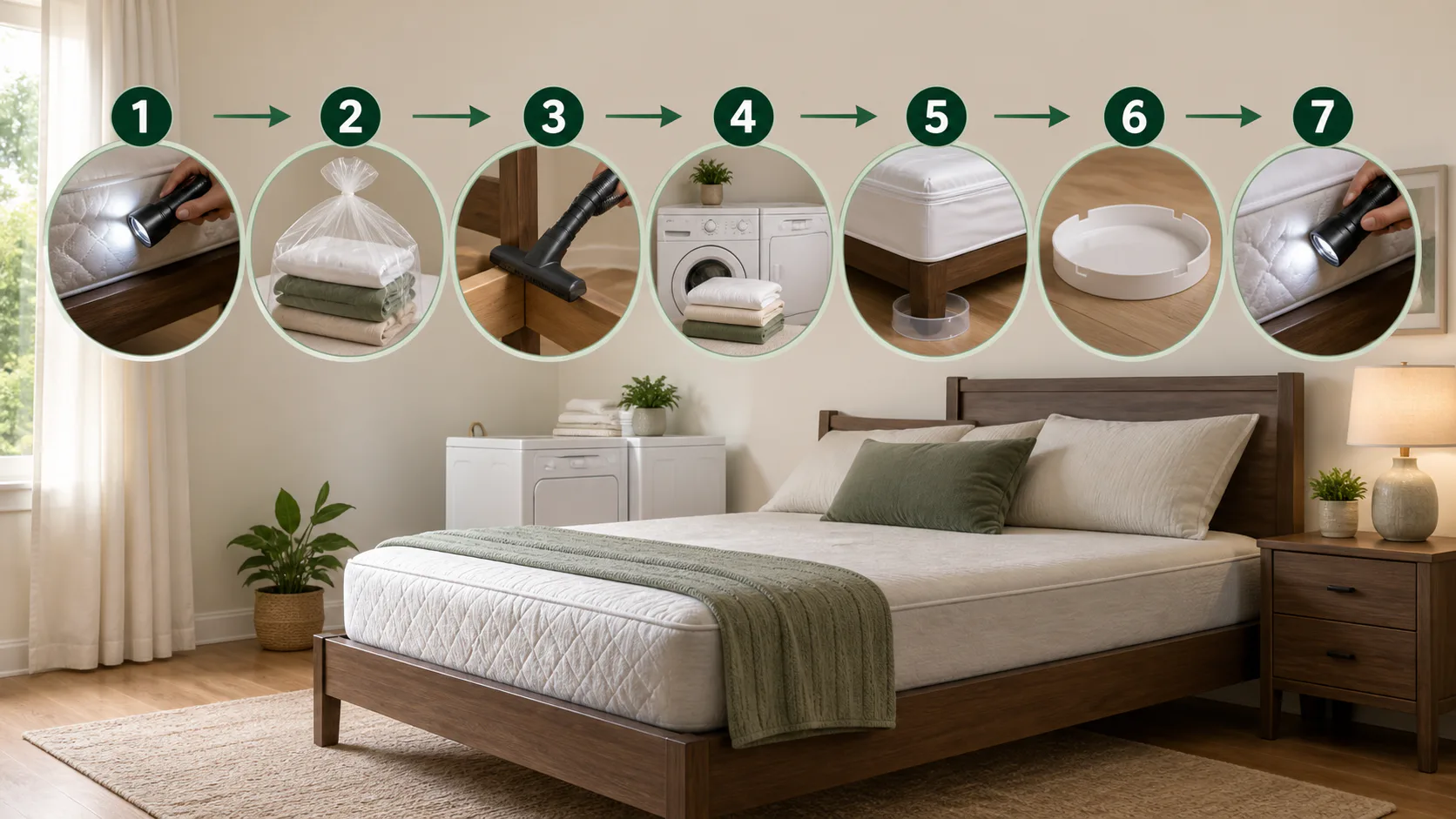
- 1
Confirm and map activity
Inspect seams, joints, cracks, and resting areas. Mark locations with live bugs or fresh evidence so follow-up checks use the same points.
- 2
Contain affected fabrics and items
Bag suspect washable items before carrying them through the home. Keep cleaned items separated until monitoring shows control is progressing.
- 3
Physically remove bugs and debris
Vacuum accessible seams, frame joints, baseboards, and furniture crevices. Seal and discard vacuum contents promptly according to the machine instructions.
- 4
Treat washable or dryable items appropriately
For items that tolerate it, use laundering and dryer settings appropriate to the fabric. Heat exposure must be adequate for the item; do not improvise whole-room heating with household equipment.
- 5
Add encasements, interceptors, and monitoring
Appropriate encasements can simplify inspection, while interceptors help track activity around beds and other resting furniture. They support control but do not replace treatment.
- 6
Use labeled treatment or professional service when appropriate
If using a pesticide, use only a product labeled for bed bugs and the intended surface, and follow the entire label. Structural heat and complex or multi-room work are safer in trained hands.
- 7
Reinspect and follow up
Check the same harborages and monitors repeatedly. Eggs and deeply hidden bugs can outlast one pass, so judge progress from a pattern of evidence rather than one quiet night.
What not to do
Do not rely on foggers
Total-release foggers do not reach many bed bug hiding places and should not be treated as the primary solution.
Do not improvise room heat
Space heaters, fireplaces, and other household equipment can create fire, electrical, and carbon-monoxide hazards without reliably treating hidden harborages.
Do not spread the problem
Avoid carrying loose belongings to another bedroom or discarding unwrapped furniture where someone may reuse it.
Safety source
EPA guidance emphasizes integrated control, label compliance, and the limitations and risks of foggers and unsafe heat attempts.
EPA bed bug guidanceHow to know treatment is working
- Live sightings and interceptor catches decline across repeated checks.
- No new fecal spotting, eggs, or cast skins appear in mapped harborages.
- Evidence does not spread to new rooms or resting areas.
- Previously active locations remain quiet through continued monitoring.
Signs the treatment is not working
- Fresh evidence continues at the same or new locations.
- Live bugs are repeatedly found after reasonable follow-up.
- Activity spreads to sofas, adjacent bedrooms, or neighboring units.
- The plan cannot reach an inaccessible harborage or cannot be carried out safely.
After treatment: reduce reinfestation risk
- Continue interceptors and scheduled seam checks after activity declines.
- Keep cleaned items separated until the affected area has been followed up.
- Inspect luggage and used furniture before they enter sleeping areas.
- Coordinate reporting and treatment in multi-unit housing when shared spread is possible.
When to call a professional
Consider licensed help for multi-room activity, apartment or shared-wall spread, repeated evidence after a careful plan, inaccessible harborages, or any treatment that requires specialized equipment.
Safety notes
- Follow pesticide labels; do not mix products or invent application rates.
- Keep children and pets away as the product label requires.
- Use professional structural heat rather than improvised whole-room heating.
- Pest control information does not replace medical care for concerning skin reactions.
FAQ
Can bed bugs be removed in one day?
Heat treatments may work quickly, but many infestations still need follow-up inspection and monitoring.
Should furniture be thrown away?
Not always. Many items can be treated. If disposal is necessary, wrap and label items so they are not reused.
Not sure the pest is correctly identified?
Upload a clear photo before treating.
Identify from photoExplore next
Continue with verified context
Related pest profiles
Related evidence
Related guides
Reviewed guidance · Last reviewed August 2026
Based on Pest Or Not verified knowledge and authoritative pest-management references.
How we review content