Verifiziertes Schädlingsprofil
How to Identify Yellow Jackets
Geprüft July 2026
Aggressive social wasps often nesting in ground cavities, wall voids, or structural gaps. They are attracted to meats, sweets, and trash.
Dies ist ein verifiziertes Schädlingsprofil. KI-Upload-Ergebnisse werden separat angezeigt.
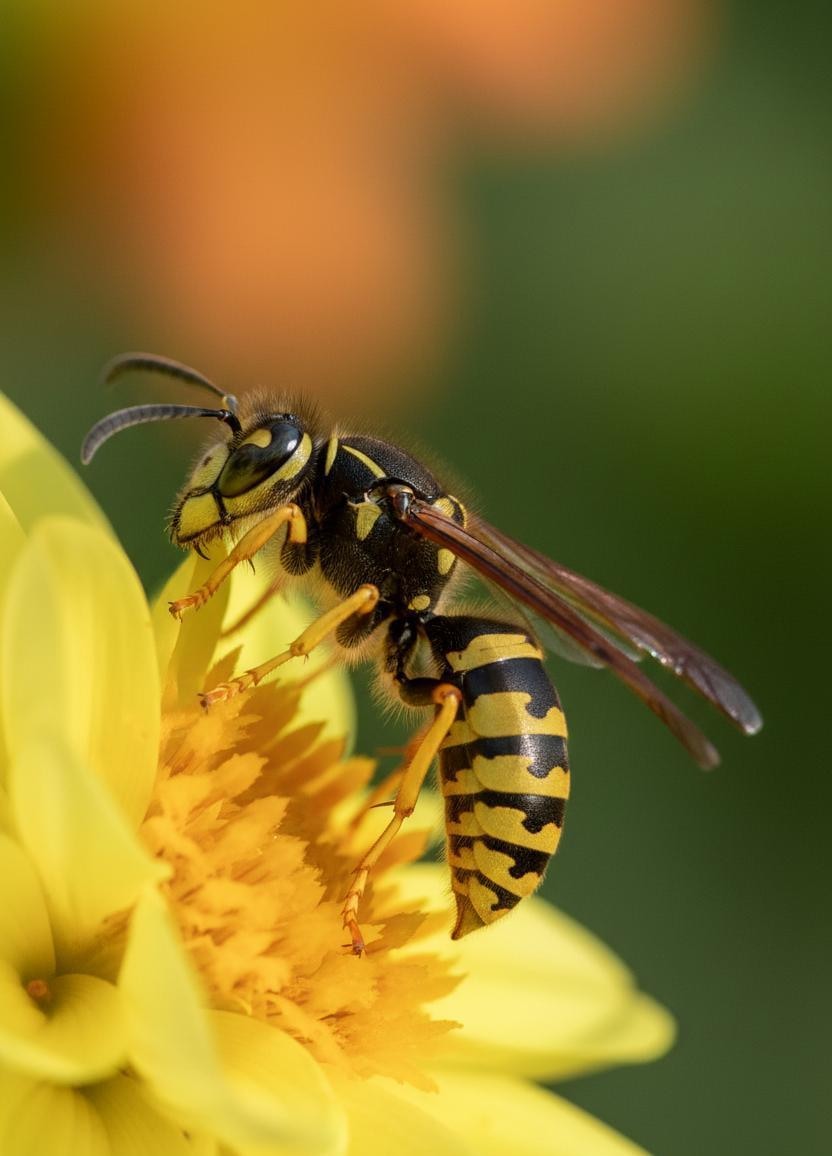
Yellow Jackets
Vespula spp.
Aggressive social wasps often nesting in ground cavities, wall voids, or structural gaps. They are attracted to meats, sweets, and trash.
Also known as yellow jacket, yellow jackets.
Visual Confirmation Checklist
Use several clues together before confirming this pest. One photo or one sign can be misleading.
- Bold yellow-and-black pattern with a compact wasp body
- Fast direct flight in and out of a single ground or wall opening
- More aggressive around food, trash, and nests than many paper wasps
Signs of Infestation
- Heavy traffic to a ground hole, wall gap, landscape timber, or void entrance
- Workers around trash, picnic food, pet food, meat, or sweet drinks
- Stings or defensive swarming when the nest area is disturbed
Habitat
- ground cavities
- wall voids
- landscape timbers
- trash areas
- picnic areas
- eaves
Health Risk
Yellow jackets can sting repeatedly and may trigger severe allergic reactions. Ground or wall nests are dangerous when disturbed.
First Steps
- Watch from a distance to find the single nest entrance and avoid vibration near it
- Keep people and pets away from the flight path immediately
- Cover trash, sweet drinks, pet food, and grill residue nearby
- Do not seal or flood the nest opening
Treatment Methods
- Locate the nest entrance from a safe distance and mark the area without disturbing it
- Keep food, trash, pets, and people away from the flight path
- Do not pour gasoline, water, or household chemicals into nests
- Do not seal a wall entrance while the nest is active
- Use professional treatment for ground nests, wall voids, or high-traffic areas
Professional Treatment Options
- Ground or wall void nest treatment
- Nest removal or exclusion after activity stops
- Exterior sanitation and entry-point recommendations
- Follow-up if workers continue entering the void
Call a professional for any ground nest, wall void nest, nest near doors or play areas, repeated stings, or allergy risk.
Prevention Tips
- Keep trash and recycling tightly sealed
- Cover outdoor food and drinks during late summer and fall
- Clean spills around patios, bins, and grills
- Seal exterior gaps before colonies establish in spring
- Remove fallen fruit and food waste promptly
Evidence and Comparison
Evidence to Compare
- Check for evidence such as ground nest.
- Check for evidence such as wall void entrance.
- Check for evidence such as flight path.
- Check for evidence such as stings.
- Check for evidence such as food scavenging.
Commonly Confused With
- Compare carefully with wasps.
- Compare carefully with paper wasps.
- Compare carefully with hornets.
- Compare carefully with honey bees.
Life Cycle
Queens start colonies in spring. Worker numbers peak in late summer and fall, when scavenging and sting incidents often increase.
FAQ
Why are yellow jackets worse in late summer?
Colonies are larger and workers search for sugary and protein foods, making them more common around trash, grills, and outdoor meals.
Geprüfte Schädlingshinweise
Dieses Schädlingsprofil stammt aus der geprüften Pest-Or-Not-Datenbank und unterstützt den visuellen Vergleich, die Risikoeinordnung und nächste Schritte.
Zuletzt geprüft July 2026
Pest Or Not dient der Information und ersetzt bei erhöhtem Risiko weder medizinischen Rat noch Produktetiketten, örtliche Vorschriften oder eine Fachinspektion.
KI kann hochgeladene Bilder einordnen und Informationen strukturieren. Öffentliche Hinweise werden vor der Veröffentlichung mit der geprüften Schädlingsdatenbank und Fachquellen abgeglichen.
So prüfen wir Inhalte