Quick Answer
A clearly photographed bristly, segmented larva can strongly support carpet beetle larval identification. Location near lint, hair, feathers, wool, rugs, or stored natural fibers adds context, but it does not reveal the full source or explain a skin reaction by itself.
Evidence strength
Strong with a clear specimen
Visible bristles, segmentation, body shape, and a compatible setting can support larval-level identification.
- A clear specimen is stronger than an empty cast skin.
- Natural-fiber damage and repeated larvae increase confidence.
- Species-level identification may still require expert examination.
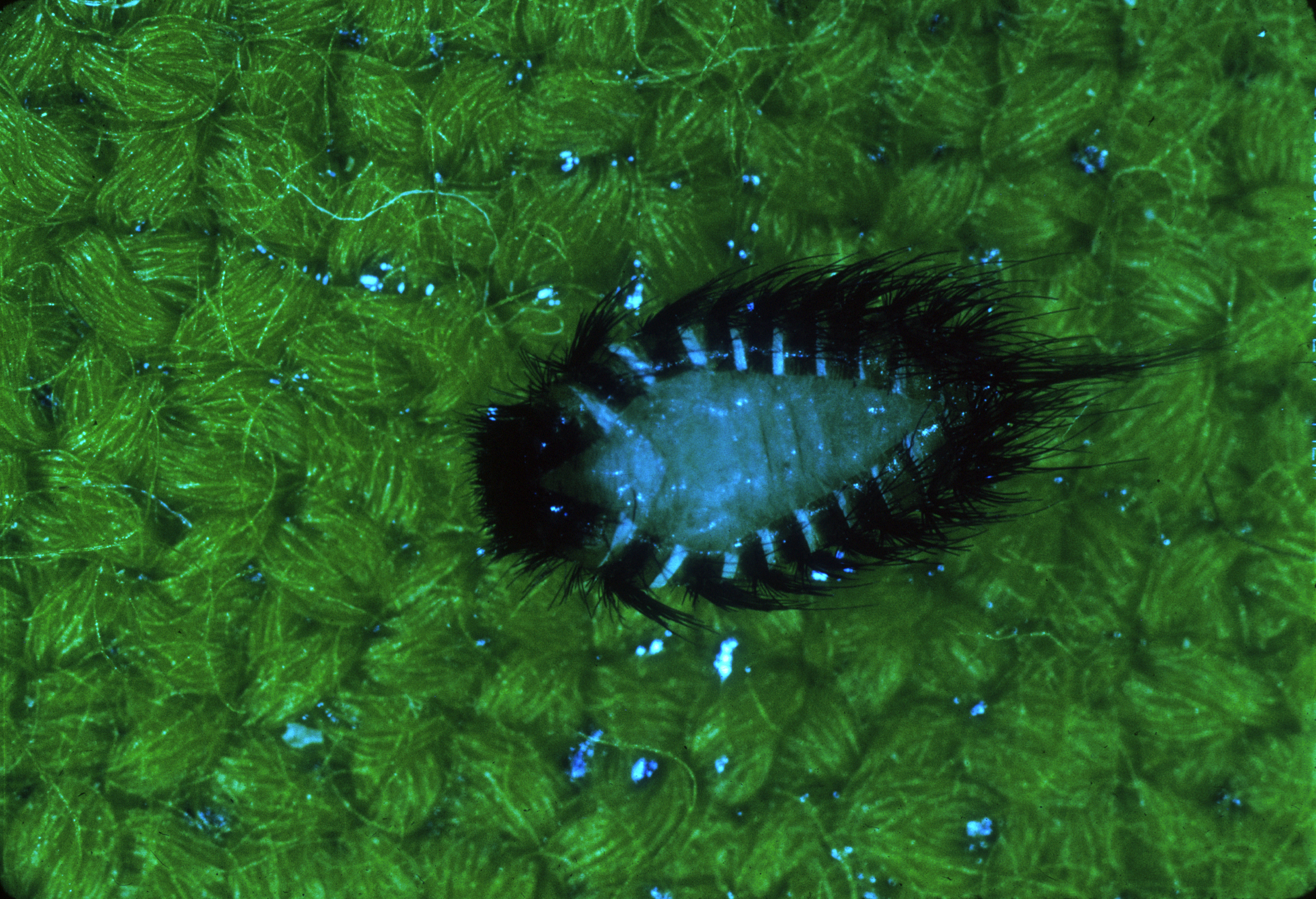
Verified carpet beetle larval reference. Appearance varies, and the photograph does not establish species or matched scale.
What it may indicate
- A carpet beetle larva feeding or sheltering near suitable organic material.
- A nearby accumulation of lint, hair, feathers, dead insects, or vulnerable natural fibers.
- An empty, bristly, segmented cast skin may reflect earlier larval development nearby, but it is weaker than a clear intact larva.
Other explanations
- Clothes-moth larvae, which are usually smoother and may be associated with silk or a portable case.
- Other dermestid larvae, lint, or an incomplete cast skin when key body features are not visible.
What this evidence cannot prove
- The infestation source or extent from one larva.
- The exact species from a typical household photograph.
- That a fragmented or incomplete cast skin confirms carpet beetles without visible diagnostic structure.
- That the larva caused a person's skin reaction.
Where to check next
- Take a macro photograph beside a ruler without crushing or brushing away the specimen.
- Inspect rug edges, closet corners, vents, pet bedding, stored textiles, and lint accumulations.
Additional evidence to collect
- More larvae or empty bristly, segmented cast skins in the same material, irregular damage to natural fibers, and adults near windows.
- Macro photographs that distinguish an empty shed from a live larva, plus wider views of rug edges, closets, window sills, or damaged fabric.
- A saved intact specimen for expert identification when the distinction matters.
Relevant Guides
Reviewed community cases
Not sure what you found?
Upload the evidence and its surrounding context. The result supports comparison; it does not create certainty.
Identify a photoExplore next
Reviewed guidance
Last reviewed August 2026. This content supports evidence interpretation and does not replace medical diagnosis, structural inspection, product labels, or local rules.