Quick answer
What to know first
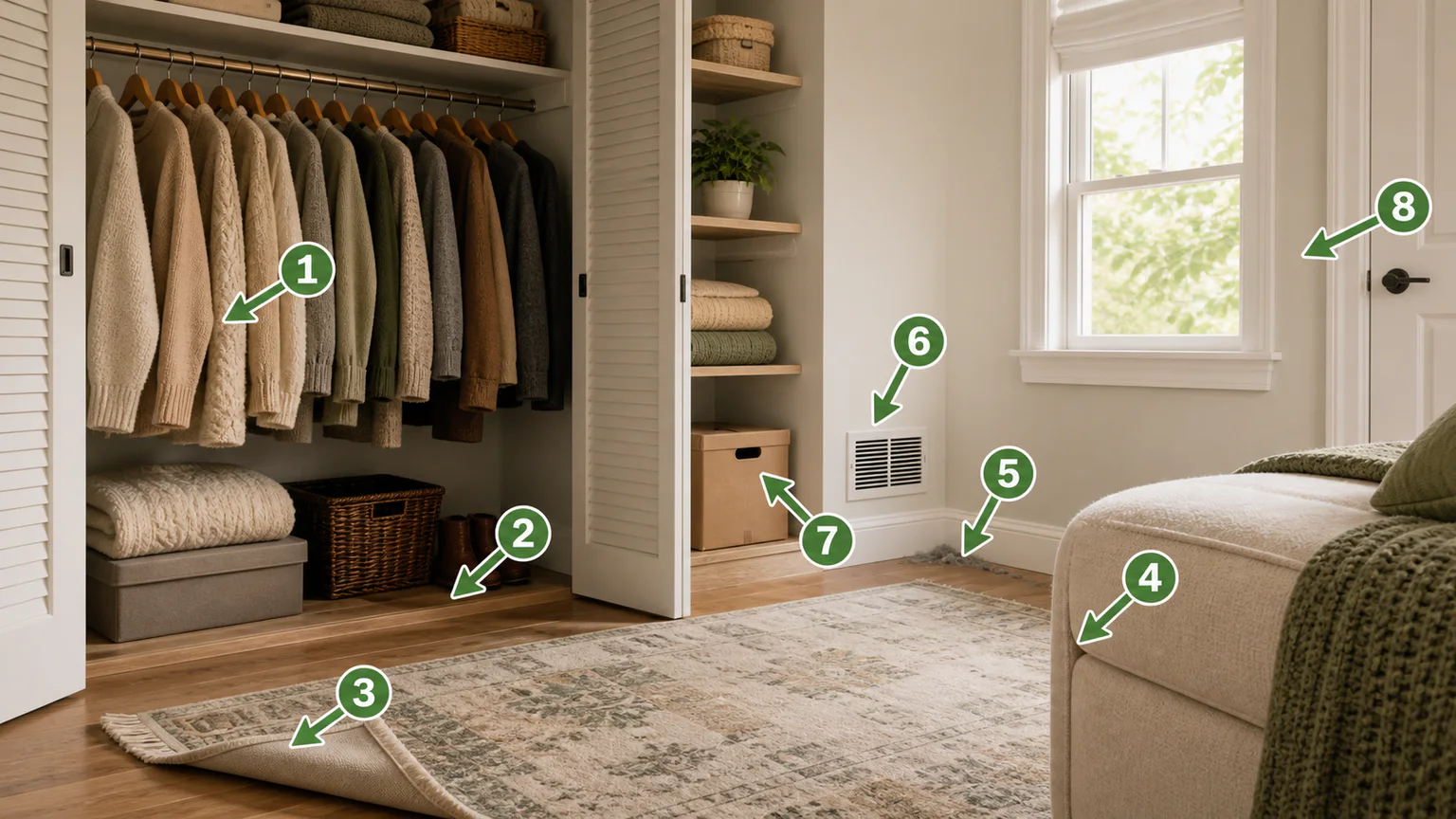
Carpet beetle larvae feed on natural fibers, lint, pet hair, feathers, and stored organic material. Adults may be seen near windows, but the damaging stage is usually hidden in closets, rugs, vents, or storage.
Start here
- Fuzzy larvae or shed skins near fabrics
- Irregular holes in wool, silk, feathers, or felt
- Adults at windows or light sources
Before you act
Carpet beetle larvae feed on natural fibers, lint, pet hair, feathers, and stored organic material. Adults may be seen near windows, but the damaging stage is usually hidden in closets, rugs, vents, or storage.
- Fuzzy larvae or shed skins near fabrics
- Irregular holes in wool, silk, feathers, or felt
- Adults at windows or light sources
Action plan
4-Step Treatment Plan
- 1
Vacuum edges, closets, rugs, and under furniture thoroughly
Vacuum edges, closets, rugs, and under furniture thoroughly.
- 2
Wash or dry-clean vulnerable fabrics
Wash or dry-clean vulnerable fabrics.
- 3
Inspect stored clothing, taxidermy, wool rugs, and pet bedding
Inspect stored clothing, taxidermy, wool rugs, and pet bedding.
- 4
Discard heavily infested lint, debris, or damaged items if needed
Discard heavily infested lint, debris, or damaged items if needed.
What not to do
Treating shelves without inspecting the infested food or fabric source
Treating shelves without inspecting the infested food or fabric source
Keeping packages that show webbing, larvae, holes, or cast skins
Keeping packages that show webbing, larvae, holes, or cast skins
Using pesticide directly on food, clothing, or bedding
Using pesticide directly on food, clothing, or bedding
How to judge progress
Recheck the same locations and evidence types instead of judging the result from one quiet interval.
- Track whether this clue persists, returns, or spreads: Fuzzy larvae or shed skins near fabrics
- Track whether this clue persists, returns, or spreads: Irregular holes in wool, silk, feathers, or felt
- Track whether this clue persists, returns, or spreads: Adults at windows or light sources
- Track whether this clue persists, returns, or spreads: Activity under furniture, along edges, or in vents
Signs the treatment is not working
- Fresh evidence continues to appear in the same inspected locations.
- Activity spreads to new rooms, materials, or monitoring points.
- The suspected source remains active after the action plan has been followed and reassessed.
After treatment and reducing recurrence
- Store wool and natural fibers in sealed containers.
- Clean pet hair and lint from edges and vents.
- Inspect stored seasonal clothing before long-term storage.
- Use monitoring traps in closets and storage rooms.
When to call a professional
Call a professional when larvae are widespread, valuable textiles are affected, or the source is hidden in wall voids or vents.
Safety notes
- Confirm the pest or evidence before applying a control product.
- Use pesticides only where the product label permits, and follow the full label.
- Do not mix products or improvise heat, electrical, or chemical treatments.
FAQ
Do adult carpet beetles damage clothes?
Larvae cause most fabric damage. Adults often feed on pollen outdoors.
Can carpet beetles live in clean homes?
Yes. Small lint, hair, or stored natural materials can support them.
Not sure the pest is correctly identified?
Upload a clear photo before choosing a treatment path.
Identify from photoExplore next
Continue with verified context
Related pest profiles
Related evidence
Related guides
Reviewed guidance · Last reviewed August 2026
Based on Pest Or Not verified knowledge and authoritative pest-management references.
How we review content