Quick Answer
Small fuzzy flies repeatedly resting near a drain may point to wet organic breeding material, but proximity alone does not prove that exact drain is the source. Check each nearby drain, overflow, floor drain, leak, and damp gap separately.
Evidence strength
Moderate clue
Repeated drain-associated activity supports a nearby wet source, while the exact breeding medium still needs confirmation.
- A fuzzy adult specimen is more useful than location alone.
- Recurrence after surface cleaning suggests a hidden source.
- Evidence linked to one fixture is stronger than room-level sightings.
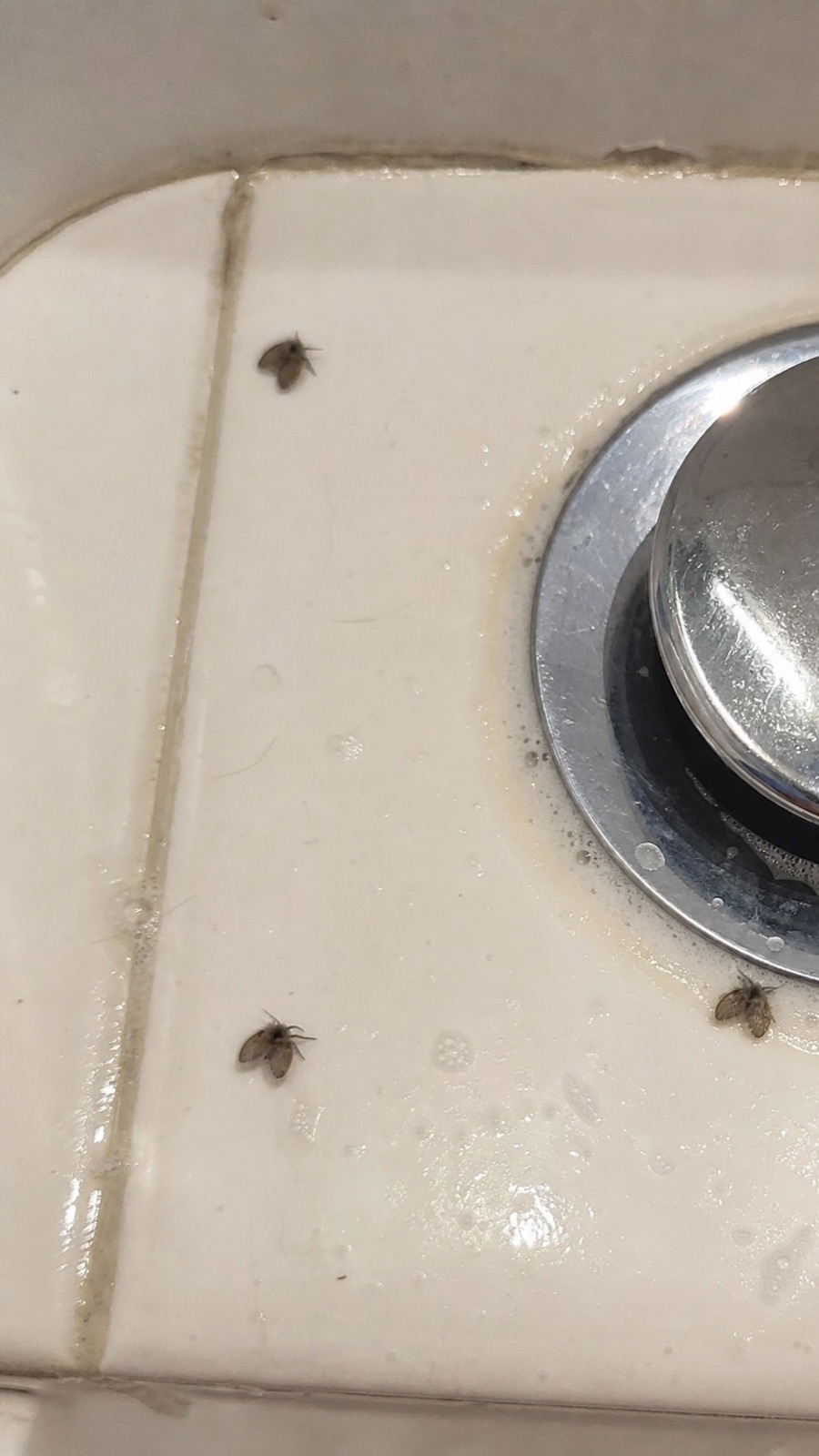
Context-only community image. It shows where flies were observed, not a verified breeding medium or diagnostic reference.
- Source
- PestOrNot Community
- Creator
- Reviewed community contributor
- License
- Context-only case image
- Reference context
- Reviewed PestOrNot community case image; retained as real-world context.
What it may indicate
- Wet organic material inside a drain, trap, overflow, floor sink, or adjacent plumbing gap.
- A moisture or drainage problem when several likely sources have been ruled out.
Other explanations
- Fruit flies associated with fermenting food, spills, recycling, or produce.
- Fungus gnats from damp potting soil or other small flies from a different sanitation source.
What this evidence cannot prove
- That the nearest drain is the breeding medium.
- A broken pipe, sewage leak, or exact fly species from room context alone.
- The size or duration of the breeding source.
Where to check next
- Inspect each sink or tub drain, overflow channel, floor drain, utility drain, and accessible trap separately rather than assuming the nearest fixture is active.
- Check persistent leaks, condensate, damp gaps, and other wet organic material when drain-level evidence is absent.
- Photograph a fly closely, map each candidate site, and document which location produces repeated activity on another day.
Additional evidence to collect
- A clear adult specimen, larvae in verified drain film, or repeated emergence tied to one fixture.
- Visible organic film, a persistent leak, or plumbing evidence at the same source.
Pests associated with similar signs
Relevant Guides
Reviewed community cases
Not sure what you found?
Upload the evidence and its surrounding context. The result supports comparison; it does not create certainty.
Identify a photoExplore next
Reviewed guidance
Last reviewed August 2026. This content supports evidence interpretation and does not replace medical diagnosis, structural inspection, product labels, or local rules.