Quick answer
What to know first
Drain fly control depends on removing the wet organic film where larvae develop. Surface sprays may reduce adults, but the source is usually inside a drain, trap, overflow, or damp plumbing gap.
Start here
- Small fuzzy flies resting near drains or wet rooms
- Slow drains, organic film, leaks, floor drains, or seldom-used drains
- Overnight tape or cup test results at suspect drains
Before you act
Drain flies develop in wet organic film inside drains, floor sinks, mop sinks, and other damp plumbing areas. Adult flies are only the visible stage; the breeding layer must be physically cleaned.
- Small fuzzy flies resting near drains or wet rooms
- Slow drains, organic film, leaks, floor drains, or seldom-used drains
- Overnight tape or cup test results at suspect drains
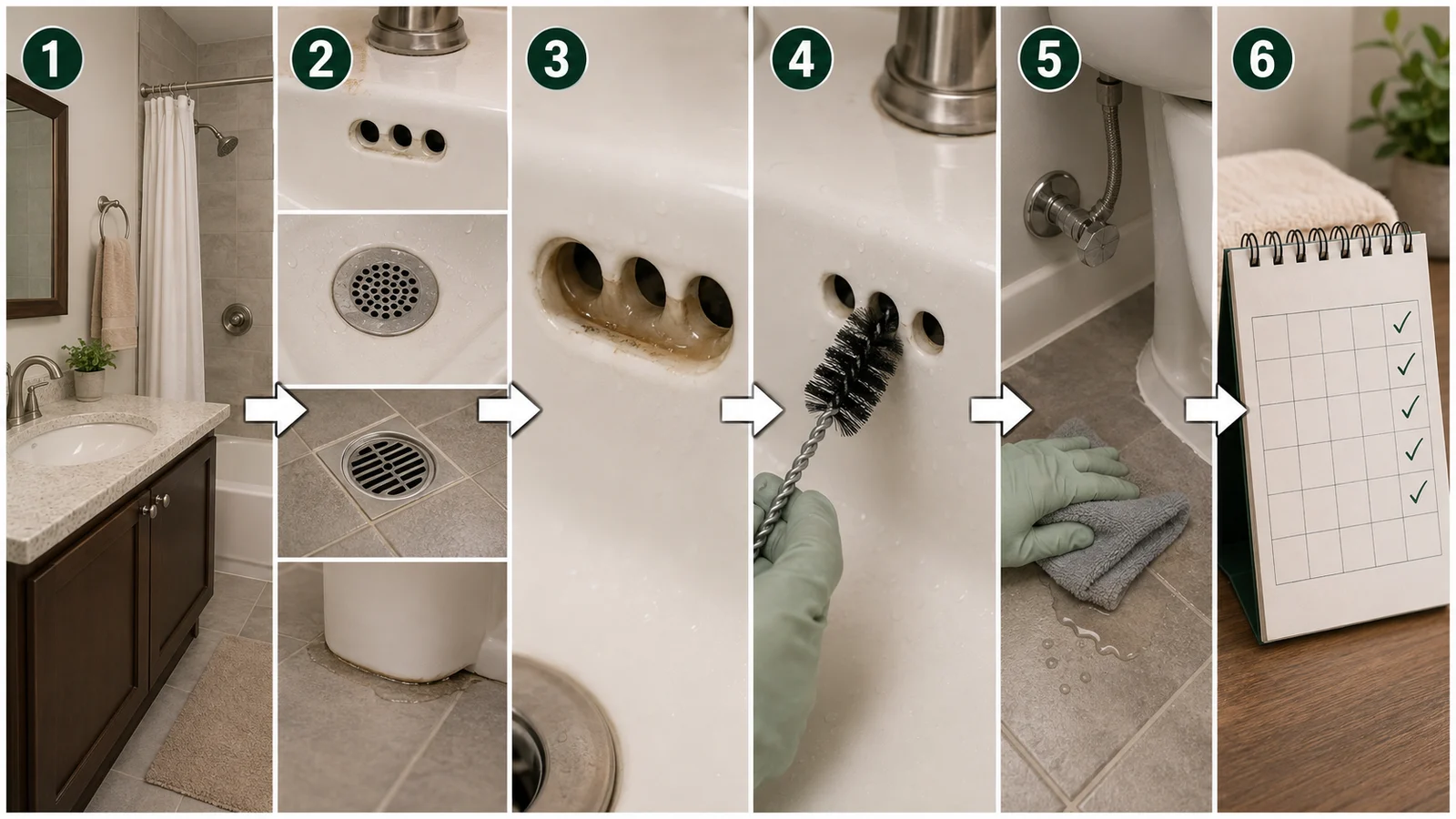
Action plan
4-Step Treatment Plan
- 1
Confirm the active drain with overnight tape or a clear cup test
Confirm the active drain with overnight tape or a clear cup test.
- 2
Scrub the drain walls and trap area to remove organic film
Scrub the drain walls and trap area to remove organic film.
- 3
Flush after cleaning according to drain-safe product directions
Flush after cleaning according to drain-safe product directions.
- 4
Check nearby floor drains, condensate lines, and wet gaps
Check nearby floor drains, condensate lines, and wet gaps.
What not to do
Relying on bleach alone without scrubbing the film
Relying on bleach alone without scrubbing the film
Treating only the visible adult flies
Treating only the visible adult flies
Ignoring nearby wet gaps, condensate lines, or floor drains
Ignoring nearby wet gaps, condensate lines, or floor drains
How to judge progress
Recheck the same locations and evidence types instead of judging the result from one quiet interval.
- Track whether this clue persists, returns, or spreads: Small fuzzy flies resting near sinks, tubs, or drains
- Track whether this clue persists, returns, or spreads: Activity strongest in bathrooms, laundry rooms, or basements
- Track whether this clue persists, returns, or spreads: Slow drains or organic buildup
- Track whether this clue persists, returns, or spreads: Adults reappear after surface sprays
Signs the treatment is not working
- Fresh evidence continues to appear in the same inspected locations.
- Activity spreads to new rooms, materials, or monitoring points.
- The suspected source remains active after the action plan has been followed and reassessed.
After treatment and reducing recurrence
- Keep drains flowing and clean.
- Repair leaks and standing water.
- Clean floor drains and seldom-used drains periodically.
- Address broken pipes or hidden wet organic buildup.
When to call a professional
Call a plumber or pest professional if flies persist after cleaning or if a broken pipe, slab leak, or hidden drain issue is suspected.
Safety notes
- Confirm the pest or evidence before applying a control product.
- Use pesticides only where the product label permits, and follow the full label.
- Do not mix products or improvise heat, electrical, or chemical treatments.
FAQ
Will bleach remove drain flies?
Bleach may pass over the film without removing it. Physical scrubbing is usually more important.
Are drain flies dangerous?
They are mainly nuisance pests, but their presence points to wet organic buildup that should be cleaned.
Not sure the pest is correctly identified?
Upload a clear photo before choosing a treatment path.
Identify from photoExplore next
Continue with verified context
Related pest profiles
Related evidence
Related guides
Reviewed guidance · Last reviewed August 2026
Based on Pest Or Not verified knowledge and authoritative pest-management references.
How we review content