Quick Answer
Wriggling larvae in still water may be mosquitoes, especially when several repeatedly return to the surface. Other aquatic larvae can look similar, and an image cannot determine the mosquito species, pathogen, or local disease risk.
Evidence strength
Moderate clue
Movement and surface posture in a compatible water source can support mosquito larvae, but clear morphology is needed for stronger identification.
- A short video may be more useful than one still.
- Several specimens provide a better pattern than one fragment.
- Species-level identification requires more detail and local expertise.
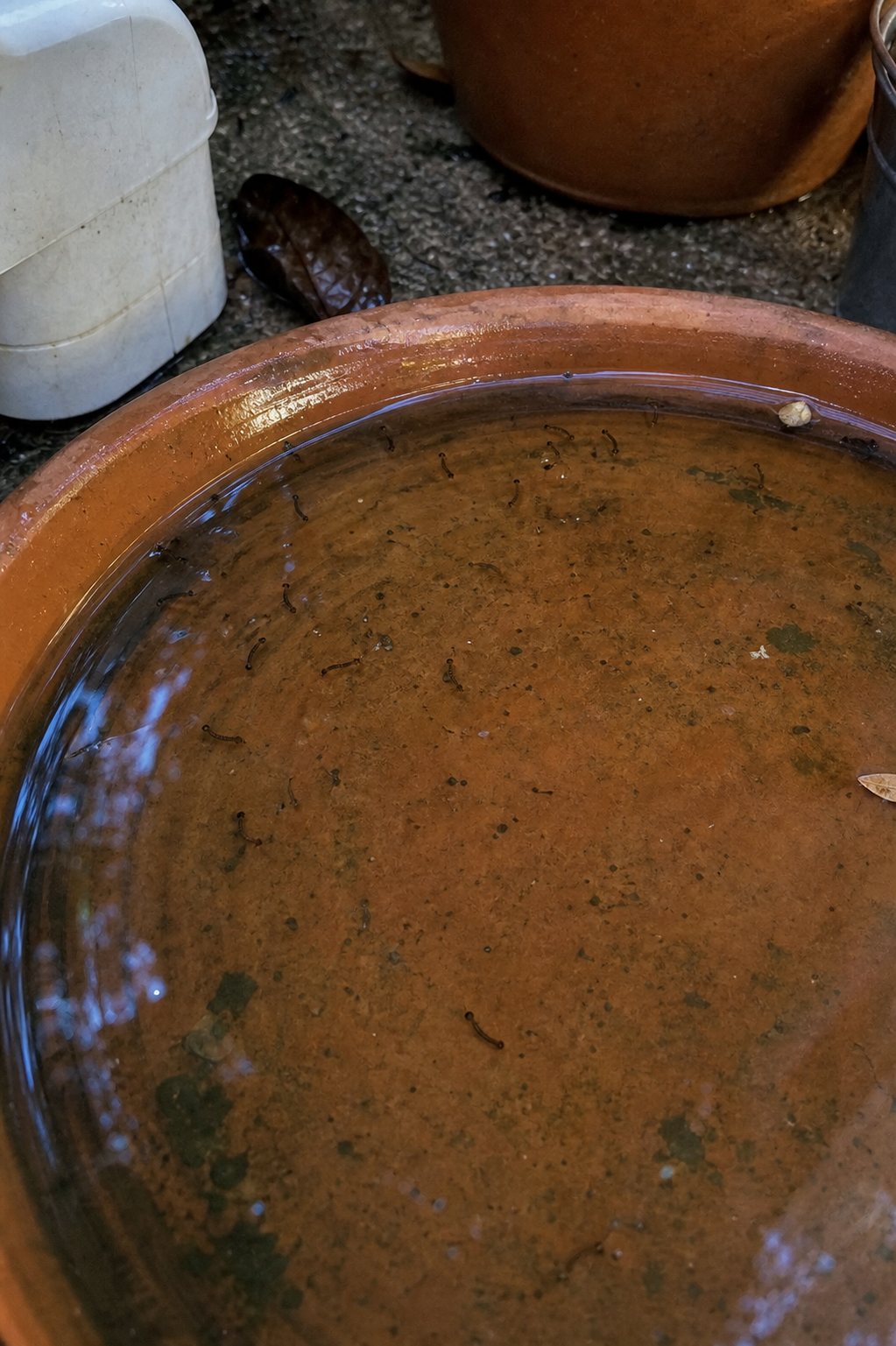
Context-only community image. The water source is real-world context; it does not verify the identity of any larva.
- Source
- PestOrNot Community
- Creator
- Reviewed community contributor
- License
- Context-only case image
- Reference context
- Reviewed PestOrNot community case image; retained as environmental context.
What it may indicate
- Mosquito development in a container, saucer, gutter, bird bath, tire, tarp, or other standing water.
- Another aquatic insect using the same temporary water source.
Other explanations
- Midge larvae or other aquatic fly larvae with different posture or movement.
- Drain-fly larvae in wet organic film rather than open water, or nonliving debris moving with the water.
What this evidence cannot prove
- The mosquito species from aquatic larvae alone.
- Whether a pathogen is present or disease transmission has occurred.
- That this water source explains every adult mosquito nearby.
Where to check next
- Capture a macro photograph and short movement video showing the water surface and body posture.
- Photograph the whole container, add a scale where practical, and inspect other standing-water sources nearby.
Additional evidence to collect
- Multiple intact specimens with identifiable body features and consistent surface behavior.
- An expert identification or matching adult activity tied to the same water source.
Keep health claims local and evidence-based
Larvae indicate a potential breeding source, not the presence of a pathogen.
- Avoid bare-hand contact with contaminated water and keep children and pets away from unsafe containers.
- Use local public-health guidance for regional mosquito risks and water that cannot be safely emptied.
Pests associated with similar signs
Relevant Guides
Reviewed community cases
Not sure what you found?
Upload the evidence and its surrounding context. The result supports comparison; it does not create certainty.
Identify a photoExplore next
Reviewed guidance
Last reviewed August 2026. This content supports evidence interpretation and does not replace medical diagnosis, structural inspection, product labels, or local rules.