Quick answer
What to know first
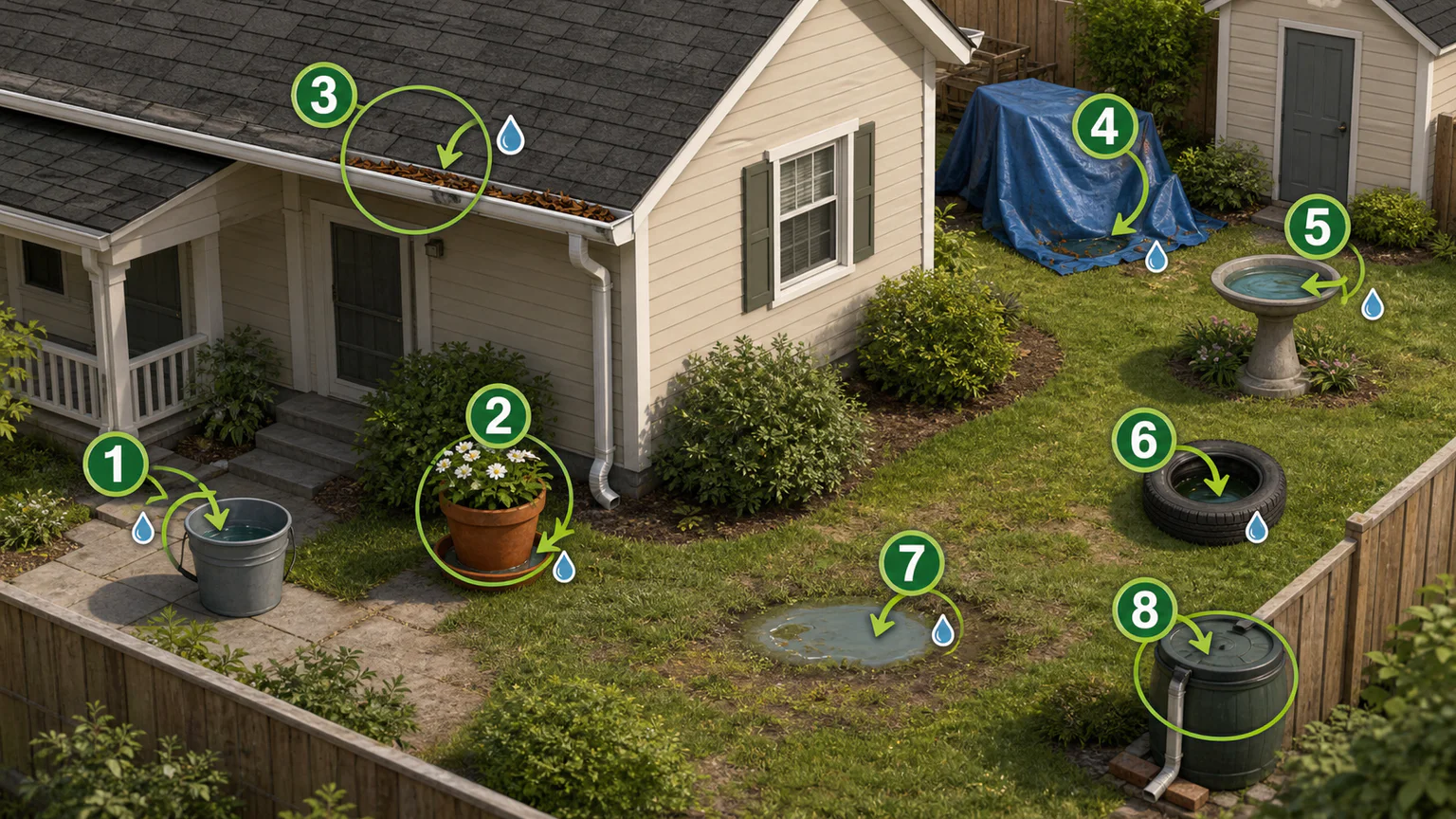
Mosquito management works best when standing water is removed before adults build up. Even small containers can produce mosquitoes quickly in warm weather.
Start here
- Buckets, saucers, gutters, tarps, bird baths, tires, and low spots
- Wiggling larvae at the water surface
- Shaded vegetation, patios, and dawn or dusk bite activity
Before you act
Mosquito management is most effective when breeding sites are removed before adult populations build. Small containers, clogged gutters, saucers, tarps, and bird baths can produce mosquitoes quickly in warm weather.
- Buckets, saucers, gutters, tarps, bird baths, tires, and low spots
- Wiggling larvae at the water surface
- Shaded vegetation, patios, and dawn or dusk bite activity
Action plan
4-Step Treatment Plan
- 1
Empty standing water at least once a week
Empty standing water at least once a week.
- 2
Treat water that cannot be drained with labeled mosquito dunks
Treat water that cannot be drained with labeled mosquito dunks.
- 3
Use EPA-registered repellents when exposure is likely
Use EPA-registered repellents when exposure is likely.
- 4
Improve airflow and reduce dense resting vegetation near patios
Improve airflow and reduce dense resting vegetation near patios.
What not to do
Only treating adult mosquitoes while breeding water remains
Only treating adult mosquitoes while breeding water remains
Forgetting small containers that refill after rain
Forgetting small containers that refill after rain
Using repellents as a substitute for source reduction
Using repellents as a substitute for source reduction
How to judge progress
Recheck the same locations and evidence types instead of judging the result from one quiet interval.
- Track whether this clue persists, returns, or spreads: Adult mosquitoes active at dawn, dusk, or shaded areas
- Track whether this clue persists, returns, or spreads: Wigglers or larvae in still water
- Track whether this clue persists, returns, or spreads: Bites after time outdoors
- Track whether this clue persists, returns, or spreads: Standing water in containers, gutters, drains, or low spots
Signs the treatment is not working
- Fresh evidence continues to appear in the same inspected locations.
- Activity spreads to new rooms, materials, or monitoring points.
- The suspected source remains active after the action plan has been followed and reassessed.
After treatment and reducing recurrence
- Clean gutters and correct drainage issues.
- Store buckets, toys, and containers upside down.
- Change bird bath and pet water frequently.
- Use screens on windows and doors.
When to call a professional
Call a professional when mosquitoes remain heavy after water removal or when a yard has persistent drainage and vegetation issues.
Safety notes
- Confirm the pest or evidence before applying a control product.
- Use pesticides only where the product label permits, and follow the full label.
- Do not mix products or improvise heat, electrical, or chemical treatments.
FAQ
Can a small amount of water breed mosquitoes?
Yes. Even small containers can produce mosquitoes if water sits long enough.
Are all mosquitoes active at night?
No. Activity varies by species. Some bite during the day, especially in shaded areas.
Not sure the pest is correctly identified?
Upload a clear photo before choosing a treatment path.
Identify from photoExplore next
Continue with verified context
Related pest profiles
Related evidence
Related guides
Reviewed guidance · Last reviewed August 2026
Based on Pest Or Not verified knowledge and authoritative pest-management references.
How we review content