How to use this evidence
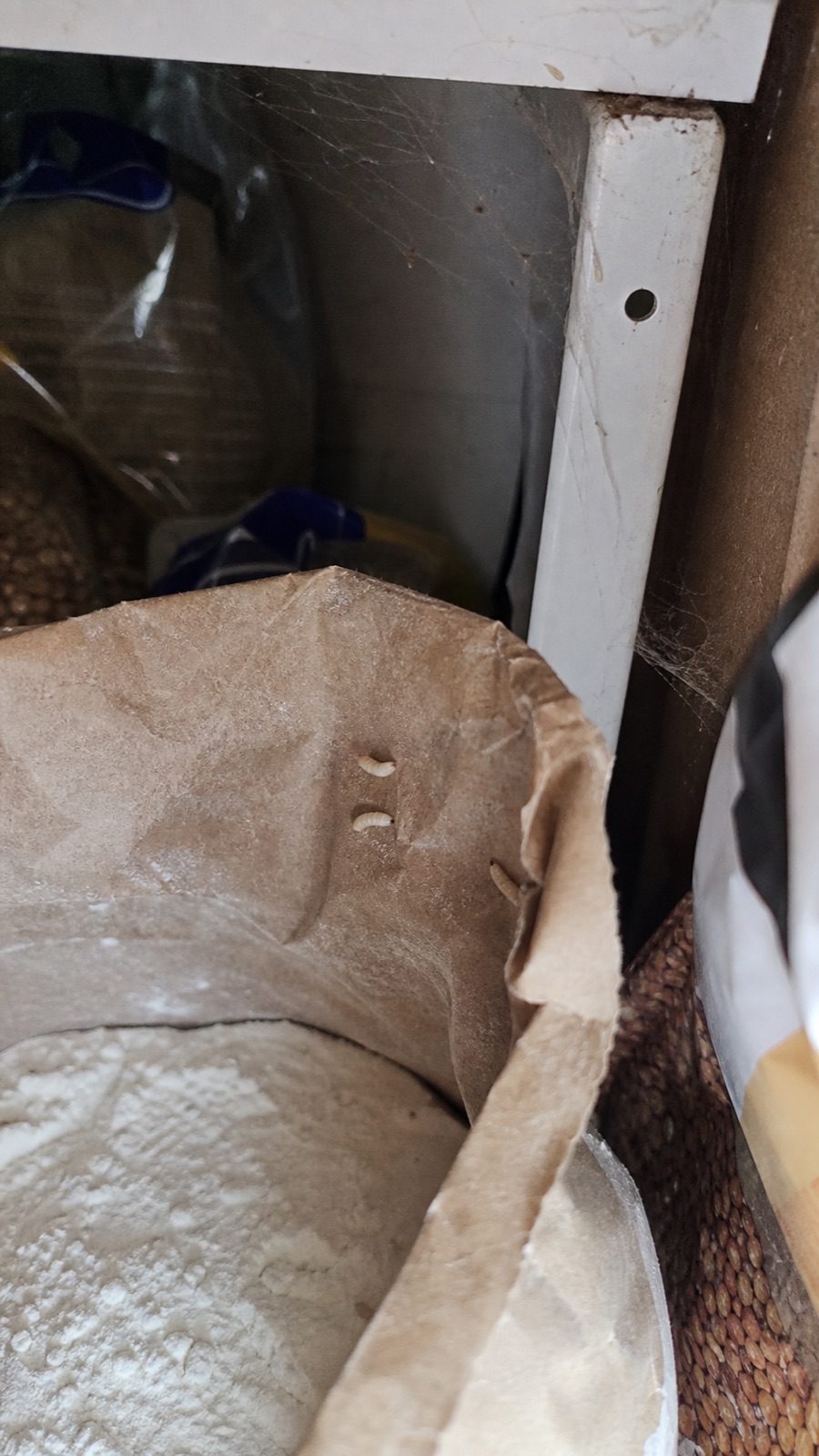
A clear photo can support a visual comparison with known pest evidence.
A photo alone cannot confirm the source or extent of an infestation. Check for matching physical evidence nearby.
What you found
Pantry webbing is a common sign of pantry moth larvae feeding inside stored dry food. The source may be inside opened or unopened packages and can spread to shelf cracks if not removed.
Common places to check
- Inspect flour and nearby hiding spots for matching evidence.
- Inspect grains and nearby hiding spots for matching evidence.
- Inspect pet food and nearby hiding spots for matching evidence.
- Inspect nuts and nearby hiding spots for matching evidence.
- Inspect dried fruit and nearby hiding spots for matching evidence.
- Inspect pantry shelves and nearby hiding spots for matching evidence.
How to identify it
What it may indicate
Food context
Infested food should be discarded because larvae, webbing, and debris are present.
Infestation context
Larvae can leave packages and pupate in shelf cracks.
Recommended actions
- 1Inspect all dry goods, including unopened packages
- 2Discard infested food in sealed bags outside
- 3Vacuum shelves, cracks, and peg holes
- 4Store replacement food in hard sealed containers
Prevention and monitoring
Professional options
- Inspection for hidden food sources
- Crack and crevice treatment when larvae persist
- Monitoring plan with pheromone traps
Explore pages related to Pantry Webbing
Follow the cluster from this evidence page to matching pest profiles and practical guides.
Guides using this evidence
Practical treatment and prevention pages where this sign matters.
Flying Insects
Fruit Fly Control: Kitchen Sources and Fast Cleanup
Find and remove fruit fly breeding sources in drains, produce, trash, recycling, and sticky spills.
Fabric & Pantry
Pantry Moth Control: Find Infested Food and Stop Reinfestation
Control pantry moths by inspecting grains, flour, pet food, nuts, dried fruit, shelves, cracks, and packaging.
Fabric & Pantry
Pantry Moth Traps: What They Catch and What They Miss
Learn how pantry moth pheromone traps work, where to place them, how to read trap catches, and why source removal is still essential.
Flying Insects
Drain Flies vs Fruit Flies: Source Clues in Kitchens and Bathrooms
Compare drain flies and fruit flies by appearance, resting areas, breeding sources, and the cleanup steps that actually work.
Pest profiles to compare
Likely pests connected to this evidence type.