Quick answer
What to know first
Fruit flies build quickly around fermenting produce, sticky residues, trash, recycling, and organic buildup. Traps may catch adults, but source removal is what stops the cycle.
Start here
- Tiny flies hovering around fruit, drains, trash, or bottles
- Activity increases near ripe or damaged produce
- Flies return after traps are removed
Before you act
Fruit flies build quickly around fermenting produce, sticky residues, trash, recycling, and organic buildup. Traps may catch adults, but source removal is what stops the cycle.
- Tiny flies hovering around fruit, drains, trash, or bottles
- Activity increases near ripe or damaged produce
- Flies return after traps are removed
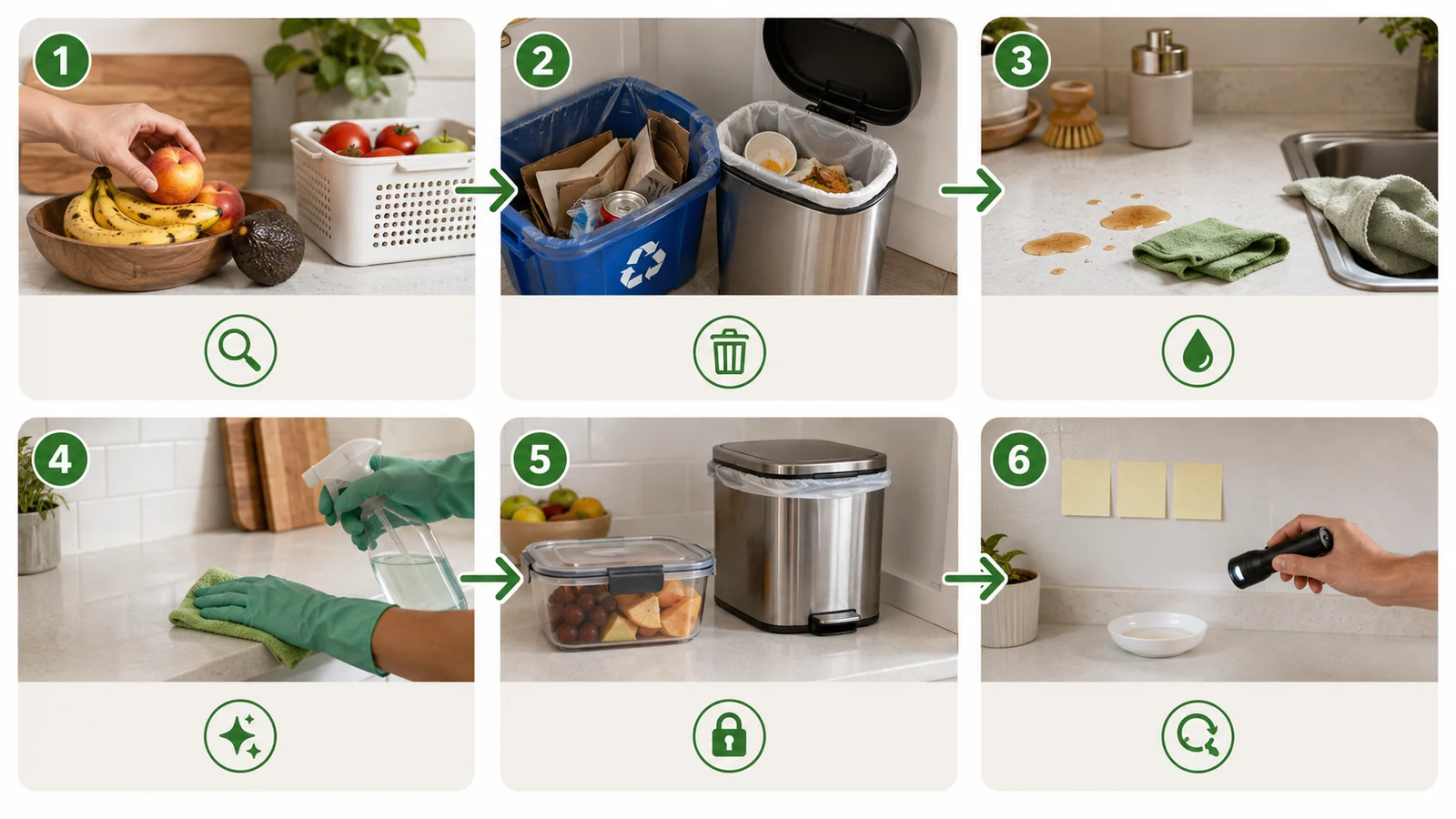
Action plan
4-Step Treatment Plan
- 1
Remove overripe produce and clean sticky surfaces
Remove overripe produce and clean sticky surfaces.
- 2
Rinse recycling containers and empty trash
Rinse recycling containers and empty trash.
- 3
Clean drains and garbage disposals where organic film collects
Clean drains and garbage disposals where organic film collects.
- 4
Use traps only as monitoring support after sources are removed
Use traps only as monitoring support after sources are removed.
What not to do
Treating adult insects without removing the breeding source
Treating adult insects without removing the breeding source
Pouring incompatible chemicals into drains or standing water
Pouring incompatible chemicals into drains or standing water
Assuming every small fly has the same food and moisture source
Assuming every small fly has the same food and moisture source
How to judge progress
Recheck the same locations and evidence types instead of judging the result from one quiet interval.
- Track whether this clue persists, returns, or spreads: Tiny flies hovering around fruit, drains, trash, or bottles
- Track whether this clue persists, returns, or spreads: Activity increases near ripe or damaged produce
- Track whether this clue persists, returns, or spreads: Flies return after traps are removed
- Track whether this clue persists, returns, or spreads: Larvae may be present in decaying organic material
Signs the treatment is not working
- Fresh evidence continues to appear in the same inspected locations.
- Activity spreads to new rooms, materials, or monitoring points.
- The suspected source remains active after the action plan has been followed and reassessed.
After treatment and reducing recurrence
- Store ripe fruit in the refrigerator.
- Clean spills immediately.
- Rinse bottles, cans, and recycling bins.
- Do not let wet organic waste sit indoors.
When to call a professional
Professional inspection may help when flies persist after kitchen cleanup, especially if drains, floor sinks, or hidden organic material are involved.
Safety notes
- Confirm the pest or evidence before applying a control product.
- Use pesticides only where the product label permits, and follow the full label.
- Do not mix products or improvise heat, electrical, or chemical treatments.
FAQ
Do fruit fly traps solve the problem?
They reduce adults but do not remove eggs or breeding material. Source removal is required.
Can fruit flies come from drains?
They can breed near organic buildup, but drain flies are a different pest and need drain-focused cleaning.
Not sure the pest is correctly identified?
Upload a clear photo before choosing a treatment path.
Identify from photoExplore next
Continue with verified context
Related pest profiles
Related evidence
Related guides
Reviewed guidance · Last reviewed August 2026
Based on Pest Or Not verified knowledge and authoritative pest-management references.
How we review content