Verifierad skadedjursprofil
How to Identify Silverfish
Granskad July 2026
Wingless silver-gray insects that prefer damp, dark areas and feed on paper, glue, starches, fabrics, and stored items.
Detta är en verifierad profil. AI-resultat från uppladdade bilder visas på en separat resultatsida.
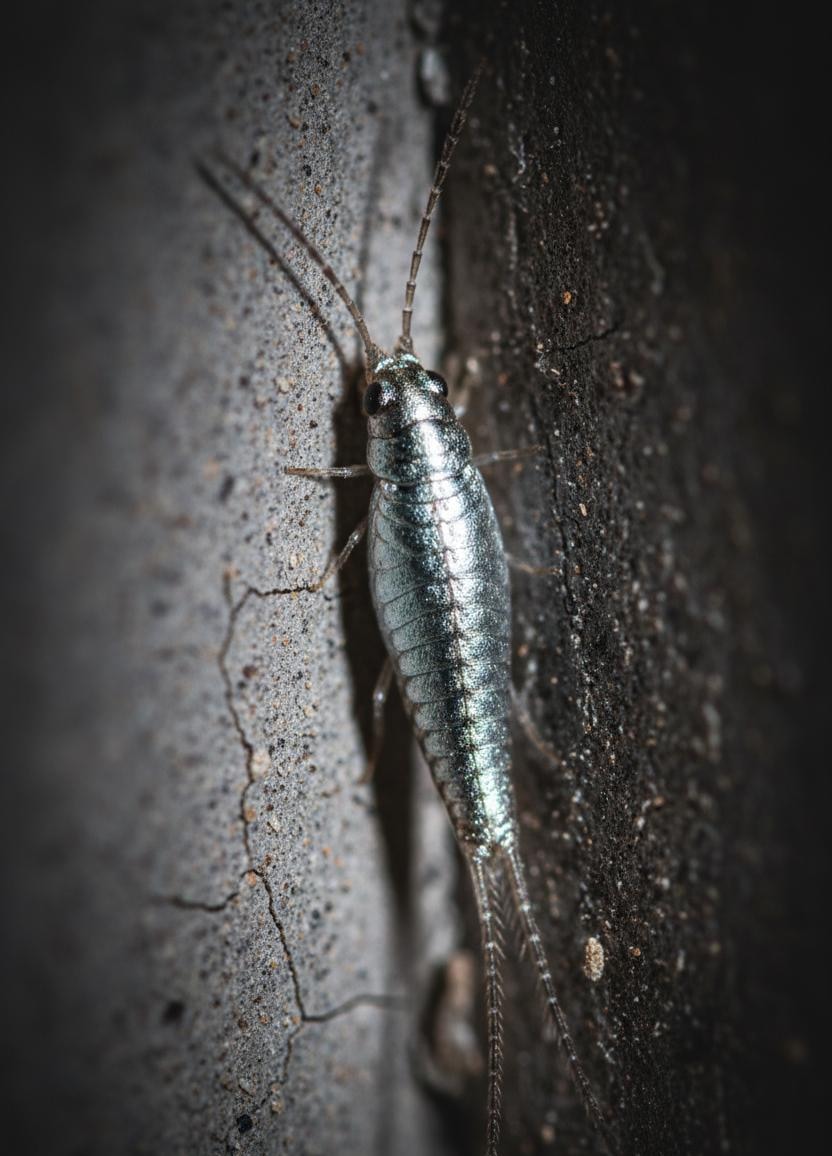
Silverfish
Lepisma saccharinum
Wingless silver-gray insects that prefer damp, dark areas and feed on paper, glue, starches, fabrics, and stored items.
Also known as silverfish.
Visual Confirmation Checklist
Use several clues together before confirming this pest. One photo or one sign can be misleading.
- Slender, flattened, silver-gray body with three long tail-like bristles
- Fast, fish-like movement when disturbed in bathrooms, basements, closets, or storage areas
- No wings; often found near humidity, paper, cardboard, or stored fabrics
Signs of Infestation
- Irregular feeding marks on paper, book bindings, wallpaper, cardboard, or fabric
- Yellowish stains, shed skins, or tiny pepper-like droppings in storage areas
- Live insects seen at night in bathrooms, basements, closets, or attics
Habitat
- bathrooms
- basements
- attics
- closets
- bookcases
- storage boxes
Health Risk
Silverfish do not bite or spread disease. The main concerns are nuisance activity and damage to paper goods, books, wallpaper, and stored fabrics.
First Steps
- Check bathrooms, basements, closets, and storage boxes for moisture and paper clutter
- Set sticky traps near baseboards and storage edges to confirm activity zones
- Reduce humidity and remove damp cardboard or paper piles
- Vacuum cracks, shed skins, and debris before applying any treatment
Treatment Methods
- Reduce humidity with ventilation, dehumidifiers, and leak repair
- Remove damp cardboard, paper clutter, and stored items from floors
- Vacuum cracks, baseboards, closets, and storage edges where shed skins collect
- Use sticky traps to locate activity zones
- Apply targeted crack-and-crevice treatment only where activity persists
Professional Treatment Options
- Humidity and source inspection
- Targeted crack-and-crevice treatment
- Dust treatment in inaccessible voids where appropriate
- Storage and exclusion recommendations
Call a professional when activity continues after moisture reduction, valuable books or stored goods are being damaged, or insects are appearing in several rooms.
Prevention Tips
- Keep indoor humidity below about 50 percent where practical
- Store books, papers, fabrics, and keepsakes in sealed plastic bins rather than cardboard
- Fix leaks and improve airflow in bathrooms, basements, and attics
- Seal gaps around baseboards, pipes, and storage rooms
- Vacuum storage areas periodically
Evidence and Comparison
Evidence to Compare
- Check for evidence such as live insects.
- Check for evidence such as shed skins.
- Check for evidence such as paper damage.
- Check for evidence such as yellow stains.
- Check for evidence such as droppings.
Commonly Confused With
- Compare carefully with booklice.
- Compare carefully with firebrats.
- Compare carefully with carpet beetles.
Life Cycle
Silverfish develop slowly and can live for years indoors when humidity and food sources are available.
FAQ
Are silverfish dangerous?
They are not dangerous to people, but they can damage paper, books, wallpaper glue, stored fabrics, and dry starchy materials.
Granskad skadedjursvägledning
Den här profilen kommer från Pest Or Nots verifierade bibliotek och stödjer visuell jämförelse, riskbedömning och praktiska nästa steg.
Senast granskad July 2026
Pest Or Not är avsett som information och ersätter inte medicinsk rådgivning, produktetiketter, lokala regler eller en professionell inspektion vid hög risk.
AI kan hjälpa till att klassificera uppladdade bilder och strukturera information. Offentlig vägledning kontrolleras mot den verifierade databasen och referenskällor före publicering.
Så granskar vi innehåll