How to use this evidence
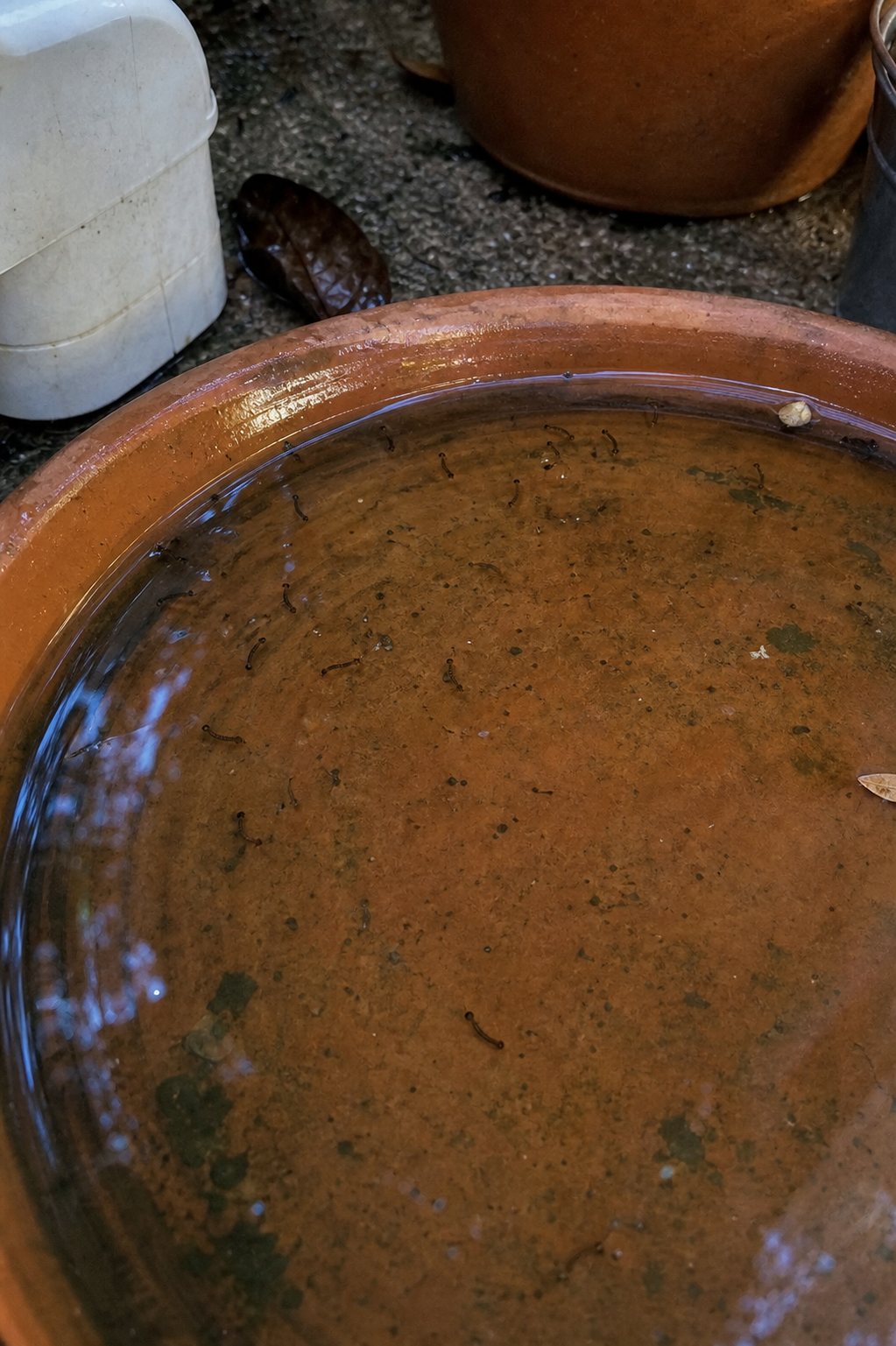
A clear photo can support a visual comparison with known pest evidence.
A photo alone cannot confirm the source or extent of an infestation. Check for matching physical evidence nearby.
What you found
Mosquito larvae develop in standing water. Even small containers can become breeding sites when water remains long enough, especially in warm weather.
Common places to check
- Inspect buckets and nearby hiding spots for matching evidence.
- Inspect plant saucers and nearby hiding spots for matching evidence.
- Inspect gutters and nearby hiding spots for matching evidence.
- Inspect bird baths and nearby hiding spots for matching evidence.
- Inspect tarps and nearby hiding spots for matching evidence.
- Inspect tires and nearby hiding spots for matching evidence.
How to identify it
Small wriggling larvae at the water surface
Found in still or stagnant water
Often appear in overlooked containers
Adult mosquito activity nearby may increase
What it may indicate
Health context
More breeding sites increase mosquito bites and potential disease exposure in some regions.
Infestation context
Larvae confirm an active breeding source on the property.
Recommended actions
- 1Empty containers and scrub residue
- 2Treat water that cannot be drained with labeled mosquito larvicide
- 3Clean gutters and low spots
- 4Repeat checks weekly during warm weather
Prevention and monitoring
Empty water weekly
Store containers upside down
Clean gutters
Repair drainage problems
Professional options
- Yard inspection for hidden breeding sites
- Drainage correction recommendations
- Larvicide treatment for persistent water sources
Explore pages related to Mosquito Larvae in Standing Water
Follow the cluster from this evidence page to matching pest profiles and practical guides.
Guides using this evidence
Practical treatment and prevention pages where this sign matters.