Verifiziertes Schädlingsprofil
How to Identify Pantry Moths
Geprüft July 2026
Pantry Moths are common insect pests associated with pantries and stored goods in indoor settings.
Dies ist ein verifiziertes Schädlingsprofil. KI-Upload-Ergebnisse werden separat angezeigt.
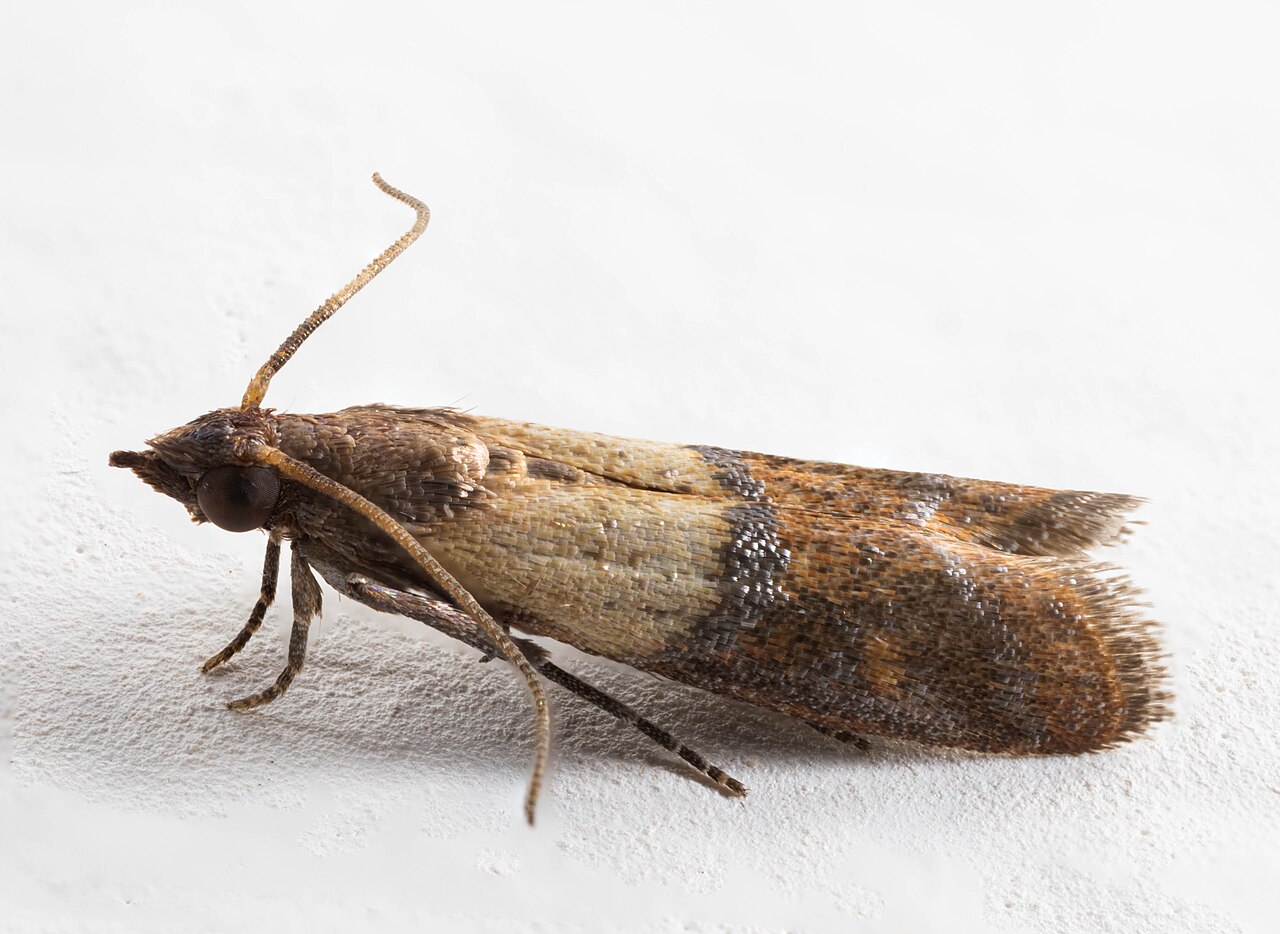
Pantry Moths
Plodia interpunctella
Pantry Moths are common insect pests associated with pantries and stored goods in indoor settings.
Also known as pantry moth, pantry moths.
Practical identification guidance
How to confirm Pantry Moths
Pantry moths are small food-infesting moths whose larvae create silk webbing in grains and other stored dry products.
Check these details
- Inspect package seams and shelf corners for webbing, larvae, or cocoons.
- Check whether adult moths have distinctly two-toned forewings.
Avoid a false match
Clothes moths are more uniformly pale and are associated with animal-fiber fabrics.
Best next step
Trace the infestation to a food package before cleaning and setting monitoring traps.
Visual Confirmation Checklist
Use several clues together before confirming this pest. One photo or one sign can be misleading.
- Check pantries and stored goods for visible pantry moths activity.
- Look for evidence such as damaged stored items, larvae, adult insects.
- Compare size, location, and evidence before choosing a treatment.
Signs of Infestation
- Damaged stored items near pantries and stored goods
- Larvae near pantries and stored goods
- Adult insects near pantries and stored goods
Habitat
- pantries
- stored goods
- closets
Health Risk
Pantry Moths are mainly a nuisance pest unless activity becomes widespread.
First Steps
- Photograph or document the pest and evidence
- Check source areas and nearby entry points
- Clean or isolate the source area and monitor activity
Treatment Methods
- Confirm pest identity and source area
- Use targeted baits, traps, exclusion, or labeled products
- Remove food, water, shelter, and entry points
Professional Treatment Options
Call a professional when pantry moths activity is repeated, widespread, or close to people, pets, food, or structural areas.
Prevention Tips
- Keep food sealed and surfaces clean
- Seal cracks around doors, windows, pipes, and foundations
- Reduce moisture, clutter, and outdoor harborage
Evidence and Comparison
Evidence to Compare
- Check for evidence such as damaged stored items.
- Check for evidence such as larvae.
- Check for evidence such as adult insects.
Commonly Confused With
- Compare carefully with bed bugs.
- Compare carefully with german cockroach.
- Compare carefully with american cockroach.
Life Cycle
Pantry Moths are most active during year-round indoors conditions and develop through species-specific life stages.
Geprüfte Schädlingshinweise
Dieses Schädlingsprofil stammt aus der geprüften Pest-Or-Not-Datenbank und unterstützt den visuellen Vergleich, die Risikoeinordnung und nächste Schritte.
Zuletzt geprüft July 2026
Pest Or Not dient der Information und ersetzt bei erhöhtem Risiko weder medizinischen Rat noch Produktetiketten, örtliche Vorschriften oder eine Fachinspektion.
KI kann hochgeladene Bilder einordnen und Informationen strukturieren. Öffentliche Hinweise werden vor der Veröffentlichung mit der geprüften Schädlingsdatenbank und Fachquellen abgeglichen.
So prüfen wir Inhalte