Entity scope
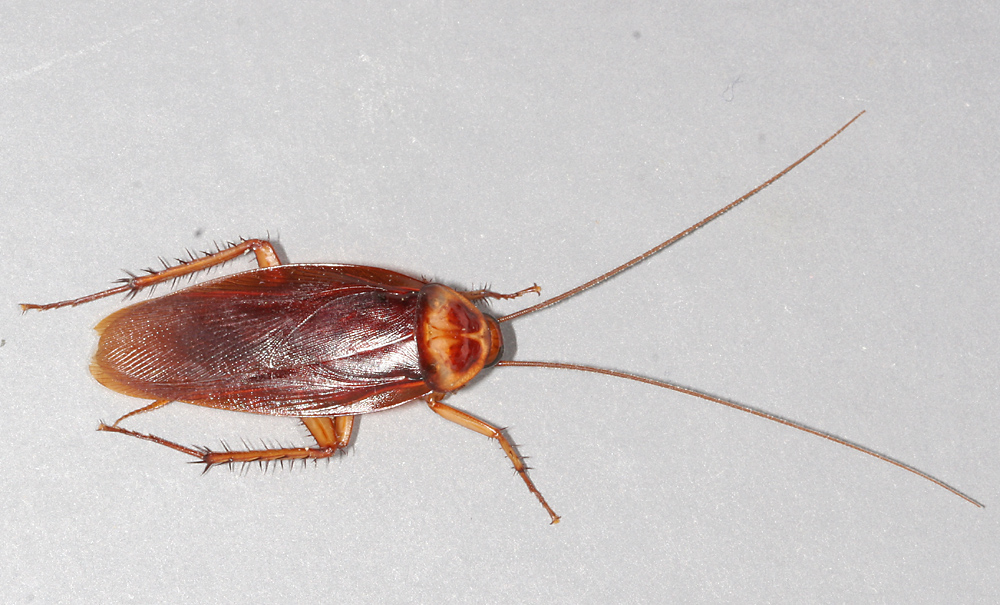
This profile covers Periplaneta americana, one large cockroach species. Location or size alone does not separate it from every other large cockroach.
Quick identity
- Scientific name
- Periplaneta americana
- Entity scope
- One cockroach species
- Typical adult size
- About 35–40 mm (roughly 1 3/8–1 5/8 in)
- Adult appearance
- Reddish brown with a pale-edged pronotum
- Wings
- Adults have developed wings extending along or beyond the abdomen
- Common context
- Warm, humid service areas, drains, sewers, basements, and utility spaces
Key characteristics
- Adults are large, reddish-brown cockroaches with long antennae and a flattened oval body.
- A pale cream-to-yellow margin around a darker central pronotum can support identification when clearly visible.
- Nymphs lack adult wings and can be confused with other large cockroach nymphs.
- Size, damp surroundings, or the label ‘water bug’ cannot confirm the species alone.
Life stages
01
Ootheca / egg case
A capsule containing multiple eggs; egg-case form can help but requires a clear view and comparison.
02
Nymph
Wingless immature stage that changes through molts and should not be identified from size alone.
03
Adult
Large winged stage with the characteristic pronotal pattern when the dorsal view is clear.
Where it is found
- Warm, humid basements, utility tunnels, boiler rooms, sewer systems, drains, and service areas.
- Outdoor warm-climate sites and peridomestic harborages may also support populations.
- One individual indoors can be an entry event; repeated activity near a route or resource is more informative.
Behavior and activity
- Usually active after dark and retreats into protected gaps.
- Can move between outdoor, sewer, utility, and building environments where routes connect.
- Adults can use their wings, but flight behavior varies with conditions and does not identify a specimen.
Diet and resources
- Uses varied decaying organic material and accessible food residues.
- Moisture and protected harborages strongly shape where activity persists.
Associated signs
Common lookalikes
Why it matters
Why repeated indoor activity matters
Repeated activity can indicate access to moisture, food, and harborages in or connected to a structure. Cockroach material can contribute to hygiene and allergen concerns, but one photograph does not prove contamination or health effects.
- Confirm identity and map repeated locations before drawing conclusions.
- Treat health and contamination concerns proportionately to verified activity and setting.
Management direction
- Confirm the species and distinguish a single entry from recurring activity.
- Trace moisture, utility, drain, and entry contexts while monitoring.
- Use targeted, label-compliant guidance or qualified help; full control programs belong in Guides.
Related Evidence
Related Guides
Have a pest photo to check?
Start a new photo identification. This Profile gives comparison context; it does not transfer certainty or diagnose your image.
Identify a photoReviewed guidance and sources
Last reviewed August 2026. Sources support the claims listed with them; their limits remain part of the review.
- University of Minnesota Extension — Cockroaches
Supports: Species morphology, indoor locations, activity, and management context.
Does not support: Species certainty from a single unclear photograph or universal risk claims.
Scope note: North American household and structural-pest context; local conditions vary.
- Penn State IPM — Common cockroach characteristics
Supports: Adult size, color, pronotum pattern, wings, and lifecycle comparison.
Does not support: Certainty from one feature or treatment outcomes.
Scope note: North American household and structural-pest context; local conditions vary.
- Wikimedia Commons — American cockroach reference
Supports: Identity and licensing of the pictured adult male.
Does not support: Female, nymph, or universal species appearance.
Scope note: One photographed specimen from Hawaii.