Entity scope
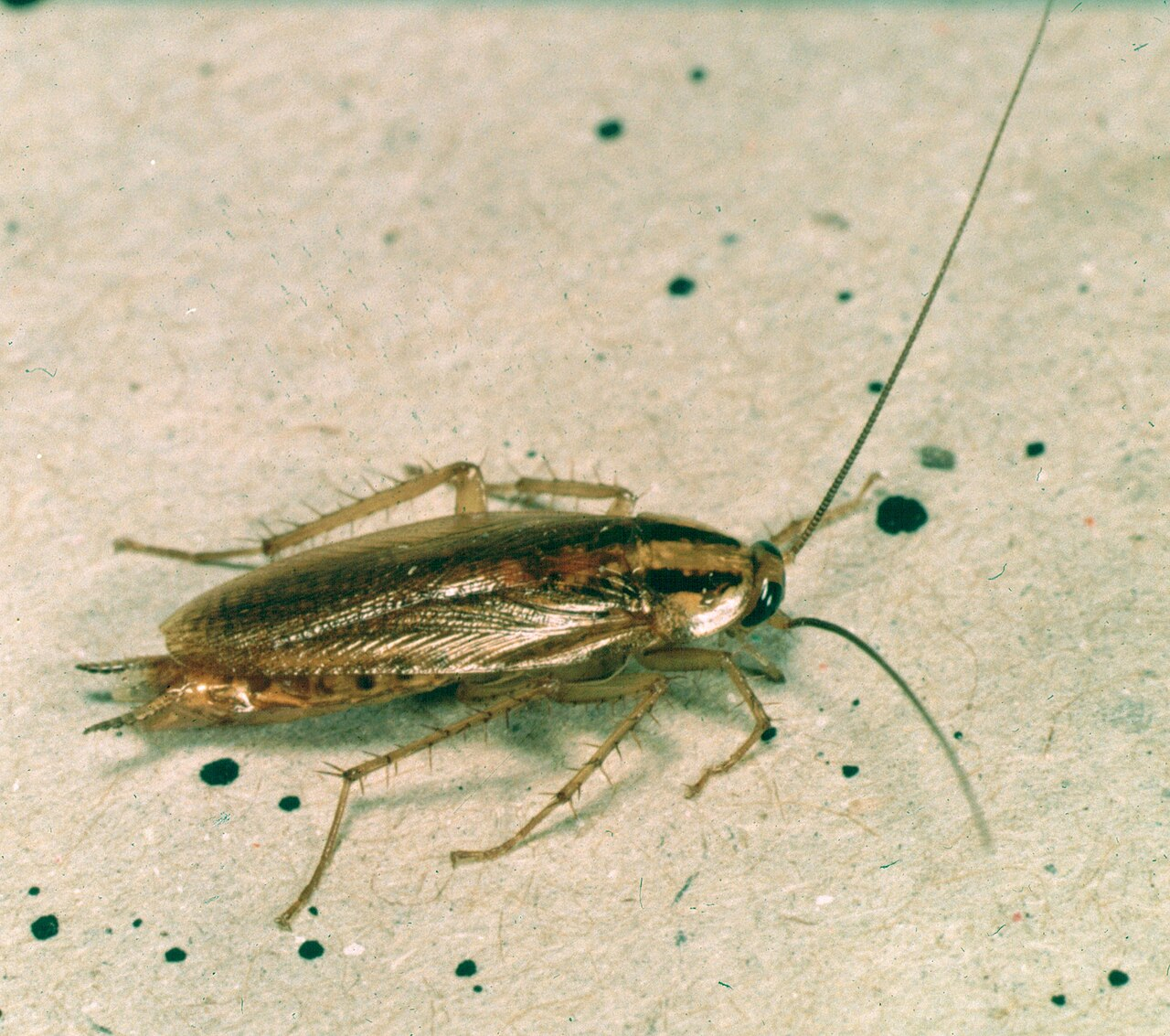
This profile covers one species: the German cockroach (Blattella germanica). Other indoor cockroaches can look similar and need separate comparison.
Quick identity
- Scientific name
- Blattella germanica
- Entity scope
- One cockroach species
- Typical adult size
- About 12–16 mm (roughly 1/2–5/8 in)
- Adult appearance
- Tan to light brown, usually with two dark lengthwise marks behind the head
- Young stage
- Wingless, darker nymphs with a pale central stripe
- Common setting
- Warm, humid indoor harborages near food and water
Key characteristics
- Adults have long antennae and wings, although they usually run rather than fly.
- Two dark longitudinal marks on the pronotum are useful when clearly visible, but no single mark guarantees identification.
- Nymphs are smaller and darker than adults and lack developed wings.
- Body appearance changes with age, lighting, angle, damage, and image quality.
Life stages
01
Ootheca / egg case
A tan-to-brown capsule that contains multiple eggs. Shape and handling differ among cockroach species, so an egg case alone needs context.
02
Nymph
A smaller, wingless stage. German cockroach nymphs are dark with a lighter lengthwise area, but photographs may hide this contrast.
03
Adult
A small tan cockroach with full wings and the characteristic paired dark pronotal marks when the view is clear.
Where it is found
- Kitchens and bathrooms, especially near sinks, drains, plumbing, and food preparation areas.
- Warm appliance voids, cabinet hinges, cracks, crevices, and protected gaps.
- Multi-unit buildings where plumbing, walls, and shared service routes can connect rooms or units.
Behavior and activity
- Primarily active after dark and quick to retreat into narrow harborages.
- Repeated activity concentrates near reliable food, water, warmth, and cover.
- A daytime sighting can have several explanations and does not by itself measure population size.
Diet and resources
- Food residues, grease, crumbs, pet food, and many other organic materials.
- Water from leaks, condensation, sinks, and humid harborages.
Associated signs
Dark specks or small pellets can support nearby cockroach activity when combined with location and other signs.
Cockroach egg casesA capsule-like ootheca is a life-stage clue, not automatic species confirmation.
Cockroach shed skinsCast exoskeletons can indicate development near a harborage when identity and context agree.
Common lookalikes
Why it matters
Why indoor activity matters
German cockroaches can maintain persistent indoor populations. Their body material and waste can contribute to allergen concerns, while activity around food and surfaces creates hygiene concerns. A photograph alone does not prove contamination or disease risk.
- Risk depends on confirmed identity, where activity occurs, and how persistent it is.
- Visible evidence should be interpreted with monitoring and harborage context, not fear-based assumptions.
Management direction
- Confirm the species and map where activity is recurring.
- Reduce accessible food, water, and protected harborage while monitoring the affected area.
- Use targeted, label-compliant management or qualified help when activity persists; detailed treatment belongs in the Guides below.
Related Evidence
Related Guides
Reviewed Community
Have a pest photo to check?
Start a new photo identification. This Profile gives comparison context; it does not transfer certainty or diagnose your image.
Identify a photoReviewed guidance and sources
Last reviewed August 2026. Sources support the claims listed with them; their limits remain part of the review.
- Penn State Extension — German Cockroaches
Supports: Morphology, indoor habitat, behavior, allergens, and integrated management context.
Does not support: Diagnosis from one photograph or universal treatment outcomes.
Scope note: U.S.-oriented residential guidance.
- CDC — Pictorial Keys to Arthropods
Supports: Taxonomic and morphological comparison context.
Does not support: Image-only certainty for a damaged or unclear specimen.
- Bugwood / Clemson–USDA — verified reference image
Supports: Identity and adult visual reference for the pictured specimen.
Does not support: Universal appearance across all life stages.