Quick Answer
Possible rat droppings should be assessed by approximate size, shape, distribution, exact location, and nearby signs. A photograph may support a rodent hypothesis, but it cannot confirm a rat species, how recent the material is, how many animals are present, or whether it carries a pathogen.
Evidence strength
Context-dependent
Several intact pellets in a plausible travel or feeding area are more informative than one fragment or an isolated close-up.
- Measure several intact pieces without handling them; photo perspective can distort apparent size.
- Distribution along edges, near openings, or around food and nesting evidence adds useful context.
- Gnaw marks, tracks, rub marks, nesting material, entry gaps, recurrence, or a documented animal strengthen the rodent interpretation.
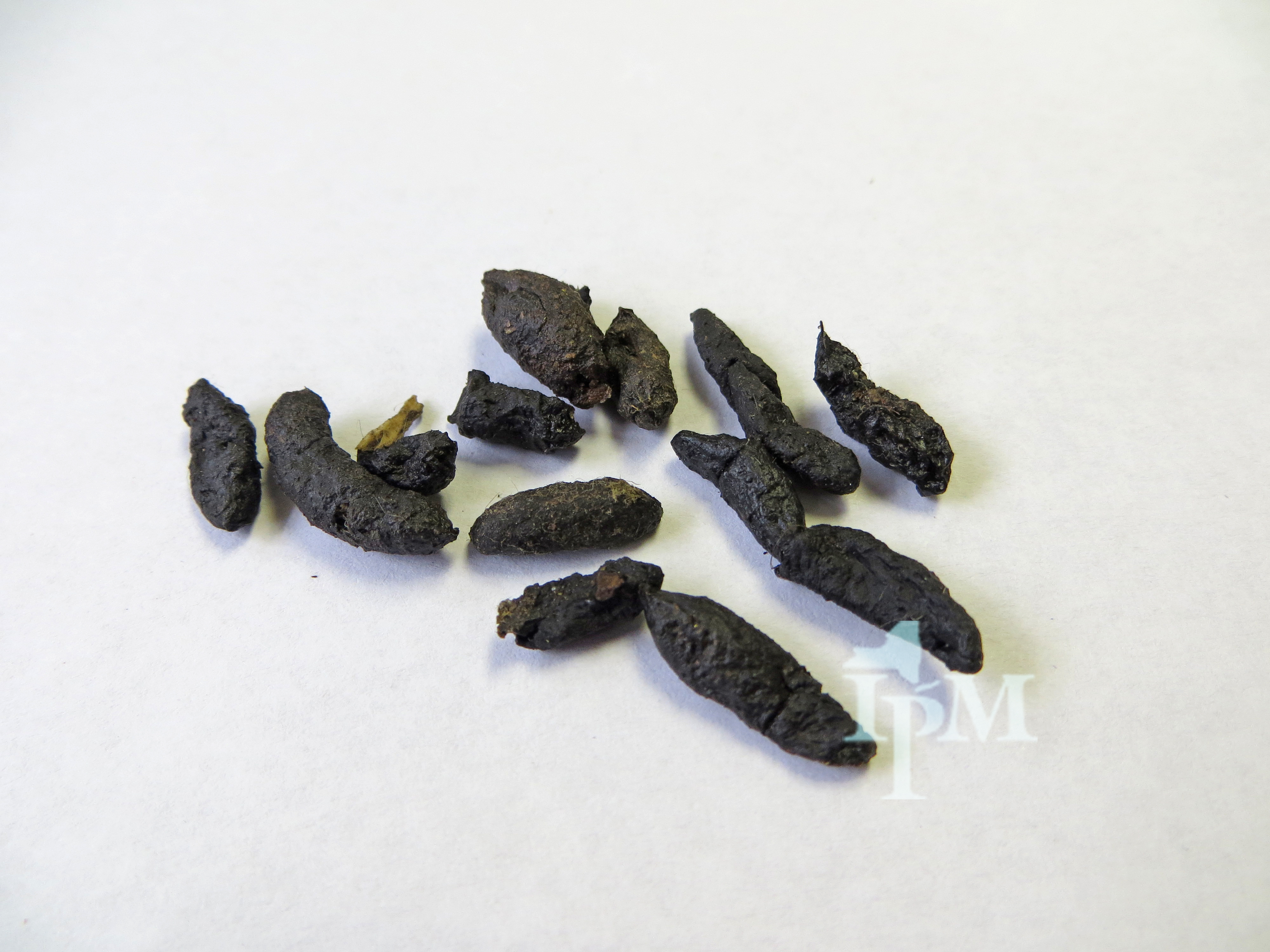
Verified Norway rat reference. The photo is not at a matched scale and does not confirm a user sample; appearance varies, so compare location and other signs too.
- Source
- NY State IPM Program at Cornell University
- Creator
- NY State IPM Program at Cornell University
- License
- CC BY 2.0
- Reference context
- Norway Rat Droppings — NY State IPM Program at Cornell University; original photograph displayed without generative alteration.
What it may indicate
- Rodent activity along a travel route, feeding area, shelter, or entry point when the location and other signs agree.
- A source that deserves documentation and safe cleanup even when the exact animal remains uncertain.
Other explanations
- Mouse or another rodent dropping that cannot be separated reliably without measurements and context.
- Bat guano or droppings from another small mammal.
- Insect debris, seeds, food fragments, or other non-biological material.
What this evidence cannot prove
- That the material came from a Norway rat or any exact species.
- Freshness, population size, infestation severity, nest location, or whether activity is current.
- Whether the material contains a pathogen, caused disease, or is safe to touch based on appearance or color.
Where to check next
- From a safe distance, photograph the material with its location and an approximate scale without touching or moving it.
- Check nearby edges, pipe or utility gaps, doors, cabinets, food storage, and sheltered voids for gnawing, tracks, rub marks, nesting material, and entry points.
- After appropriate cleanup, use dates and non-contact monitoring to record whether material returns and where.
Additional evidence to collect
- A wider image showing distribution and the surrounding route or opening.
- Clear photographs of separate corroborating signs such as gnawing, tracks, rub marks, nesting material, or damaged packaging.
- A safely documented animal or repeated monitoring result interpreted with the site context.
Avoid creating contaminated dust
Treat rodent droppings and contaminated nesting material as potentially hazardous; appearance cannot show whether pathogens are present.
- Keep people and pets away, ventilate where appropriate, wear gloves, and do not dry sweep or vacuum the material.
- Wet contaminated material with an appropriate disinfectant, follow the product label and contact time, then wipe it up using current public-health guidance.
- For large accumulations, confined spaces, ventilation systems, occupational exposure, or illness after substantial exposure, seek qualified local or medical guidance.
Pests associated with similar signs
Relevant Guides
Not sure what you found?
Upload the evidence and its surrounding context. The result supports comparison; it does not create certainty.
Identify a photoExplore next
Reviewed guidance
Last reviewed August 2026. This content supports evidence interpretation and does not replace medical diagnosis, structural inspection, product labels, or local rules.