Quick answer
What to know first
Wet the droppings before removal and avoid any dry-cleaning method that can put contaminated dust into the air.
Start here
- Whether the deposit is small and accessible or extensive and enclosed
- Whether fresh droppings, nesting material, odors, or entry gaps indicate active rodents
Before you act
Do not sweep or vacuum dry rodent waste. First ventilate the area, wear gloves, wet the droppings with an appropriate disinfectant, allow contact time according to the label, then wipe up and bag the waste. Large deposits, enclosed spaces, or possible ventilation contamination need professional assessment.
- Whether the deposit is small and accessible or extensive and enclosed
- Whether fresh droppings, nesting material, odors, or entry gaps indicate active rodents
Action plan
5-Step Treatment Plan
- 1
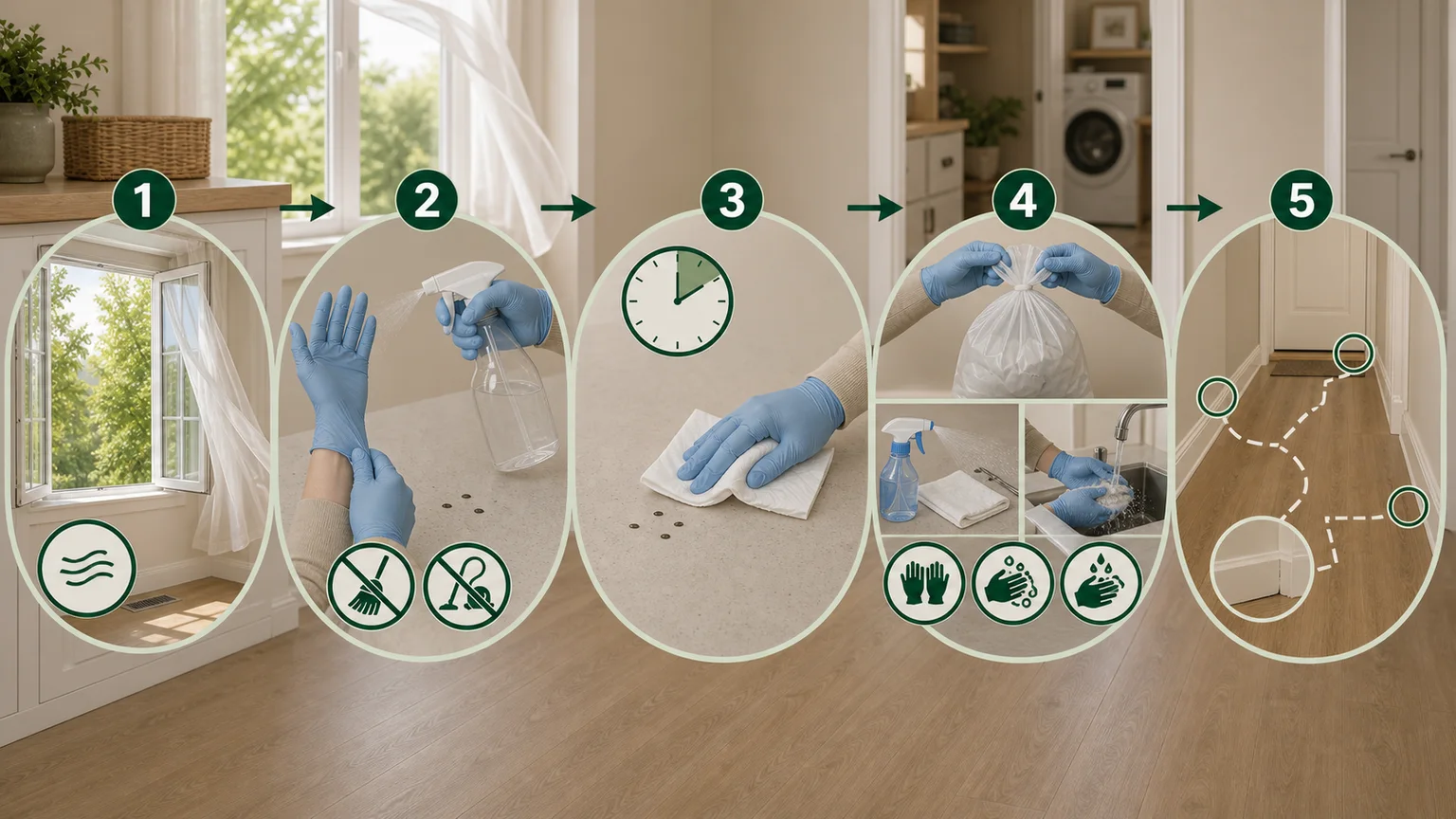
Keep people and pets away, open doors or windows, and leave the area to ventilate.
Keep people and pets away, open doors or windows, and leave the area to ventilate.
- 2
Wear disposable gloves and wet the waste and surrounding surface with disinfectant.
Wear disposable gloves and wet the waste and surrounding surface with disinfectant.
- 3
Wait for the product's stated contact time, then wipe up with disposable towels.
Wait for the product's stated contact time, then wipe up with disposable towels.
- 4
Double-bag the waste, disinfect reusable tools, wash gloved hands, remove gloves, and wash again.
Double-bag the waste, disinfect reusable tools, wash gloved hands, remove gloves, and wash again.
- 5
Inspect and monitor the travel route before sealing gaps or placing traps.
Inspect and monitor the travel route before sealing gaps or placing traps.
What not to do
Sweeping, brushing, or vacuuming dry droppings
Sweeping, brushing, or vacuuming dry droppings
Mixing cleaning products or ignoring disinfectant label contact time
Mixing cleaning products or ignoring disinfectant label contact time
How to judge progress
Recheck the same locations and evidence types instead of judging the result from one quiet interval.
- Track whether this clue persists, returns, or spreads: Fresh dark pellets along walls, inside drawers, or below appliances
- Track whether this clue persists, returns, or spreads: Urine odor, rub marks, gnawing, or nesting material nearby
- Track whether this clue persists, returns, or spreads: New droppings appearing after the cleaned area is monitored
Signs the treatment is not working
- Fresh evidence continues to appear in the same inspected locations.
- Activity spreads to new rooms, materials, or monitoring points.
- The suspected source remains active after the action plan has been followed and reassessed.
After treatment and reducing recurrence
- Store food, pet food, and seed in hard sealed containers.
- Repair gaps around pipes, doors, vents, and foundations after active rodents are controlled.
- Reduce clutter along walls and inspect protected storage areas regularly.
When to call a professional
Use qualified help for heavy accumulations, HVAC contamination, inaccessible voids, repeated activity, or cleanup involving immunocompromised occupants.
Safety notes
- Confirm the pest or evidence before applying a control product.
- Use pesticides only where the product label permits, and follow the full label.
- Do not mix products or improvise heat, electrical, or chemical treatments.
FAQ
Can I vacuum mouse droppings with a household vacuum?
No. Vacuuming dry droppings can disperse contaminated particles. Wet-disinfect and wipe up a small deposit instead.
Does cleanup solve the infestation?
No. Cleanup removes contamination; trapping, monitoring, food control, and exclusion address the active rodent problem.
Not sure the pest is correctly identified?
Upload a clear photo before choosing a treatment path.
Identify from photoExplore next
Continue with verified context
Related pest profiles
Related evidence
Related guides
Reviewed guidance · Last reviewed August 2026
Based on Pest Or Not verified knowledge and authoritative pest-management references.
How we review content