Quick answer
What to know first
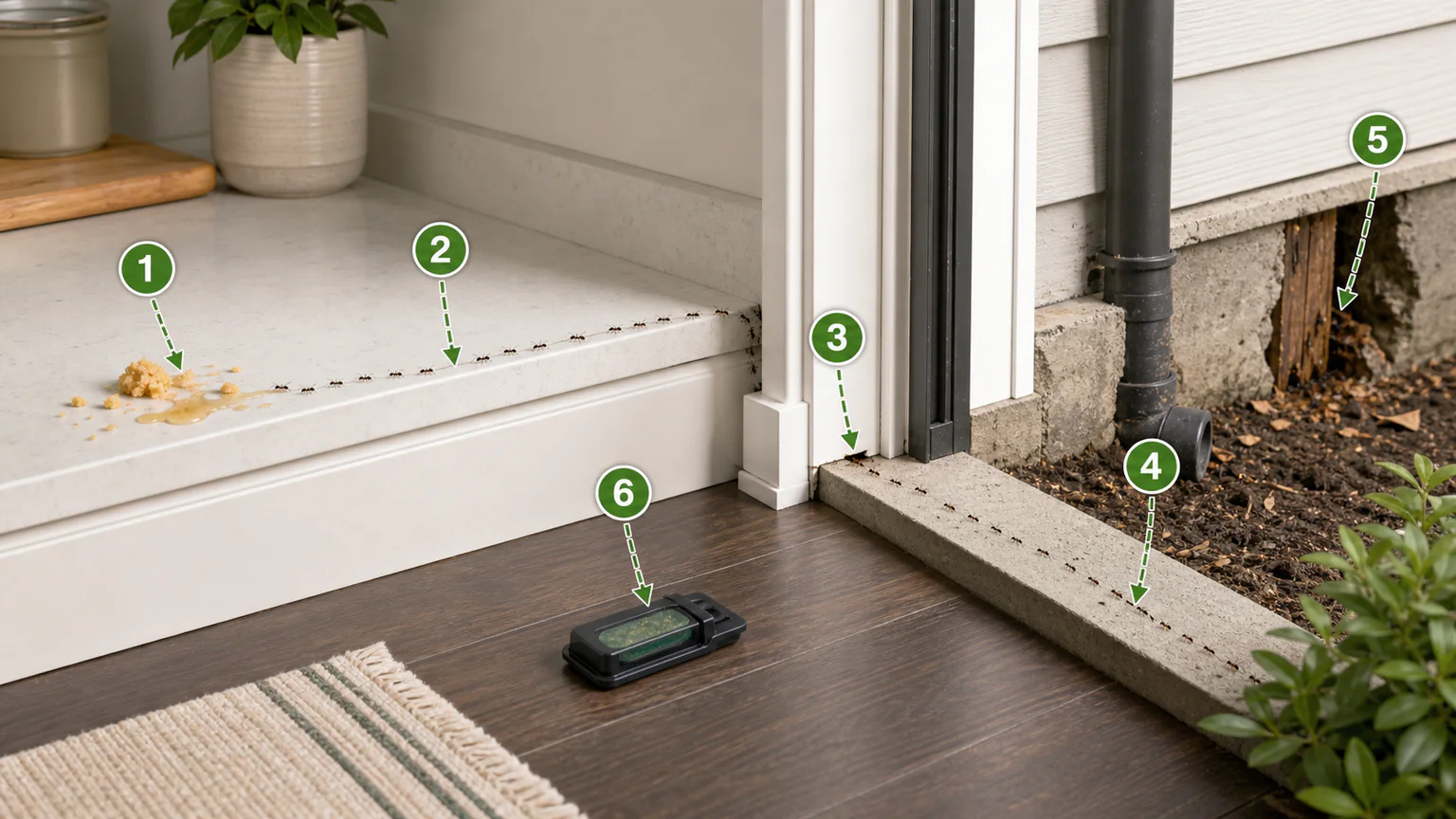
Carpenter ants excavate galleries in wood, often where moisture has already softened the material. Finding large ants indoors, frass, or nighttime trails should trigger a moisture and nest investigation.
Start here
- Large black or reddish ants indoors, especially at night
- Coarse sawdust-like frass below wood openings
- Rustling sounds in wall voids or damaged wood
Before you act
Carpenter ants excavate galleries in wood, often where moisture has already softened the material. Finding large ants indoors, frass, or nighttime trails should trigger a moisture and nest investigation.
- Large black or reddish ants indoors, especially at night
- Coarse sawdust-like frass below wood openings
- Rustling sounds in wall voids or damaged wood
Action plan
4-Step Treatment Plan
- 1
Look for moisture sources near the activity
Look for moisture sources near the activity.
- 2
Check window frames, door frames, decks, and roofline wood
Check window frames, door frames, decks, and roofline wood.
- 3
Follow trails at dusk or night to locate nest direction
Follow trails at dusk or night to locate nest direction.
- 4
Avoid sealing galleries before the nest is addressed
Avoid sealing galleries before the nest is addressed.
What not to do
Spraying visible workers before identifying the trail and nest source
Spraying visible workers before identifying the trail and nest source
Leaving moisture, crumbs, or honeydew-producing insects untreated
Leaving moisture, crumbs, or honeydew-producing insects untreated
Sealing one gap while active trails continue elsewhere
Sealing one gap while active trails continue elsewhere
How to judge progress
Recheck the same locations and evidence types instead of judging the result from one quiet interval.
- Track whether this clue persists, returns, or spreads: Large black or reddish ants indoors, especially at night
- Track whether this clue persists, returns, or spreads: Coarse sawdust-like frass below wood openings
- Track whether this clue persists, returns, or spreads: Rustling sounds in wall voids or damaged wood
- Track whether this clue persists, returns, or spreads: Activity around wet trim, roof leaks, decks, or window frames
Signs the treatment is not working
- Fresh evidence continues to appear in the same inspected locations.
- Activity spreads to new rooms, materials, or monitoring points.
- The suspected source remains active after the action plan has been followed and reassessed.
After treatment and reducing recurrence
- Repair leaks and replace moisture-damaged wood.
- Keep firewood away from the house.
- Trim branches that touch the structure.
- Maintain drainage and ventilation in crawl spaces.
When to call a professional
Call a professional when frass, winged ants indoors, or wall activity suggests a hidden nest or structural wood involvement.
Safety notes
- Confirm the pest or evidence before applying a control product.
- Use pesticides only where the product label permits, and follow the full label.
- Do not mix products or improvise heat, electrical, or chemical treatments.
FAQ
Do carpenter ants eat wood?
No. They excavate wood to make galleries, but the damage can still be serious.
Does frass always mean termites?
No. Carpenter ant frass is usually coarse and may include insect parts, unlike drywood termite pellets.
Not sure the pest is correctly identified?
Upload a clear photo before choosing a treatment path.
Identify from photoExplore next
Continue with verified context
Related pest profiles
Related evidence
Related guides
Reviewed guidance · Last reviewed August 2026
Based on Pest Or Not verified knowledge and authoritative pest-management references.
How we review content