Quick answer
What to know first
Carpenter ants excavate wood and may leave coarse frass with insect parts. Termites consume wood and may leave mud tubes, pellet-like frass, swarm wings, or layered internal damage.
Start here
- Coarse frass, insect parts, and large ants for carpenter ants
- Mud tubes, pellet frass, wings, or hollow wood for termites
- Moisture-damaged wood, leaks, crawl spaces, decks, and trim
Side-by-side comparison
| Diagnostic clue | How to compare Carpenter Ants and Termites | How much it proves |
|---|---|---|
| Clue 1 | Carpenter ant frass is often coarse and may contain insect parts | Use with the other listed clues and the finding location; one clue alone may not confirm the source. |
| Clue 2 | Subterranean termites often build mud tubes from soil to wood | Use with the other listed clues and the finding location; one clue alone may not confirm the source. |
| Clue 3 | Drywood termites may leave small pellet-like frass | Use with the other listed clues and the finding location; one clue alone may not confirm the source. |
| Clue 4 | Both problems can be worse near moisture-damaged wood | Use with the other listed clues and the finding location; one clue alone may not confirm the source. |
Most useful distinguishing clues
- Carpenter ant frass is often coarse and may contain insect parts
- Subterranean termites often build mud tubes from soil to wood
- Drywood termites may leave small pellet-like frass
- Both problems can be worse near moisture-damaged wood
Location and context
Carpenter ants and termites can both involve wood, but they behave differently. Carpenter ants excavate galleries and push out coarse debris, while termites consume cellulose and may leave mud tubes, pellets, or hidden galleries.
- Coarse frass, insect parts, and large ants for carpenter ants
- Mud tubes, pellet frass, wings, or hollow wood for termites
- Moisture-damaged wood, leaks, crawl spaces, decks, and trim
Evidence differences
- Compare this clue with the finding location and the other listed evidence: Carpenter ant frass is often coarse and may contain insect parts
- Compare this clue with the finding location and the other listed evidence: Subterranean termites often build mud tubes from soil to wood
- Compare this clue with the finding location and the other listed evidence: Drywood termites may leave small pellet-like frass
What photos alone cannot confirm
A blurry, damaged, or out-of-context photo may hide the feature that separates the alternatives. A photo also may not establish the source, extent, or whether the evidence is current.
What to inspect next
- 1
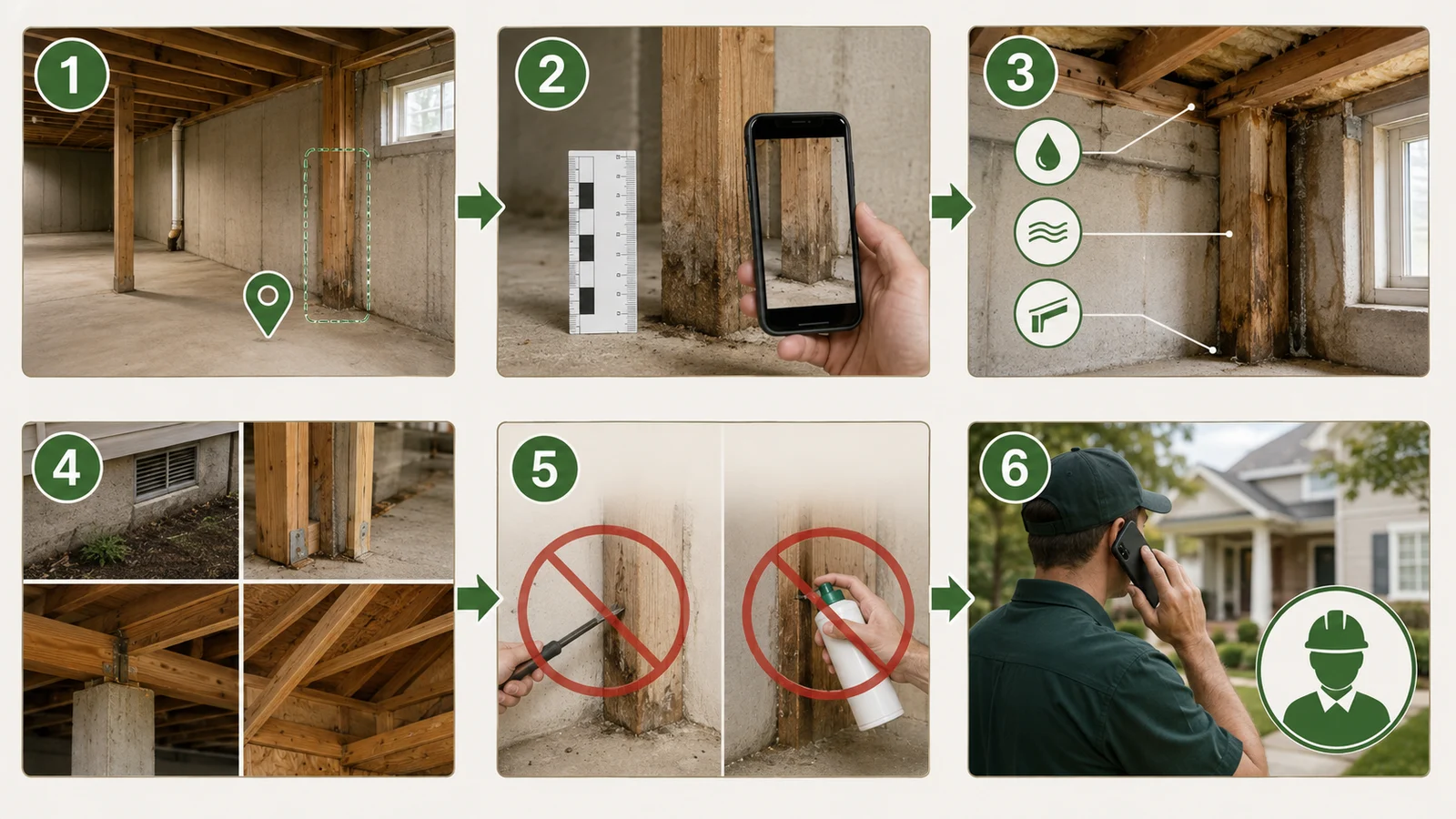
Photograph debris, insects, wings, tubes, and damaged wood
Photograph debris, insects, wings, tubes, and damaged wood.
- 2
Check moisture sources around windows, doors, decks, roofs, and crawl spaces.
Check moisture sources around windows, doors, decks, roofs, and crawl spaces.
- 3
Compare debris texture and look for mud tubes or pellet frass
Compare debris texture and look for mud tubes or pellet frass.
- 4
Get inspection when structural wood may be involved
Get inspection when structural wood may be involved.
What to do depending on the result
Clues favor Carpenter Ants
Document the strongest matching features and follow the actions that apply to Carpenter Ants; keep checking for corroborating evidence.
Clues favor Termites
Document the strongest matching features and follow the actions that apply to Termites; keep checking for corroborating evidence.
Still ambiguous
Keep a specimen or clearer photos when safe, and avoid treatment based on one uncertain distinction.
What not to assume
Assuming all sawdust-like debris is termite frass
Assuming all sawdust-like debris is termite frass
Sealing galleries before the nest or colony is identified
Sealing galleries before the nest or colony is identified
Ignoring moisture that supports both problems
Ignoring moisture that supports both problems
When to call a professional
Call a professional when evidence involves structural wood, indoor swarmers, mud tubes, recurring frass, or hidden wall activity.
FAQ
Do carpenter ants eat wood?
No. They excavate wood for nesting, but the galleries can still weaken damaged areas.
Which is worse, carpenter ants or termites?
Both need attention. Termites often create more hidden structural risk, but carpenter ants can indicate moisture-damaged wood.
Still comparing the possibilities?
Upload a clear photo and use the result alongside the distinguishing clues.
Identify from photoExplore next
Continue with verified context
Related pest profiles
Related evidence
Related guides
Reviewed guidance · Last reviewed August 2026
Based on Pest Or Not verified knowledge and authoritative pest-management references.
How we review content