Quick answer
What to know first
Mouse control should begin where fresh droppings are found. Those areas show travel paths, food sources, and the best trap locations, especially along walls and hidden edges.
Start here
- Rice-sized pointed droppings near cabinets, pantries, or baseboards
- Small entry gaps around pipes, doors, foundations, or utility lines
- Chewed packaging, nesting material, or nighttime sounds
Before you act
Mouse control should start where droppings are found. Fresh droppings show travel routes and feeding areas, which makes trap placement and exclusion more effective.
- Rice-sized pointed droppings near cabinets, pantries, or baseboards
- Small entry gaps around pipes, doors, foundations, or utility lines
- Chewed packaging, nesting material, or nighttime sounds
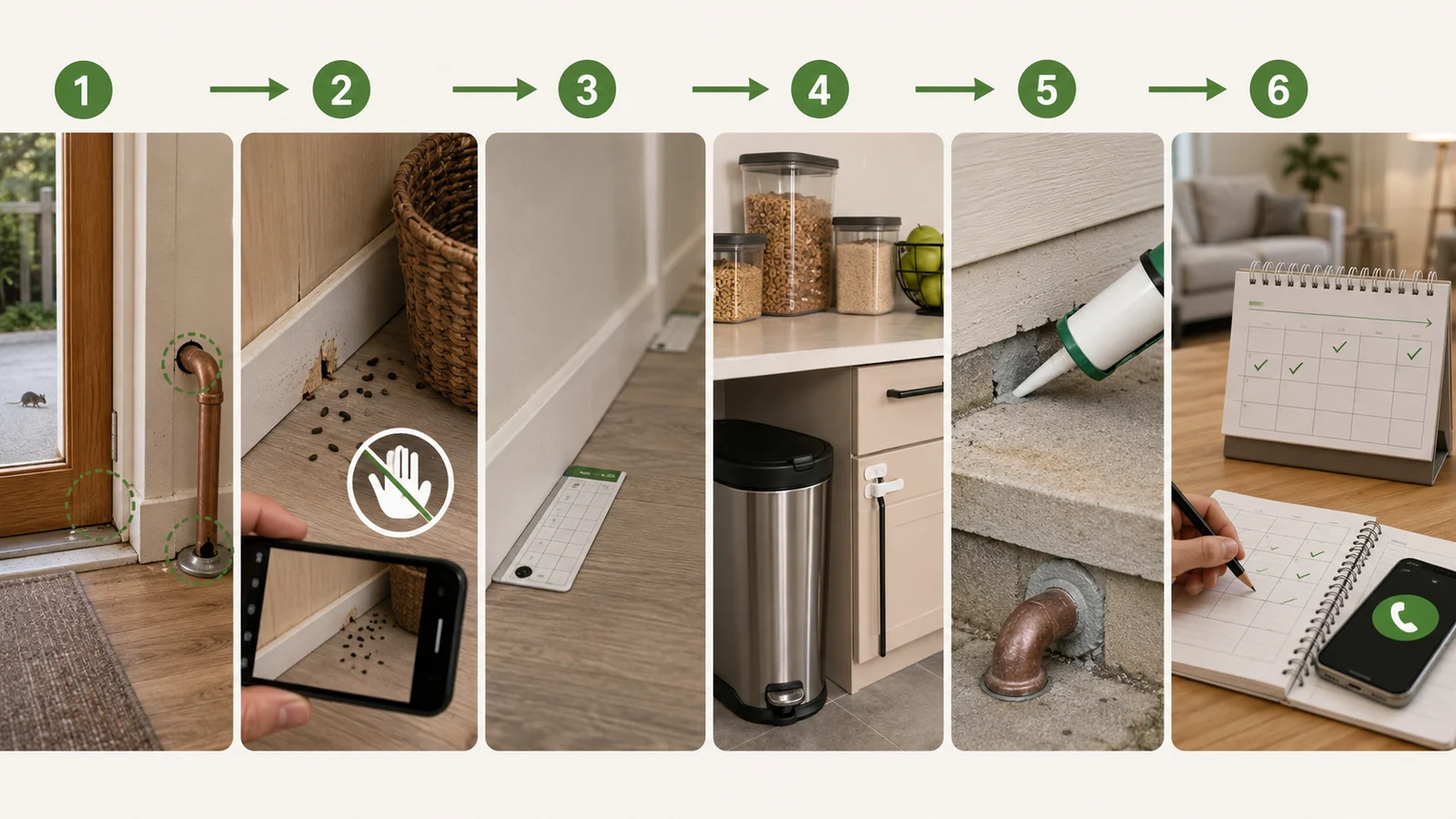
Action plan
4-Step Treatment Plan
- 1
Do not sweep dry droppings
Do not sweep dry droppings; disinfect first and use gloves.
- 2
Place traps along walls, behind appliances, and near droppings
Place traps along walls, behind appliances, and near droppings.
- 3
Seal small entry gaps with durable materials mice cannot chew through.
Seal small entry gaps with durable materials mice cannot chew through.
- 4
Remove food access and clean crumbs nightly
Remove food access and clean crumbs nightly.
What not to do
Sweeping or vacuuming dry droppings
Sweeping or vacuuming dry droppings
Placing one trap in the middle of a room
Placing one trap in the middle of a room
Sealing only visible gaps while food remains accessible
Sealing only visible gaps while food remains accessible
How to judge progress
Recheck the same locations and evidence types instead of judging the result from one quiet interval.
- Track whether this clue persists, returns, or spreads: Small pointed droppings near food, cabinets, or edges
- Track whether this clue persists, returns, or spreads: Chewed packaging or nesting material
- Track whether this clue persists, returns, or spreads: Noises in walls, cabinets, or ceilings
- Track whether this clue persists, returns, or spreads: Small gaps around pipes, doors, or foundation seams
Signs the treatment is not working
- Fresh evidence continues to appear in the same inspected locations.
- Activity spreads to new rooms, materials, or monitoring points.
- The suspected source remains active after the action plan has been followed and reassessed.
After treatment and reducing recurrence
- Use sealed containers for grains, pet food, and snacks.
- Keep garage and storage areas organized.
- Install door sweeps on exterior doors.
- Recheck traps and monitors until activity stops.
When to call a professional
Professional help is recommended when droppings keep appearing, activity is inside walls, or entry points are hard to locate.
Safety notes
- Confirm the pest or evidence before applying a control product.
- Use pesticides only where the product label permits, and follow the full label.
- Do not mix products or improvise heat, electrical, or chemical treatments.
FAQ
How many traps should be used?
Use several traps in active zones rather than one trap in the middle of a room.
Are droppings dangerous?
They can carry pathogens. Wet them with disinfectant before cleanup and avoid creating dust.
Not sure the pest is correctly identified?
Upload a clear photo before choosing a treatment path.
Identify from photoExplore next
Continue with verified context
Related pest profiles
Related evidence
Related guides
Reviewed guidance · Last reviewed August 2026
Based on Pest Or Not verified knowledge and authoritative pest-management references.
How we review content