Quick answer
What to know first
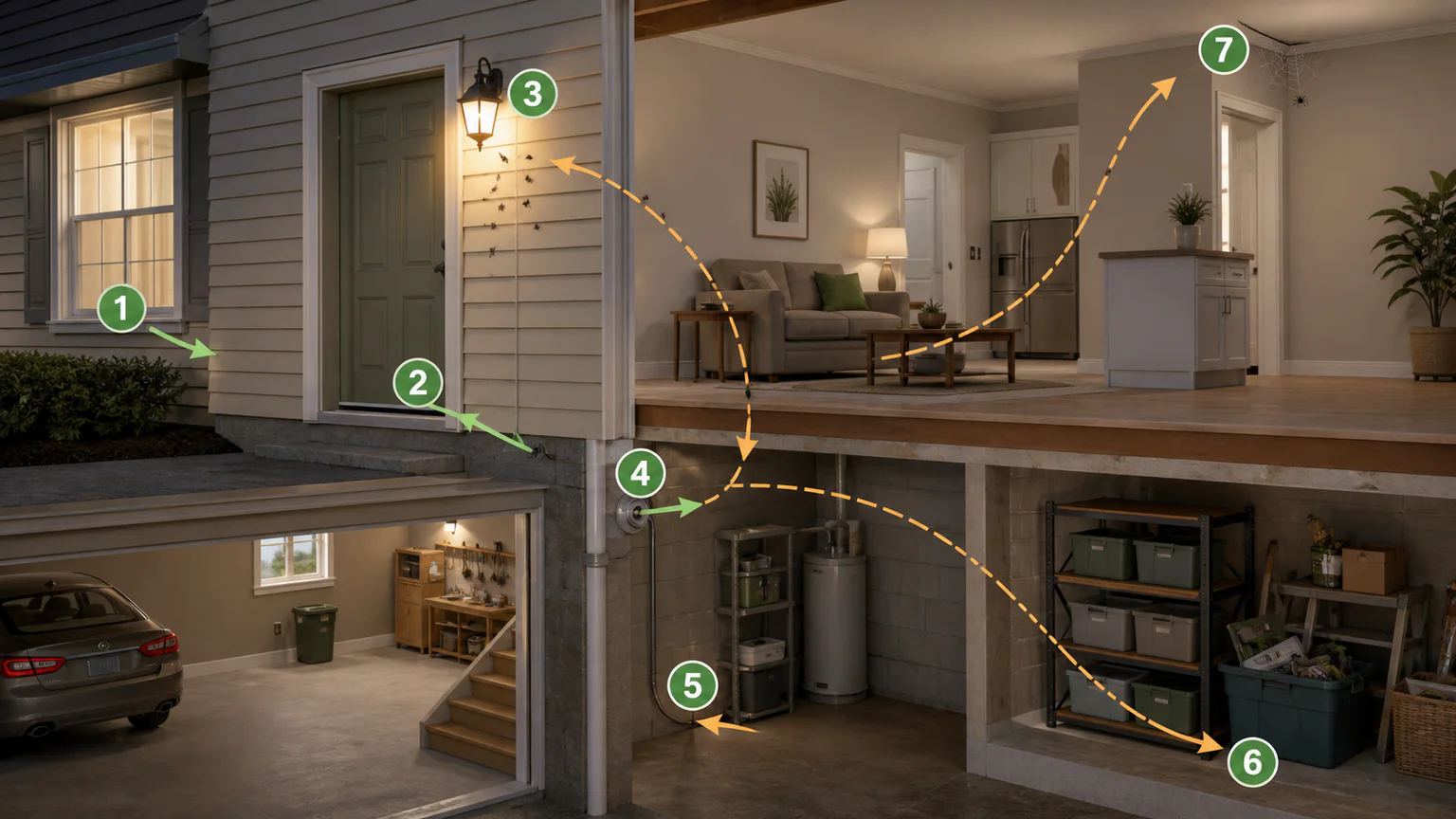
Spider prevention is mostly habitat and prey control. Spiders follow insects and sheltered hiding areas, so reducing webs, clutter, and entry points lowers indoor encounters.
Start here
- Webs in corners, garages, sheds, or crawl spaces
- Egg sacs near undisturbed storage areas
- Spiders appearing near lights or insect activity
Highest-impact prevention steps
- Keep storage areas organized and off the floor.
- Move firewood and debris away from the structure.
- Use sealed bins instead of cardboard boxes.
- Check shoes, gloves, and outdoor gear before use.
Why activity becomes established
Spider prevention is mostly habitat and prey control. Spiders follow insects and sheltered hiding areas, so reducing webs, clutter, and entry points lowers indoor encounters.
Entry points, attractants, and warning clues
Webs in corners, garages, sheds, or crawl spaces
Webs in corners, garages, sheds, or crawl spaces
Egg sacs near undisturbed storage areas
Egg sacs near undisturbed storage areas
Spiders appearing near lights or insect activity
Spiders appearing near lights or insect activity
Gaps around doors, vents, windows, or utility openings
Gaps around doors, vents, windows, or utility openings
Area-by-area checklist
- 1
Remove webs and egg sacs with a vacuum or long-handled tool
Remove webs and egg sacs with a vacuum or long-handled tool.
- 2
Reduce insects around exterior lights and doors
Reduce insects around exterior lights and doors.
- 3
Seal gaps, install door sweeps, and repair screens
Seal gaps, install door sweeps, and repair screens.
- 4
Wear gloves when moving stored boxes, firewood, or outdoor items
Wear gloves when moving stored boxes, firewood, or outdoor items.
What people commonly miss
Applying pesticides before identifying the pest or evidence
Applying pesticides before identifying the pest or evidence
Treating one symptom while moisture, food, or entry sources remain
Treating one symptom while moisture, food, or entry sources remain
Skipping monitoring after the first cleanup or treatment
Skipping monitoring after the first cleanup or treatment
Monitoring routine
- Recheck on a consistent schedule: Webs in corners, garages, sheds, or crawl spaces
- Recheck on a consistent schedule: Egg sacs near undisturbed storage areas
- Recheck on a consistent schedule: Spiders appearing near lights or insect activity
Signs prevention is failing
- New, recurring, or spreading evidence: Webs in corners, garages, sheds, or crawl spaces
- New, recurring, or spreading evidence: Egg sacs near undisturbed storage areas
- New, recurring, or spreading evidence: Spiders appearing near lights or insect activity
- New, recurring, or spreading evidence: Gaps around doors, vents, windows, or utility openings
What to do if activity appears
Call a professional when dangerous species are suspected, spiders are numerous, or activity is concentrated in crawl spaces or garages.
- Keep storage areas organized and off the floor.
- Move firewood and debris away from the structure.
- Use sealed bins instead of cardboard boxes.
FAQ
Are most house spiders dangerous?
No. Most are nuisance pests, but certain species and bite symptoms should be taken seriously.
Why do spiders come indoors?
They enter for shelter, prey, and suitable hiding places.
Found signs despite prevention?
Upload the specimen or evidence before deciding what to do next.
Identify the evidenceExplore next
Continue with verified context
Related pest profiles
Related evidence
Related guides
Reviewed guidance · Last reviewed August 2026
Based on Pest Or Not verified knowledge and authoritative pest-management references.
How we review content