Quick answer
What to know first
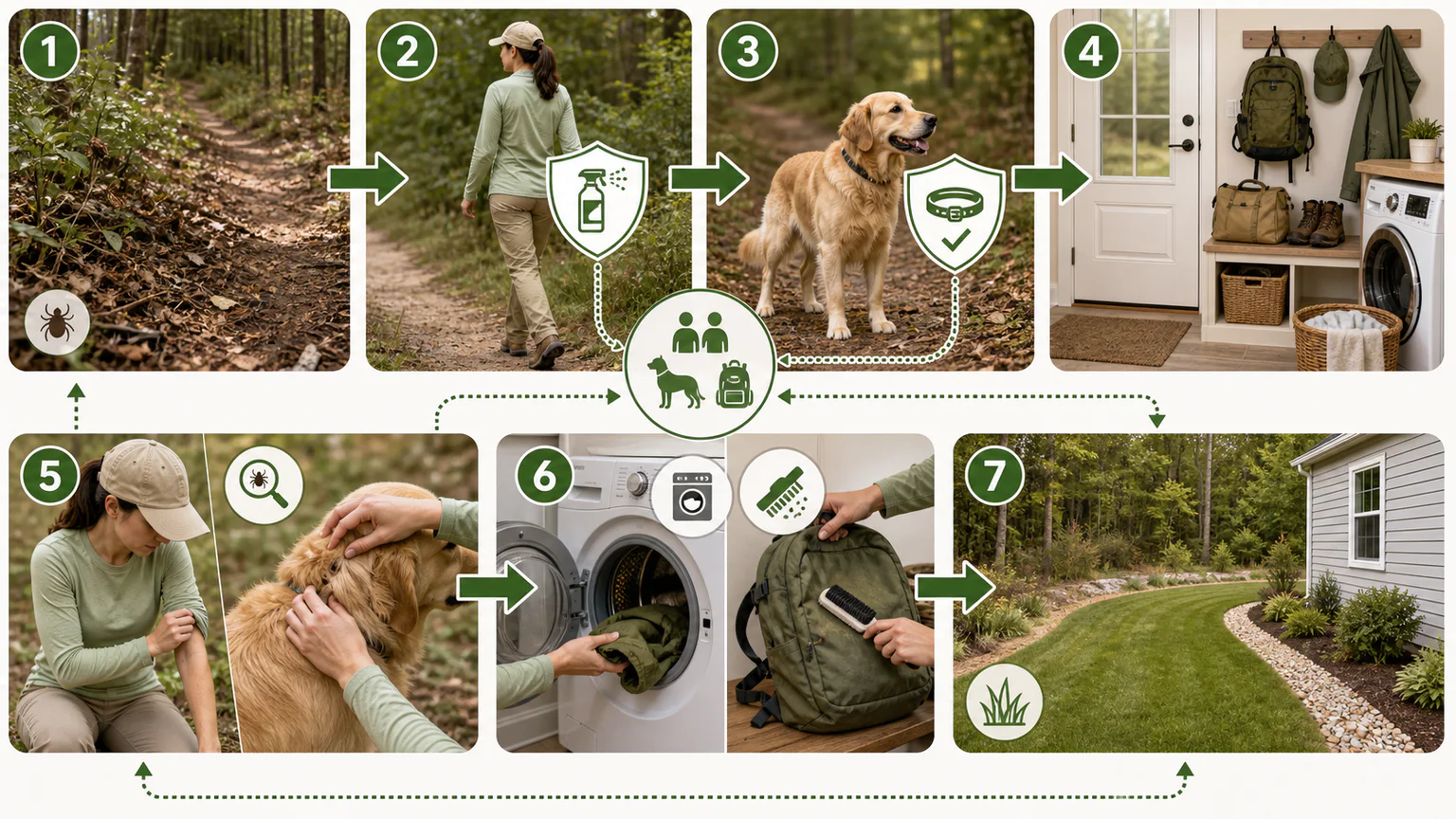
Tick prevention combines personal protection, pet care, and habitat management. Ticks wait in grass, leaf litter, brush edges, and wildlife travel zones, so exposure often happens near yard borders and trails.
Start here
- Ticks attached to people or pets after outdoor activity
- Bites near waistbands, socks, hairline, or skin folds
- Ticks found in brush, tall grass, or leaf litter
Highest-impact prevention steps
- Keep grass mowed and remove leaf litter near activity areas.
- Create a dry barrier between lawn and wooded edges.
- Discourage deer and rodents near the home.
- Treat clothing or gear according to product labels.
Why activity becomes established
Tick prevention combines personal protection, pet care, and habitat management. Ticks wait in grass, leaf litter, brush edges, and wildlife travel zones, so exposure often happens near yard borders and trails.
Entry points, attractants, and warning clues
Ticks attached to people or pets after outdoor activity
Ticks attached to people or pets after outdoor activity
Bites near waistbands, socks, hairline, or skin folds
Bites near waistbands, socks, hairline, or skin folds
Ticks found in brush, tall grass, or leaf litter
Ticks found in brush, tall grass, or leaf litter
Pets scratching after being outdoors
Pets scratching after being outdoors
Area-by-area checklist
- 1
Do full-body tick checks after outdoor activity
Do full-body tick checks after outdoor activity.
- 2
Use fine-tipped tweezers to remove attached ticks close to the skin
Use fine-tipped tweezers to remove attached ticks close to the skin.
- 3
Save or photograph the tick if identification is needed
Save or photograph the tick if identification is needed.
- 4
Use EPA-registered repellents and veterinarian-approved pet prevention.
Use EPA-registered repellents and veterinarian-approved pet prevention.
What people commonly miss
Applying pesticides before identifying the pest or evidence
Applying pesticides before identifying the pest or evidence
Treating one symptom while moisture, food, or entry sources remain
Treating one symptom while moisture, food, or entry sources remain
Skipping monitoring after the first cleanup or treatment
Skipping monitoring after the first cleanup or treatment
Monitoring routine
- Recheck on a consistent schedule: Ticks attached to people or pets after outdoor activity
- Recheck on a consistent schedule: Bites near waistbands, socks, hairline, or skin folds
- Recheck on a consistent schedule: Ticks found in brush, tall grass, or leaf litter
Signs prevention is failing
- New, recurring, or spreading evidence: Ticks attached to people or pets after outdoor activity
- New, recurring, or spreading evidence: Bites near waistbands, socks, hairline, or skin folds
- New, recurring, or spreading evidence: Ticks found in brush, tall grass, or leaf litter
- New, recurring, or spreading evidence: Pets scratching after being outdoors
What to do if activity appears
Contact a healthcare provider for symptoms after a bite. Consider professional yard treatment when ticks remain common around play areas or pet zones.
- Keep grass mowed and remove leaf litter near activity areas.
- Create a dry barrier between lawn and wooded edges.
- Discourage deer and rodents near the home.
FAQ
Should ticks be burned or covered with oil?
No. Remove ticks with tweezers using steady pressure close to the skin.
Can ticks live indoors?
Most do not establish indoors, but brown dog ticks can become indoor pests in some cases.
Found signs despite prevention?
Upload the specimen or evidence before deciding what to do next.
Identify the evidenceExplore next
Continue with verified context
Related evidence
Related guides
Reviewed guidance · Last reviewed August 2026
Based on Pest Or Not verified knowledge and authoritative pest-management references.
How we review content