Quick answer
What to know first
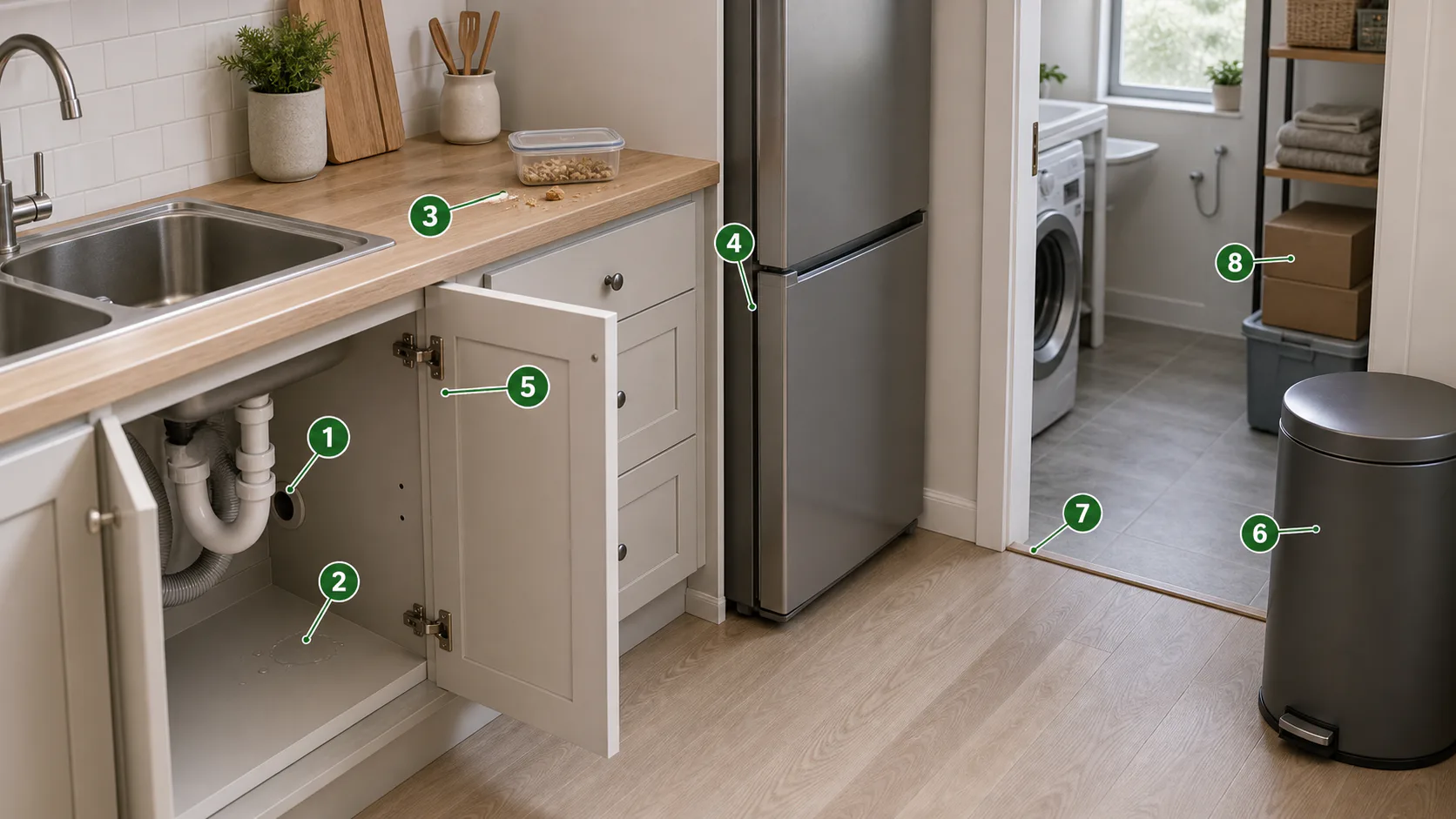
Cockroach prevention works best when food residue, water, hiding space, and entry routes are reduced together. Prioritize overnight kitchen cleanup, leak repair, protected-edge monitoring, and sealing plumbing or cabinet gaps after checking for active traffic.
Start here
- Remove overnight food and water access.
- Place monitors along protected edges near sinks and appliances.
- Inspect plumbing penetrations, cabinet backs, deliveries, and cardboard.
Highest-impact prevention steps
- Store food and pet food in sealed containers and remove waste regularly.
- Dry sinks and counters overnight; repair leaks and condensation sources.
- Vacuum crumbs and grease from appliance edges, hinges, and cabinet corners.
- Reduce cardboard and dense clutter near warm or damp areas.
- Seal confirmed entry gaps and keep monitors in place.
Why cockroaches get inside and establish
Cockroaches persist where food, moisture, warmth, narrow harborages, and access overlap. Deliveries, used appliances, drains, utility gaps, and shared walls can introduce activity even in a regularly cleaned home.
Room-by-room checklist
Kitchen
Clean under the refrigerator and range; inspect hinges and appliance motors; seal food; empty recycling; keep sink areas dry.
Bathroom
Repair leaks, inspect vanity voids and pipe gaps, reduce damp clutter, and monitor protected edges.
Utility areas
Check water heaters, laundry plumbing, floor drains, stored cardboard, and warm equipment.
Entry points
Inspect door sweeps, plumbing penetrations, cabinet backs, shared-wall gaps, boxes, and used appliances before sealing.
What people commonly miss
- Slow plumbing leaks and condensation behind cabinets.
- Grease film and crumbs under heavy appliances.
- Warm voids around motors and electronics.
- Cardboard cases, grocery bags, and used appliances.
- Neighboring-unit or shared utility routes in apartments.
Monitoring routine
- 1
Place
Put sticky monitors tight to walls and protected edges near sinks, appliances, and pipe openings—not in open floor centers.
- 2
Record
Label location and date so catches can be compared over time.
- 3
Review
Check on a consistent schedule and move effort toward the highest-activity zones.
- 4
Maintain
Replace full or dusty monitors and continue after visible activity stops.
Signs prevention is failing
- Fresh droppings reappear after cleaning.
- Egg cases, nymphs, or cast skins appear in protected areas.
- Monitor catches rise or spread to additional rooms.
- Daytime sightings become frequent, which can accompany heavier activity.
What to do if activity appears
Document the signs, identify the likely cockroach group when possible, and locate the highest-activity harborages. Keep sanitation and monitoring in place; use only labeled products as directed or seek professional help for widespread or shared-building activity.
FAQ
Do cockroaches mean a home is dirty?
Not always. Roaches can enter through shared walls, boxes, drains, and deliveries, but sanitation reduces survival and breeding.
Where should monitors go?
Place them where walls meet appliances, pipes, cabinets, and other protected edges.
Found signs despite prevention?
Upload what you're seeing.
Identify the evidenceExplore next
Continue with verified context
Related pest profiles
Related evidence
Related guides
Reviewed guidance · Last reviewed August 2026
Based on Pest Or Not verified knowledge and authoritative pest-management references.
How we review content