Geverifieerd plaagprofiel
How to Identify Carpet Beetles
Gecontroleerd July 2026
Small beetles whose larvae feed on wool, fur, feathers, stored fabrics, and lint in quiet indoor areas.
Dit is een geverifieerd profiel. AI-resultaten van uploads staan op een aparte resultaatpagina.
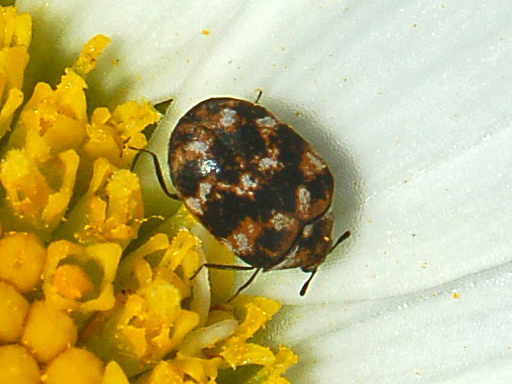
Carpet Beetles
Dermestidae
Small beetles whose larvae feed on wool, fur, feathers, stored fabrics, and lint in quiet indoor areas.
Also known as carpet beetle, carpet beetles.
Practical identification guidance
How to confirm Carpet Beetles
Adult carpet beetles are small, rounded beetles; their banded, hairy larvae are the stage that damages natural-fiber materials.
Check these details
- Look for adults at windows and larvae in dark textile storage areas.
- Check for irregular surface grazing, shed skins, and lint or hair accumulations.
Avoid a false match
Lady beetles resemble some adults, while clothes moth larvae may cause similar fabric damage.
Best next step
Identify the larval food source before vacuuming and treating affected materials.
Visual Confirmation Checklist
Use several clues together before confirming this pest. One photo or one sign can be misleading.
- Check wood and stored materials for visible carpet beetles activity.
- Look for evidence such as damaged stored items, larvae, adult insects.
- Compare size, location, and evidence before choosing a treatment.
Signs of Infestation
- Damaged stored items near wood and stored materials
- Larvae near wood and stored materials
- Adult insects near wood and stored materials
Habitat
- wood
- stored materials
- structural voids
Health Risk
Carpet Beetles are mainly a nuisance pest unless activity becomes widespread.
First Steps
- Photograph or document the pest and evidence
- Check source areas and nearby entry points
- Clean or isolate the source area and monitor activity
Treatment Methods
- Confirm pest identity and source area
- Use targeted baits, traps, exclusion, or labeled products
- Remove food, water, shelter, and entry points
Professional Treatment Options
Call a professional when carpet beetles activity is repeated, widespread, or close to people, pets, food, or structural areas.
Prevention Tips
- Keep food sealed and surfaces clean
- Seal cracks around doors, windows, pipes, and foundations
- Reduce moisture, clutter, and outdoor harborage
Evidence and Comparison
Evidence to Compare
- Check for evidence such as damaged stored items.
- Check for evidence such as larvae.
- Check for evidence such as adult insects.
Commonly Confused With
- Compare carefully with bed bugs.
- Compare carefully with german cockroach.
- Compare carefully with american cockroach.
Life Cycle
Carpet Beetles are most active during year-round indoors conditions and develop through species-specific life stages.
Gecontroleerde plaaginformatie
Dit profiel komt uit de geverifieerde Pest Or Not-bibliotheek en ondersteunt visuele vergelijking, risico-inschatting en praktische vervolgstappen.
Laatst beoordeeld July 2026
Pest Or Not is informatief en vervangt geen medisch advies, productetiketten, lokale regels of een professionele inspectie bij een verhoogd risico.
AI kan helpen bij het classificeren van uploads en het structureren van informatie. Openbare informatie wordt vóór publicatie getoetst aan de geverifieerde database en bronnen.
Hoe wij inhoud beoordelen