Quick answer
What to know first
Bed bug eggs are tiny pale capsules glued into seams, cracks, or furniture joints near resting areas. Carpet beetle larvae are larger, fuzzy or bristly, and often found near lint, wool, rugs, vents, or stored fabrics.
Start here
- Whether the object is an egg-like capsule or a moving bristly larva
- Mattress seams, box springs, headboards, and bed frame cracks
- Closets, vents, rugs, lint buildup, pet hair, and stored textiles
Side-by-side comparison
| Diagnostic clue | How to compare Bed Bug Eggs and Carpet Beetle Larvae | How much it proves |
|---|---|---|
| Clue 1 | Bed bug eggs are very small and often hidden near bed bug harborages | Use with the other listed clues and the finding location; one clue alone may not confirm the source. |
| Clue 2 | Carpet beetle larvae are bristly and may crawl near fabric or lint | Use with the other listed clues and the finding location; one clue alone may not confirm the source. |
| Clue 3 | Bed bug evidence often includes stains, shed skins, bites, or live insects | Use with the other listed clues and the finding location; one clue alone may not confirm the source. |
| Clue 4 | Carpet beetle evidence often includes fabric damage, larvae, and shed larval skins | Use with the other listed clues and the finding location; one clue alone may not confirm the source. |
Most useful distinguishing clues
- Bed bug eggs are very small and often hidden near bed bug harborages
- Carpet beetle larvae are bristly and may crawl near fabric or lint
- Bed bug evidence often includes stains, shed skins, bites, or live insects
- Carpet beetle evidence often includes fabric damage, larvae, and shed larval skins
Location and context
Small pale objects near a bed can create panic, but bed bug eggs and carpet beetle larvae look and behave differently. Bed bug eggs are tiny, pale, and usually hidden in protected seams or cracks, while carpet beetle larvae are visible, bristly, and tied to lint or natural fibers.
- Whether the object is an egg-like capsule or a moving bristly larva
- Mattress seams, box springs, headboards, and bed frame cracks
- Closets, vents, rugs, lint buildup, pet hair, and stored textiles
Evidence differences
- Compare this clue with the finding location and the other listed evidence: Bed bug eggs are very small and often hidden near bed bug harborages
- Compare this clue with the finding location and the other listed evidence: Carpet beetle larvae are bristly and may crawl near fabric or lint
- Compare this clue with the finding location and the other listed evidence: Bed bug evidence often includes stains, shed skins, bites, or live insects
What photos alone cannot confirm
A blurry, damaged, or out-of-context photo may hide the feature that separates the alternatives. A photo also may not establish the source, extent, or whether the evidence is current.
What to inspect next
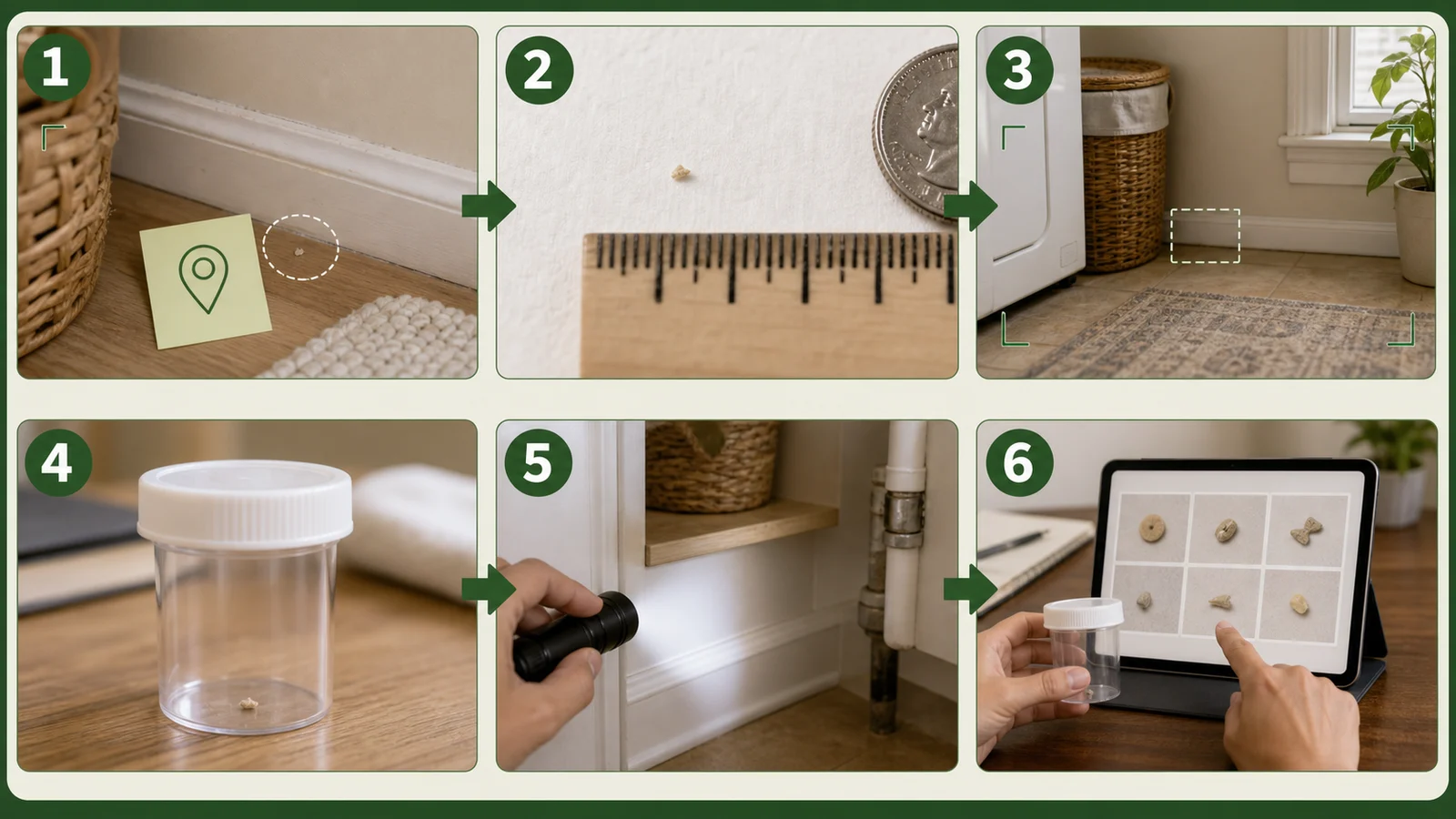
- 1
Take close photos with scale before cleaning
Take close photos with scale before cleaning.
- 2
Inspect mattress seams, headboards, bed frames, and sofas
Inspect mattress seams, headboards, bed frames, and sofas.
- 3
Inspect rugs, closets, vents, lint, pet hair, and natural-fiber fabrics.
Inspect rugs, closets, vents, lint, pet hair, and natural-fiber fabrics.
- 4
Use the strongest supporting evidence before choosing treatment
Use the strongest supporting evidence before choosing treatment.
What to do depending on the result
Clues favor Bed Bug Eggs
Document the strongest matching features and follow the actions that apply to Bed Bug Eggs; keep checking for corroborating evidence.
Clues favor Carpet Beetle Larvae
Document the strongest matching features and follow the actions that apply to Carpet Beetle Larvae; keep checking for corroborating evidence.
Still ambiguous
Keep a specimen or clearer photos when safe, and avoid treatment based on one uncertain distinction.
What not to assume
Treating for bed bugs from a single pale speck
Treating for bed bugs from a single pale speck
Ignoring fabric sources and lint buildup
Ignoring fabric sources and lint buildup
Destroying evidence before photographing it
Destroying evidence before photographing it
When to call a professional
Call a professional when bed bug eggs or live bugs are confirmed, or when larvae keep appearing after fabric-source cleanup.
FAQ
Are bed bug eggs easy to see?
They are small and often hidden, so photos, location, and nearby evidence are important.
Can carpet beetle larvae appear in bedrooms?
Yes. They can occur wherever lint, hair, feathers, wool, or other natural materials collect.
Still comparing the possibilities?
Upload a clear photo and use the result alongside the distinguishing clues.
Identify from photoExplore next
Continue with verified context
Related pest profiles
Related evidence
Related guides
Reviewed guidance · Last reviewed August 2026
Based on Pest Or Not verified knowledge and authoritative pest-management references.
How we review content