Quick answer
What to know first
Clothes moth larvae feed on animal-based fibers such as wool, silk, fur, and feathers. Damage usually appears in undisturbed clothing, rugs, closets, or storage boxes rather than frequently worn items.
Start here
- Irregular holes in wool, cashmere, silk, or fur
- Webbing or cases on fabric surfaces
- Small moths flying weakly in closets
Before you act
Clothes moth larvae feed on animal-based fibers such as wool, silk, fur, and feathers. Damage usually appears in undisturbed clothing, rugs, closets, or storage boxes rather than frequently worn items.
- Irregular holes in wool, cashmere, silk, or fur
- Webbing or cases on fabric surfaces
- Small moths flying weakly in closets
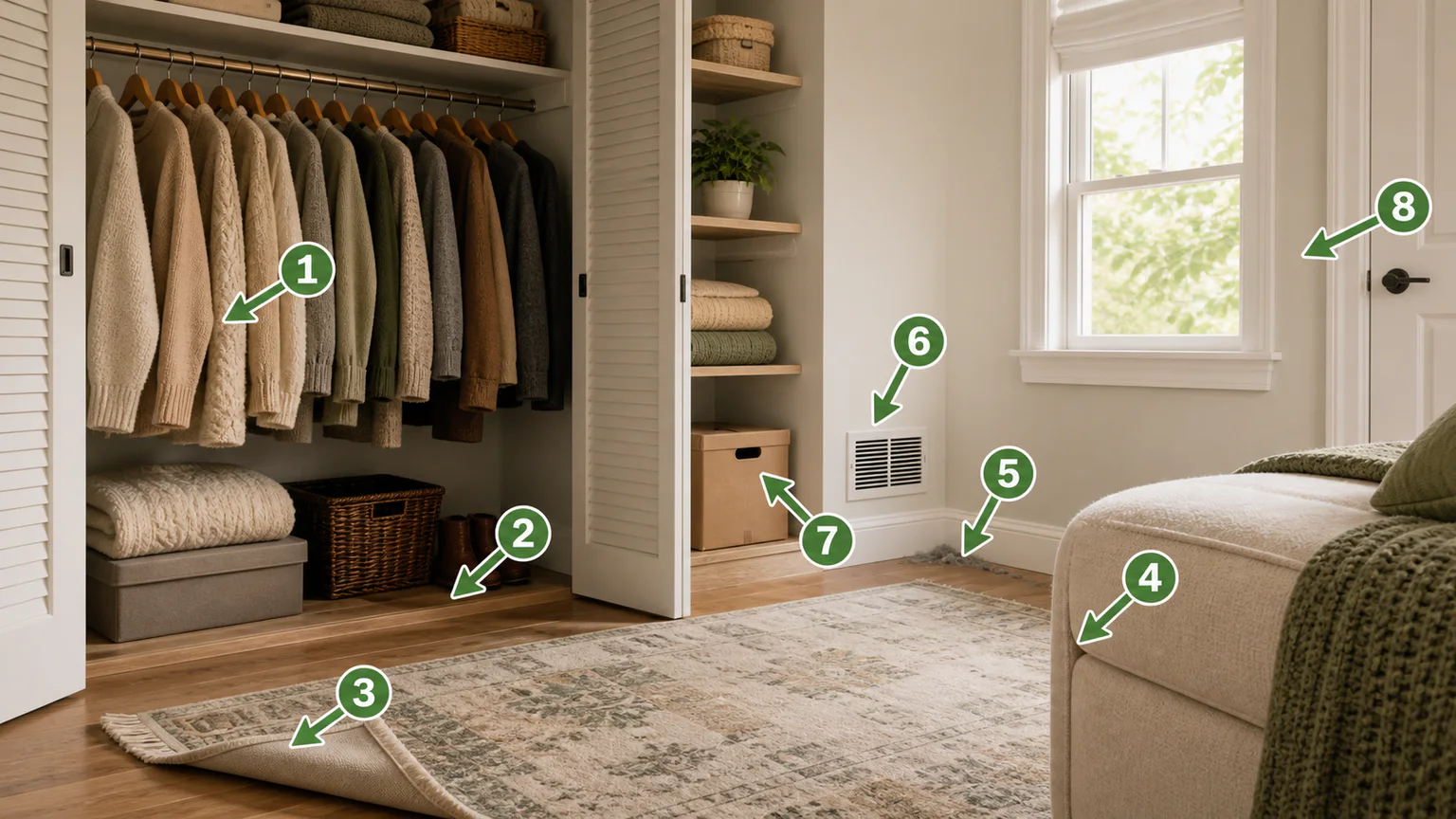
Action plan
4-Step Treatment Plan
- 1
Remove and inspect all items in the affected closet or storage area
Remove and inspect all items in the affected closet or storage area.
- 2
Dry-clean, heat-treat, or freeze vulnerable items according to fabric care.
Dry-clean, heat-treat, or freeze vulnerable items according to fabric care.
- 3
Vacuum shelves, corners, rugs, and baseboards
Vacuum shelves, corners, rugs, and baseboards.
- 4
Use pheromone traps to monitor adult activity
Use pheromone traps to monitor adult activity.
What not to do
Treating shelves without inspecting the infested food or fabric source
Treating shelves without inspecting the infested food or fabric source
Keeping packages that show webbing, larvae, holes, or cast skins
Keeping packages that show webbing, larvae, holes, or cast skins
Using pesticide directly on food, clothing, or bedding
Using pesticide directly on food, clothing, or bedding
How to judge progress
Recheck the same locations and evidence types instead of judging the result from one quiet interval.
- Track whether this clue persists, returns, or spreads: Irregular holes in wool, cashmere, silk, or fur
- Track whether this clue persists, returns, or spreads: Webbing or cases on fabric surfaces
- Track whether this clue persists, returns, or spreads: Small moths flying weakly in closets
- Track whether this clue persists, returns, or spreads: Larvae or gritty debris in stored textiles
Signs the treatment is not working
- Fresh evidence continues to appear in the same inspected locations.
- Activity spreads to new rooms, materials, or monitoring points.
- The suspected source remains active after the action plan has been followed and reassessed.
After treatment and reducing recurrence
- Clean clothing before long-term storage.
- Use sealed garment bags or bins for valuable wool and silk.
- Inspect stored items every season.
- Reduce dust, hair, and lint in closets.
When to call a professional
Professional treatment may be needed when valuable textiles, rugs, or multiple storage areas are affected.
Safety notes
- Confirm the pest or evidence before applying a control product.
- Use pesticides only where the product label permits, and follow the full label.
- Do not mix products or improvise heat, electrical, or chemical treatments.
FAQ
Do clothes moths eat cotton?
They prefer animal fibers. Cotton may be damaged if blended with wool or soiled with organic residue.
Do cedar blocks solve clothes moths?
Cedar may help as a deterrent, but cleaning, sealing, and monitoring are more important.
Not sure the pest is correctly identified?
Upload a clear photo before choosing a treatment path.
Identify from photoExplore next
Continue with verified context
Related pest profiles
Related evidence
Related guides
Reviewed guidance · Last reviewed August 2026
Based on Pest Or Not verified knowledge and authoritative pest-management references.
How we review content