Quick answer
What to know first
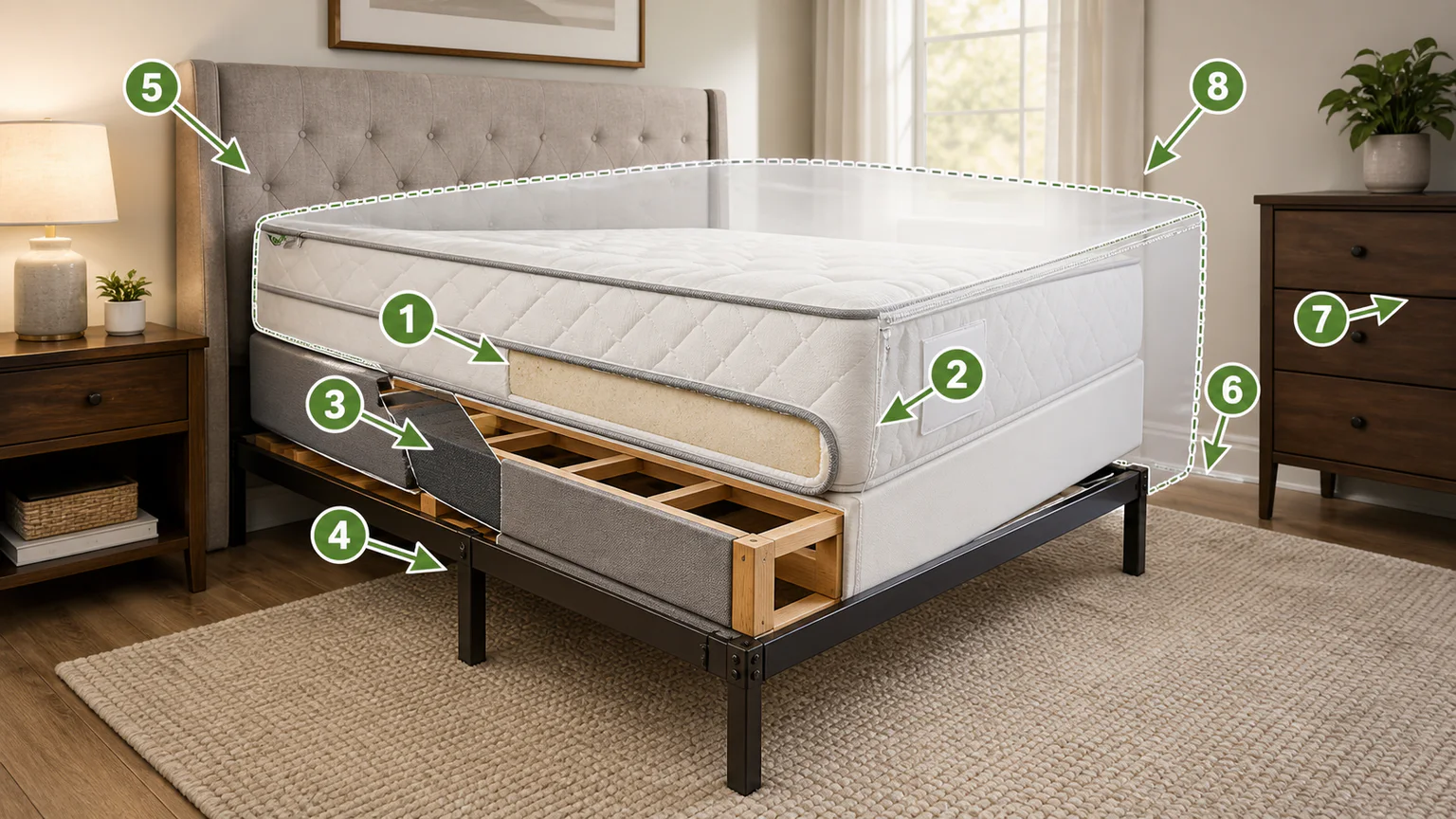
A mattress is only one part of a bed bug hiding area. Inspect the mattress, box spring, frame, headboard, nearby furniture, and baseboards; treat suitable fabrics with heat, vacuum accessible evidence, add an encasement, and monitor the entire sleeping area.
Start here
- Live flat reddish-brown bugs in seams, labels, or tufts
- Black fecal spots, pale eggs, or shed skins along protected edges
- Evidence in the box spring, frame joints, headboard, or nearby furniture
Before you act
A mattress is only one part of a bed bug hiding area. Inspect the mattress, box spring, frame, headboard, nearby furniture, and baseboards; treat suitable fabrics with heat, vacuum accessible evidence, add an encasement, and monitor the entire sleeping area.
- Live flat reddish-brown bugs in seams, labels, or tufts
- Black fecal spots, pale eggs, or shed skins along protected edges
- Evidence in the box spring, frame joints, headboard, or nearby furniture
Action plan
4-Step Treatment Plan
- 1
Photograph and confirm physical evidence before cleaning or treatment.
Photograph and confirm physical evidence before cleaning or treatment.
- 2
Bag bedding at the bed and heat-dry suitable items according to their care labels.
Bag bedding at the bed and heat-dry suitable items according to their care labels.
- 3
Vacuum mattress seams, the frame, headboard, baseboards, and nearby furniture slowly.
Vacuum mattress seams, the frame, headboard, baseboards, and nearby furniture slowly.
- 4
Install a bed-bug-rated encasement and interceptors, then continue monitoring.
Install a bed-bug-rated encasement and interceptors, then continue monitoring.
What not to do
Relying on bites alone without checking for physical evidence
Relying on bites alone without checking for physical evidence
Moving suspect furniture or fabrics through the home uncovered
Moving suspect furniture or fabrics through the home uncovered
Using foggers as a substitute for inspection and follow-up
Using foggers as a substitute for inspection and follow-up
How to judge progress
Recheck the same locations and evidence types instead of judging the result from one quiet interval.
- Track whether this clue persists, returns, or spreads: Live flat reddish-brown bugs in seams, labels, or tufts
- Track whether this clue persists, returns, or spreads: Black fecal spots, pale eggs, or shed skins along protected edges
- Track whether this clue persists, returns, or spreads: Evidence in the box spring, frame joints, headboard, or nearby furniture
- Track whether this clue persists, returns, or spreads: Repeated nighttime bites together with physical evidence near the bed
Signs the treatment is not working
- Fresh evidence continues to appear in the same inspected locations.
- Activity spreads to new rooms, materials, or monitoring points.
- The suspected source remains active after the action plan has been followed and reassessed.
After treatment and reducing recurrence
- Keep the bed slightly away from walls during monitoring.
- Do not move unbagged bedding or furniture into another room.
- Inspect used furniture and luggage before they enter sleeping areas.
- Continue checks after treatment because eggs and hidden bugs may remain.
When to call a professional
Call a professional when live bugs or eggs are confirmed, evidence appears beyond the mattress, more than one room is involved, or activity continues after careful first steps.
Safety notes
- Confirm the pest or evidence before applying a control product.
- Use pesticides only where the product label permits, and follow the full label.
- Do not mix products or improvise heat, electrical, or chemical treatments.
FAQ
Do I have to throw the mattress away?
Usually not. An intact mattress can often be inspected, vacuumed, encased, and included in a whole-room treatment plan.
Will an encasement eliminate the infestation?
An encasement simplifies inspection and traps bugs already inside, but it does not treat the frame, room, or items nearby.
Not sure the pest is correctly identified?
Upload a clear photo before choosing a treatment path.
Identify from photoExplore next
Continue with verified context
Related pest profiles
Related evidence
Related guides
Reviewed guidance · Last reviewed August 2026
Based on Pest Or Not verified knowledge and authoritative pest-management references.
How we review content