Quick answer
What to know first
Pantry moths point to stored dry foods, webbing, larvae, and package contamination. Clothes moths point to wool, rugs, stored textiles, shed larval cases, and irregular holes in natural fabrics.
Start here
- Stored grains, cereal, flour, nuts, pet food, bird seed, and pantry shelves
- Wool, silk, fur, feathers, rugs, closets, and stored fabric bins
- Webbing, larvae, holes, shed cases, and where adults are flying
Side-by-side comparison
| Diagnostic clue | How to compare Pantry Moths and Clothes Moths | How much it proves |
|---|---|---|
| Clue 1 | Pantry moths often leave webbing or larvae inside dry food packages | Use with the other listed clues and the finding location; one clue alone may not confirm the source. |
| Clue 2 | Clothes moth larvae damage natural fibers and stored textiles | Use with the other listed clues and the finding location; one clue alone may not confirm the source. |
| Clue 3 | Adult moths may wander away from the source, so larvae matter more | Use with the other listed clues and the finding location; one clue alone may not confirm the source. |
| Clue 4 | Cleaning must match the source: food disposal for pantry moths, fabric inspection for clothes moths | Use with the other listed clues and the finding location; one clue alone may not confirm the source. |
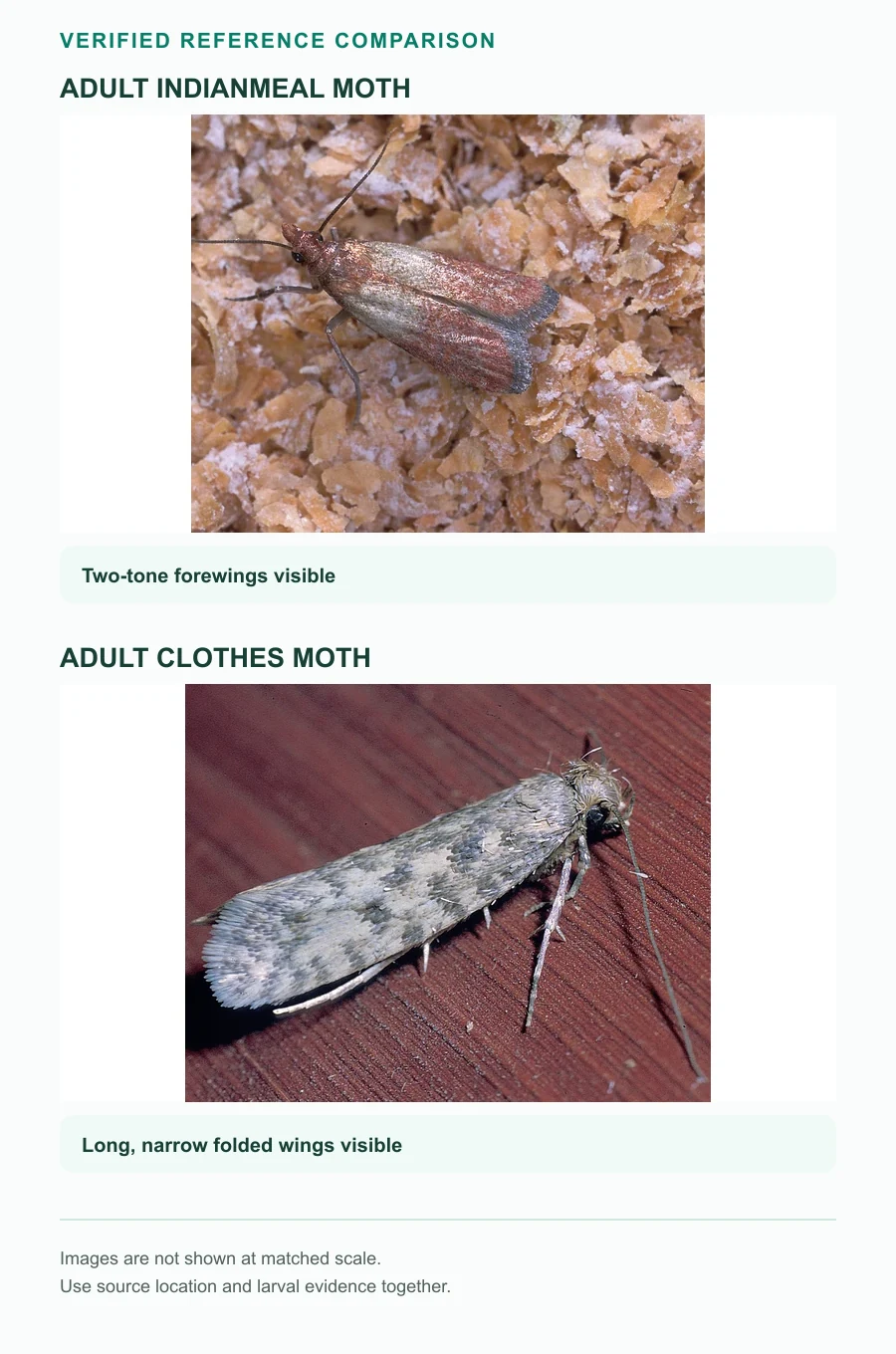
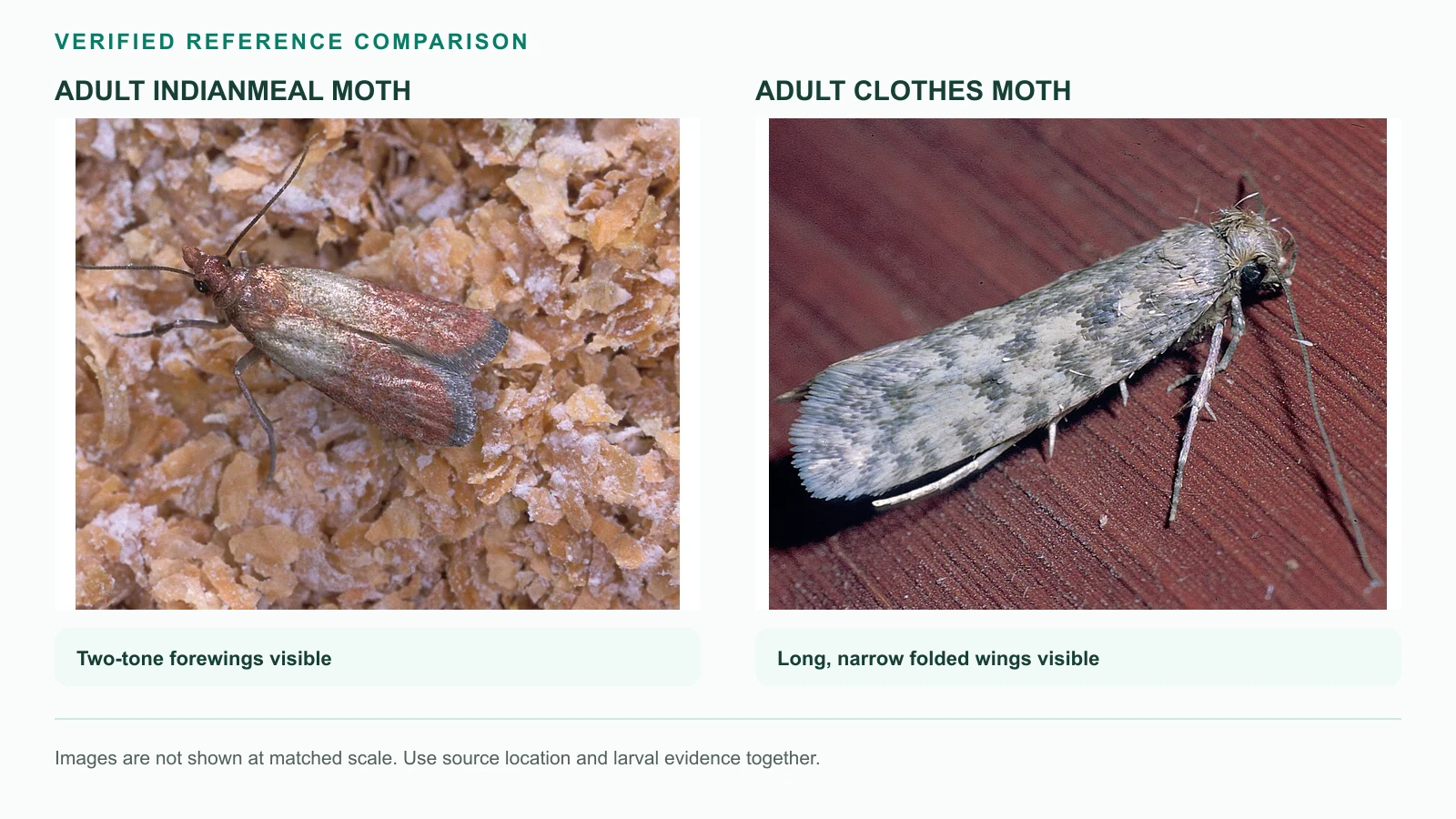
Reference image credits
- Adult Indianmeal moth (K10313-2) — Scott Bauer / USDA Agricultural Research Service · Public domain · cropped, resized, and arranged for comparison.
- A Clothes Moth (CSIRO ScienceImage 2327) — CSIRO Entomology · CC BY 3.0 · cropped, resized, and arranged for comparison.
Most useful distinguishing clues
- Pantry moths often leave webbing or larvae inside dry food packages
- Clothes moth larvae damage natural fibers and stored textiles
- Adult moths may wander away from the source, so larvae matter more
- Cleaning must match the source: food disposal for pantry moths, fabric inspection for clothes moths
Location and context
Small indoor moths can come from stored food or fabric sources. Pantry moth larvae feed in dry foods and leave webbing in packages, while clothes moth larvae damage wool, silk, feathers, fur, and other animal-based materials.
- Stored grains, cereal, flour, nuts, pet food, bird seed, and pantry shelves
- Wool, silk, fur, feathers, rugs, closets, and stored fabric bins
- Webbing, larvae, holes, shed cases, and where adults are flying
Evidence differences
- Compare this clue with the finding location and the other listed evidence: Pantry moths often leave webbing or larvae inside dry food packages
- Compare this clue with the finding location and the other listed evidence: Clothes moth larvae damage natural fibers and stored textiles
- Compare this clue with the finding location and the other listed evidence: Adult moths may wander away from the source, so larvae matter more
What photos alone cannot confirm
A blurry, damaged, or out-of-context photo may hide the feature that separates the alternatives. A photo also may not establish the source, extent, or whether the evidence is current.
What to inspect next
- 1
Inspect dry food packages and discard infested items
Inspect dry food packages and discard infested items.
- 2
Inspect wool, rugs, closets, and stored textiles for larvae or damage.
Inspect wool, rugs, closets, and stored textiles for larvae or damage.
- 3
Vacuum shelf cracks, closet edges, and storage areas
Vacuum shelf cracks, closet edges, and storage areas.
- 4
Use traps as monitors after source removal, not as the only treatment.
Use traps as monitors after source removal, not as the only treatment.
What to do depending on the result
Clues favor Pantry Moths
Document the strongest matching features and follow the actions that apply to Pantry Moths; keep checking for corroborating evidence.
Clues favor Clothes Moths
Document the strongest matching features and follow the actions that apply to Clothes Moths; keep checking for corroborating evidence.
Still ambiguous
Keep a specimen or clearer photos when safe, and avoid treatment based on one uncertain distinction.
What not to assume
Treating closets when the source is stored food
Treating closets when the source is stored food
Keeping opened dry goods after larvae or webbing are found
Keeping opened dry goods after larvae or webbing are found
Ignoring shelf cracks or fabric storage bins
Ignoring shelf cracks or fabric storage bins
When to call a professional
Call a professional when moth activity continues after source removal or when valuable textiles are affected.
FAQ
Can pantry moths damage clothes?
Pantry moths are tied to stored foods. Clothes damage is more consistent with clothes moths or carpet beetles.
Do moth traps remove the source?
No. Traps help monitor adults, but infested food or fabric sources still need removal and cleaning.
Still comparing the possibilities?
Upload a clear photo and use the result alongside the distinguishing clues.
Identify from photoExplore next
Continue with verified context
Related pest profiles
Related evidence
Related guides
Reviewed guidance · Last reviewed August 2026
Based on Pest Or Not verified knowledge and authoritative pest-management references.
How we review content