Quick answer
What to know first
Termite control starts with identifying the evidence type. Mud tubes often point to subterranean termites, while pellet-like frass can point to drywood termites. The treatment path depends on that distinction.
Start here
- Mud tubes, frass, wings, hollow wood, or blistered surfaces
- Moisture, wood-to-soil contact, mulch contact, or crawl-space issues
- Whether evidence is recurring after cleaning or newly appearing
Before you act
Termite control starts with correct evidence. Mud tubes, discarded wings, frass, hollow wood, and moisture conditions can point to different termite groups and different treatment paths.
- Mud tubes, frass, wings, hollow wood, or blistered surfaces
- Moisture, wood-to-soil contact, mulch contact, or crawl-space issues
- Whether evidence is recurring after cleaning or newly appearing
Action plan
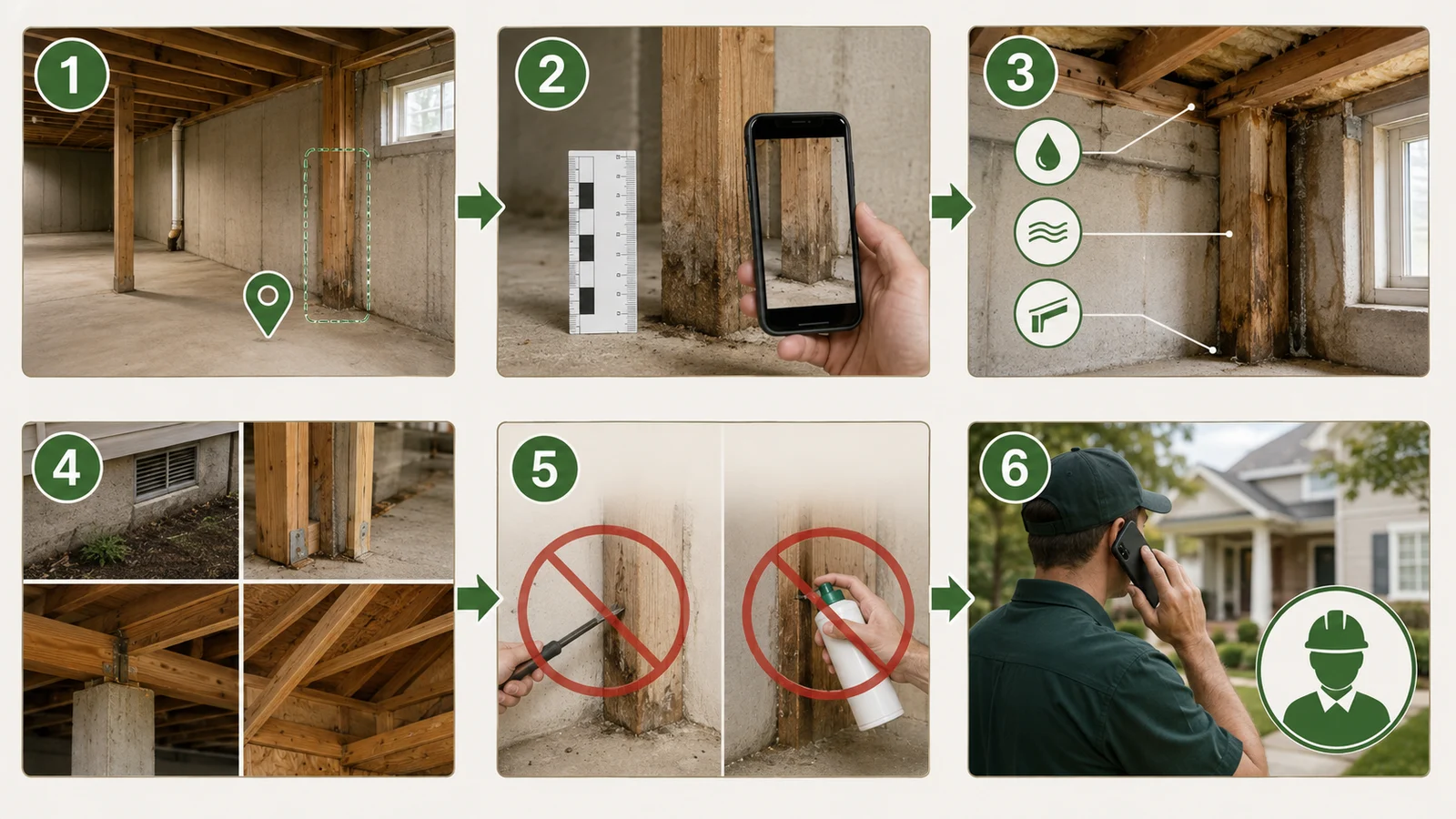
4-Step Treatment Plan
- 1
Photograph evidence before disturbing it
Photograph evidence before disturbing it.
- 2
Check for moisture, leaks, drainage issues, and wood-to-soil contact
Check for moisture, leaks, drainage issues, and wood-to-soil contact.
- 3
Identify whether evidence suggests subterranean or drywood termites
Identify whether evidence suggests subterranean or drywood termites.
- 4
Schedule a licensed inspection if structural wood may be involved
Schedule a licensed inspection if structural wood may be involved.
What not to do
Destroying all evidence before taking photos
Destroying all evidence before taking photos
Assuming every wood problem is the same termite type
Assuming every wood problem is the same termite type
Delaying inspection when structural wood may be involved
Delaying inspection when structural wood may be involved
How to judge progress
Recheck the same locations and evidence types instead of judging the result from one quiet interval.
- Track whether this clue persists, returns, or spreads: Mud tubes on foundations, piers, or crawl-space walls
- Track whether this clue persists, returns, or spreads: Discarded wings near windows, doors, or light sources
- Track whether this clue persists, returns, or spreads: Pellet-like frass below small kick-out holes
- Track whether this clue persists, returns, or spreads: Hollow, blistered, or damaged wood
Signs the treatment is not working
- Fresh evidence continues to appear in the same inspected locations.
- Activity spreads to new rooms, materials, or monitoring points.
- The suspected source remains active after the action plan has been followed and reassessed.
After treatment and reducing recurrence
- Keep soil and mulch away from siding and wood framing.
- Repair leaks and improve drainage around the foundation.
- Store firewood away from the home and off the ground.
- Inspect crawl spaces and foundation edges at least once a year.
When to call a professional
Call a licensed termite professional when you find mud tubes, swarmers, termite frass, or damaged structural wood.
Safety notes
- Confirm the pest or evidence before applying a control product.
- Use pesticides only where the product label permits, and follow the full label.
- Do not mix products or improvise heat, electrical, or chemical treatments.
FAQ
Can termite treatment be DIY?
Moisture correction and prevention can be DIY, but active structural infestations usually require licensed treatment.
Should mud tubes be removed?
Photograph them first. Removing all evidence before inspection can make diagnosis harder.
Not sure the pest is correctly identified?
Upload a clear photo before choosing a treatment path.
Identify from photoExplore next
Continue with verified context
Related pest profiles
Related evidence
Related guides
Reviewed guidance · Last reviewed August 2026
Based on Pest Or Not verified knowledge and authoritative pest-management references.
How we review content