Quick answer
What to know first
A DIY termite inspection does not replace a licensed inspection, but it helps homeowners spot warning signs early. The highest-risk areas are where wood, moisture, soil, cracks, and hidden voids overlap.
Start here
- Pencil-width mud tubes on concrete or masonry
- Wood that sounds hollow or breaks in layers
- Tiny pellets below trim, furniture, or attic wood
What you're looking for
A DIY termite inspection does not replace a licensed inspection, but it helps homeowners spot warning signs early. The highest-risk areas are where wood, moisture, soil, cracks, and hidden voids overlap.
- Pencil-width mud tubes on concrete or masonry
- Wood that sounds hollow or breaks in layers
- Tiny pellets below trim, furniture, or attic wood
- Swarmer wings collected on sills or floors
Where to inspect first
- Pencil-width mud tubes on concrete or masonry
- Wood that sounds hollow or breaks in layers
- Tiny pellets below trim, furniture, or attic wood
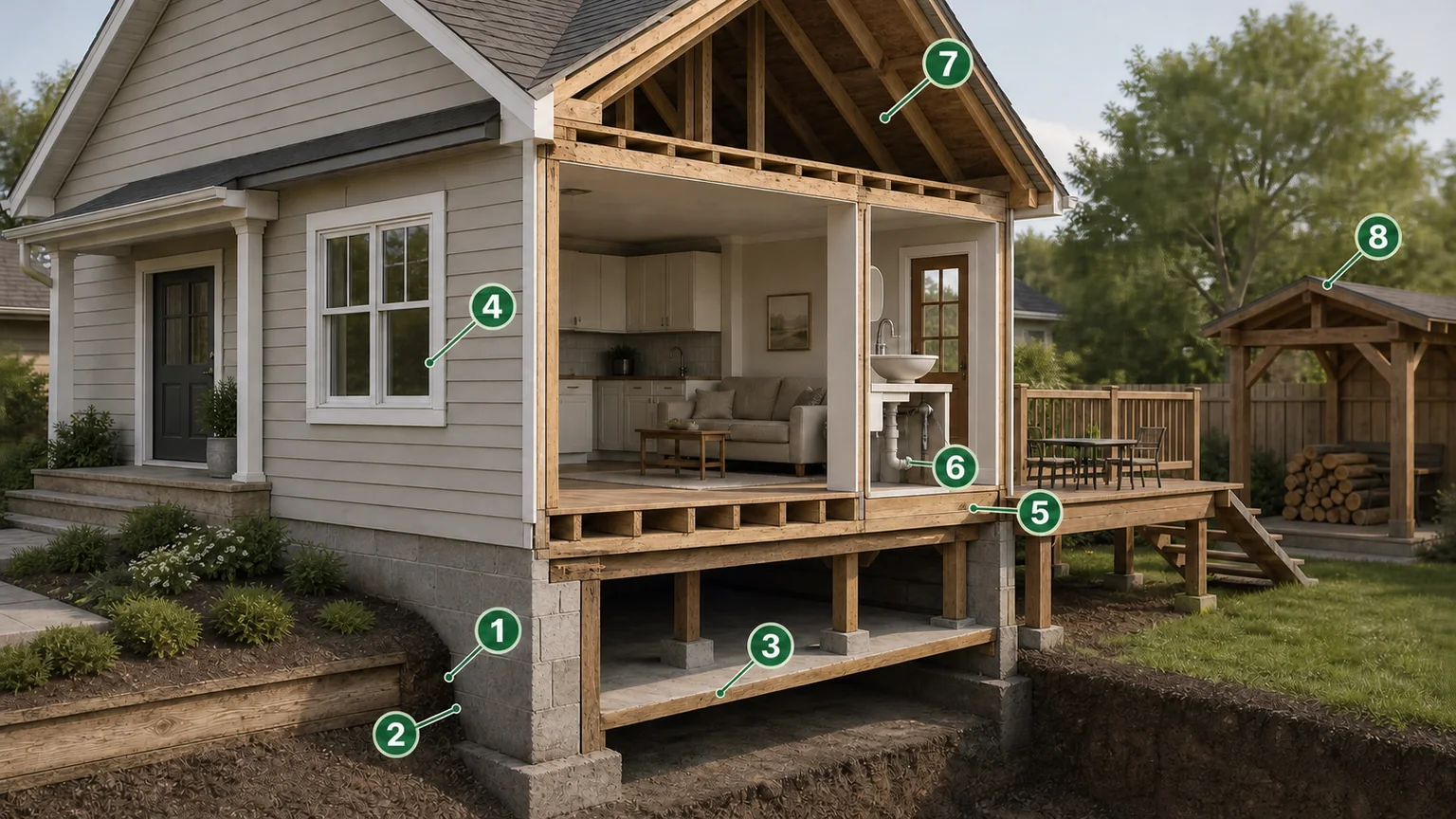
Step-by-step inspection
- 1
Walk the exterior foundation and look for tubes, cracks, and moisture.
Walk the exterior foundation and look for tubes, cracks, and moisture.
- 2
Check crawl spaces, sill plates, joists, and support posts
Check crawl spaces, sill plates, joists, and support posts.
- 3
Inspect window frames, door frames, and garage trim
Inspect window frames, door frames, and garage trim.
- 4
Use photos and notes to track suspicious areas over time
Use photos and notes to track suspicious areas over time.
Visual and physical clues
Pencil-width mud tubes on concrete or masonry
Pencil-width mud tubes on concrete or masonry
Wood that sounds hollow or breaks in layers
Wood that sounds hollow or breaks in layers
Tiny pellets below trim, furniture, or attic wood
Tiny pellets below trim, furniture, or attic wood
Swarmer wings collected on sills or floors
Swarmer wings collected on sills or floors
Evidence to look for
- Pencil-width mud tubes on concrete or masonry
- Wood that sounds hollow or breaks in layers
- Tiny pellets below trim, furniture, or attic wood
- Swarmer wings collected on sills or floors
What it can be confused with
Disturbing tubes, pellets, or damaged wood before documenting them
Disturbing tubes, pellets, or damaged wood before documenting them
Assuming every pile of sawdust is termite evidence
Assuming every pile of sawdust is termite evidence
Applying surface spray without locating the colony or entry route
Applying surface spray without locating the colony or entry route
How to confirm
- Photograph the specimen or sign sharply and include scale when practical.
- Record the exact finding location and check nearby areas for a repeated pattern.
- Use more than one compatible clue before assigning a pest or source.
What the evidence cannot prove
One damaged surface, loose particle, stain, or distant photo may have more than one cause. Use location, repeated patterns, and multiple compatible signs before drawing a conclusion.
What to do after finding evidence
- Maintain clearance between soil and exterior wood.
- Keep gutters working and downspouts directed away from the home.
- Remove cardboard, wood scraps, and cellulose debris from crawl spaces.
- Schedule periodic professional inspections in termite-prone regions.
When to call a professional
Call a professional if you find active insects, mud tubes, swarmers, frass, or damage in framing, flooring, or support wood.
FAQ
How often should homes be checked?
Annual checks are reasonable in many areas, with more frequent checks after moisture problems or previous termite activity.
What looks like termite damage but is not?
Water damage, carpenter ant galleries, and powderpost beetle holes can look similar and need correct diagnosis.
Found something during your inspection?
Upload the specimen or evidence you documented.
Identify what you foundExplore next
Continue with verified context
Related pest profiles
Related evidence
Related guides
Reviewed guidance · Last reviewed August 2026
Based on Pest Or Not verified knowledge and authoritative pest-management references.
How we review content