Quick answer
What to know first
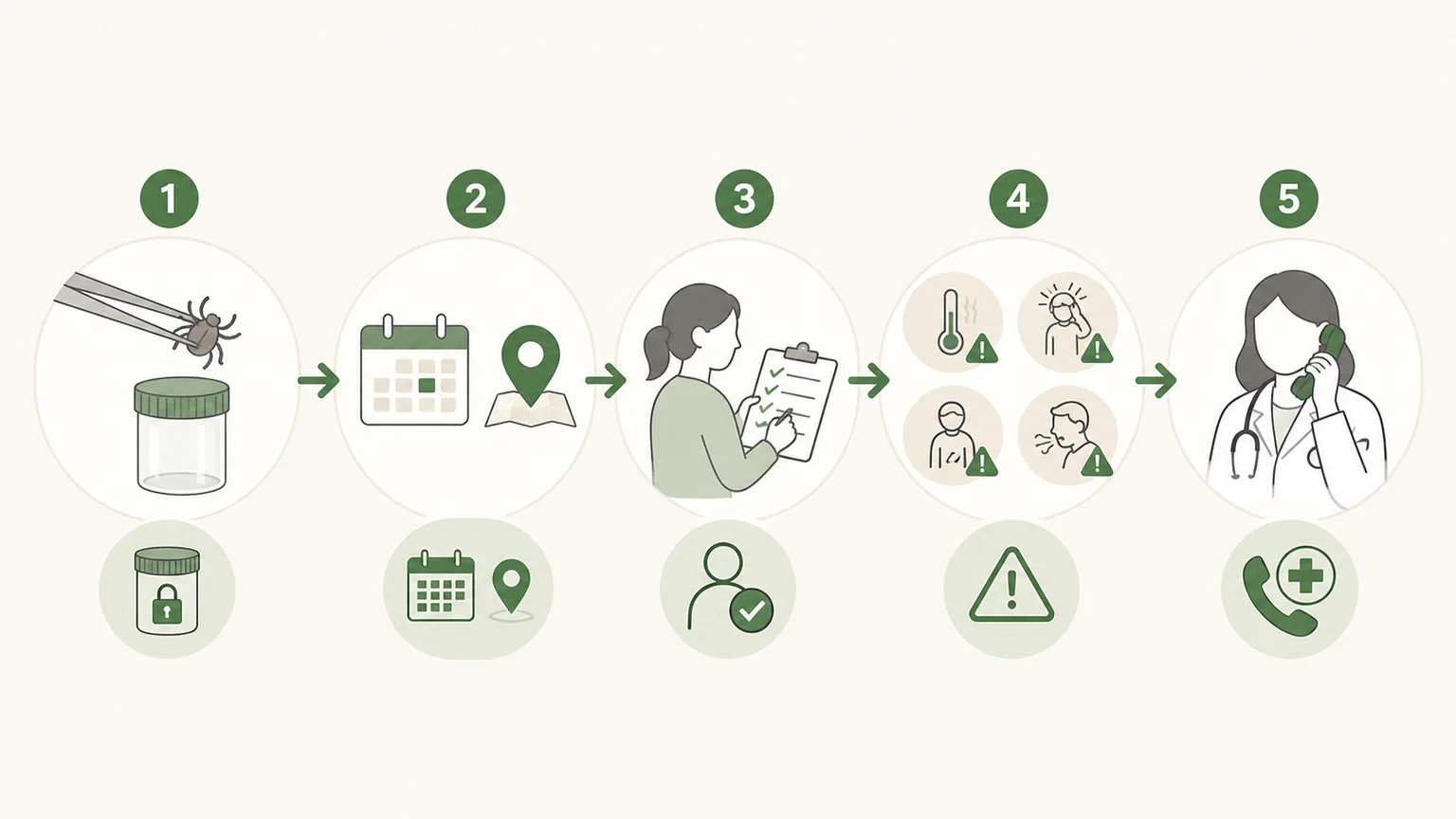
Remove the tick with fine-tipped tweezers, clean the area, and record the date. Contact a clinician promptly if an expanding rash, fever, severe headache, facial weakness, breathing trouble, or unusual illness develops.
Start here
- Whether a tick is still attached and can be removed without twisting or crushing it
- The date, likely exposure location, and a clear photo of the tick or bite area
- Expanding redness, fever, severe headache, muscle weakness, or breathing difficulty
Before you act
Most tick bites do not lead to illness, but prompt removal and symptom monitoring matter. Seek medical advice for an expanding rash, fever, severe headache, weakness, breathing trouble, or symptoms that develop after a known tick exposure.
- Whether a tick is still attached and can be removed without twisting or crushing it
- The date, likely exposure location, and a clear photo of the tick or bite area
- Expanding redness, fever, severe headache, muscle weakness, or breathing difficulty
Action plan
4-Step Treatment Plan
- 1
Use fine-tipped tweezers to grasp the tick close to the skin and pull upward steadily.
Use fine-tipped tweezers to grasp the tick close to the skin and pull upward steadily.
- 2
Clean the bite and hands with soap and water or an appropriate antiseptic.
Clean the bite and hands with soap and water or an appropriate antiseptic.
- 3
Photograph the tick and skin, then record the date and likely exposure location.
Photograph the tick and skin, then record the date and likely exposure location.
- 4
Monitor for new symptoms and contact a clinician when warning signs appear.
Monitor for new symptoms and contact a clinician when warning signs appear.
What not to do
Burning, smothering, or coating an attached tick with household substances
Burning, smothering, or coating an attached tick with household substances
Assuming a circular rash must always appear before tick-borne illness
Assuming a circular rash must always appear before tick-borne illness
Waiting for severe symptoms when the person is pregnant, immunocompromised, or very young
Waiting for severe symptoms when the person is pregnant, immunocompromised, or very young
How to judge progress
Recheck the same locations and evidence types instead of judging the result from one quiet interval.
- Track whether this clue persists, returns, or spreads: An attached tick or a recent outdoor exposure in brush, grass, or woodland
- Track whether this clue persists, returns, or spreads: A small local bump that remains limited versus redness that keeps expanding
- Track whether this clue persists, returns, or spreads: Fever, chills, fatigue, headache, muscle pain, or swollen lymph nodes
- Track whether this clue persists, returns, or spreads: Facial weakness, confusion, breathing trouble, or rapidly worsening symptoms
Signs the treatment is not working
- Fresh evidence continues to appear in the same inspected locations.
- Activity spreads to new rooms, materials, or monitoring points.
- The suspected source remains active after the action plan has been followed and reassessed.
After treatment and reducing recurrence
- Use an appropriate registered repellent according to its label.
- Check skin, clothing, children, and pets after outdoor activity.
- Shower soon after returning indoors and tumble-dry suitable clothing.
- Keep frequently used yard edges clear of leaf litter and tall vegetation.
When to call a professional
Seek urgent care for breathing trouble, facial weakness, confusion, severe headache, or rapidly worsening illness. Contact a clinician promptly for an expanding rash, fever, or flu-like symptoms after a tick bite.
Safety notes
- Confirm the pest or evidence before applying a control product.
- Use pesticides only where the product label permits, and follow the full label.
- Do not mix products or improvise heat, electrical, or chemical treatments.
FAQ
Does every tick bite need antibiotics?
No. Treatment depends on the tick, location, attachment time, symptoms, and medical history. A clinician can assess whether preventive treatment is appropriate.
Is a small red bump normal?
A small local reaction can occur. Redness that expands, persists, or appears with fever or other illness deserves medical advice.
Not sure the pest is correctly identified?
Upload a clear photo before choosing a treatment path.
Identify from photoExplore next
Continue with verified context
Related evidence
Related guides
Reviewed guidance · Last reviewed August 2026
Based on Pest Or Not verified knowledge and authoritative pest-management references.
How we review content