Quick answer
What to know first
Yellow jackets are social wasps that can nest underground, in wall voids, or in protected cavities. They become more noticeable around food and garbage and can aggressively defend nest entrances.
Start here
- Fast wasps entering a ground hole or wall gap
- Activity around meat, soda, fruit, or garbage
- Stings near lawns, patios, or trash areas
Before you act
Yellow jackets are social wasps that can nest underground, in wall voids, or in protected cavities. They become more noticeable around food and garbage and can aggressively defend nest entrances.
- Fast wasps entering a ground hole or wall gap
- Activity around meat, soda, fruit, or garbage
- Stings near lawns, patios, or trash areas
Action plan
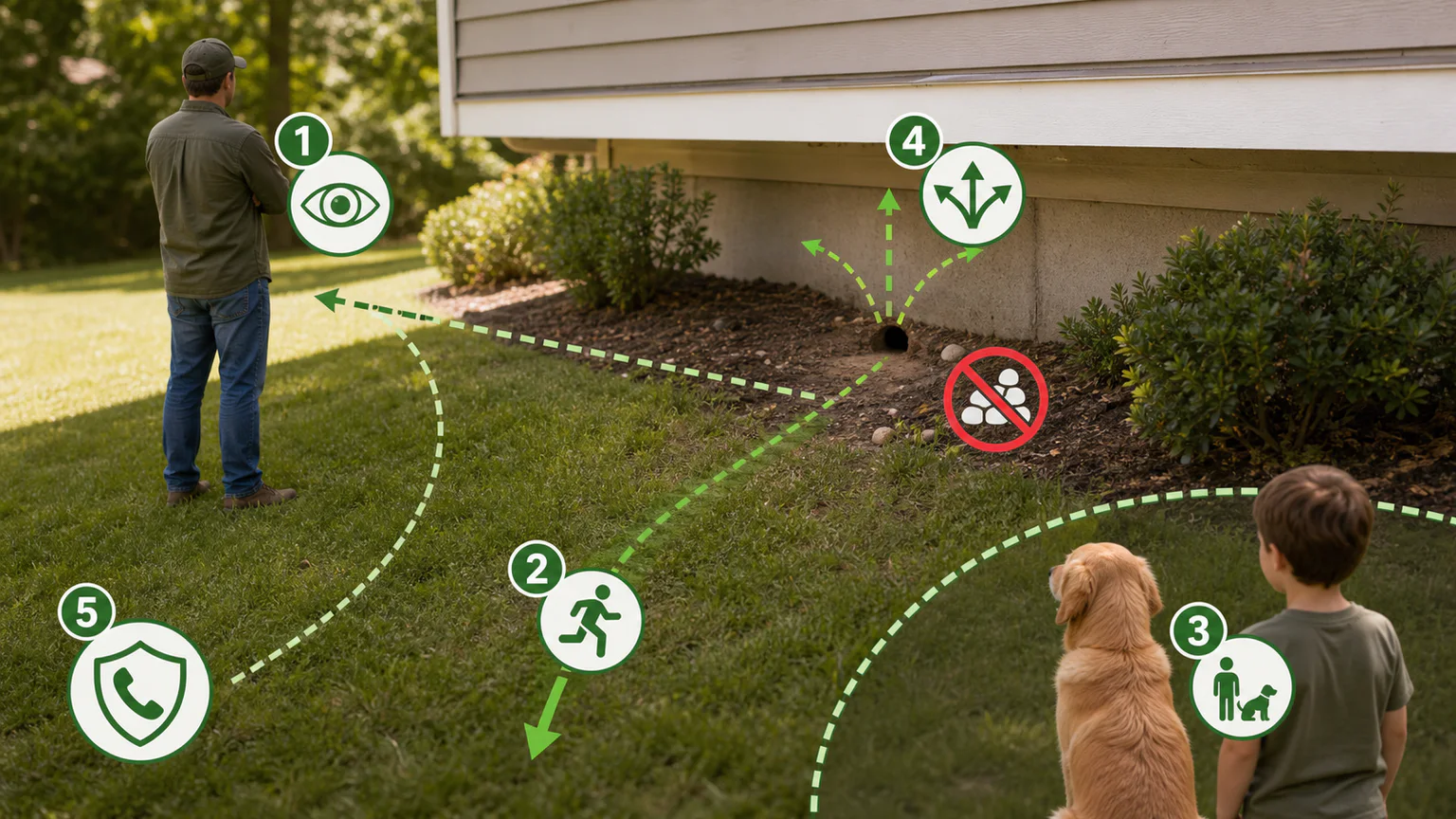
4-Step Treatment Plan
- 1
Mark the entrance from a safe distance and avoid vibration nearby
Mark the entrance from a safe distance and avoid vibration nearby.
- 2
Keep food, drinks, and garbage covered outdoors
Keep food, drinks, and garbage covered outdoors.
- 3
Do not pour liquids into a nest or block the opening
Do not pour liquids into a nest or block the opening.
- 4
Use professional help for active ground or wall nests
Use professional help for active ground or wall nests.
What not to do
Blocking an active nest entrance while insects are inside
Blocking an active nest entrance while insects are inside
Working near a nest without an exit route or protective distance
Working near a nest without an exit route or protective distance
Attempting DIY removal after a serious sting reaction
Attempting DIY removal after a serious sting reaction
How to judge progress
Recheck the same locations and evidence types instead of judging the result from one quiet interval.
- Track whether this clue persists, returns, or spreads: Fast wasps entering a ground hole or wall gap
- Track whether this clue persists, returns, or spreads: Activity around meat, soda, fruit, or garbage
- Track whether this clue persists, returns, or spreads: Stings near lawns, patios, or trash areas
- Track whether this clue persists, returns, or spreads: Nest traffic increasing through late summer
Signs the treatment is not working
- Fresh evidence continues to appear in the same inspected locations.
- Activity spreads to new rooms, materials, or monitoring points.
- The suspected source remains active after the action plan has been followed and reassessed.
After treatment and reducing recurrence
- Seal structural gaps when nests are inactive.
- Use tight garbage lids.
- Clean spills from outdoor eating areas.
- Remove fallen fruit and food waste quickly.
When to call a professional
Call a professional when the nest is in the ground, a wall, near entrances, or when anyone nearby has a sting allergy.
Safety notes
- Confirm the pest or evidence before applying a control product.
- Use pesticides only where the product label permits, and follow the full label.
- Do not mix products or improvise heat, electrical, or chemical treatments.
FAQ
Are yellow jackets bees?
No. They are wasps and can sting multiple times.
Why are they worse late in the season?
Colonies are larger, and workers often forage aggressively for sugar and protein.
Not sure the pest is correctly identified?
Upload a clear photo before choosing a treatment path.
Identify from photoExplore next
Continue with verified context
Related evidence
Related guides
Reviewed guidance · Last reviewed August 2026
Based on Pest Or Not verified knowledge and authoritative pest-management references.
How we review content