Quick answer
What to know first
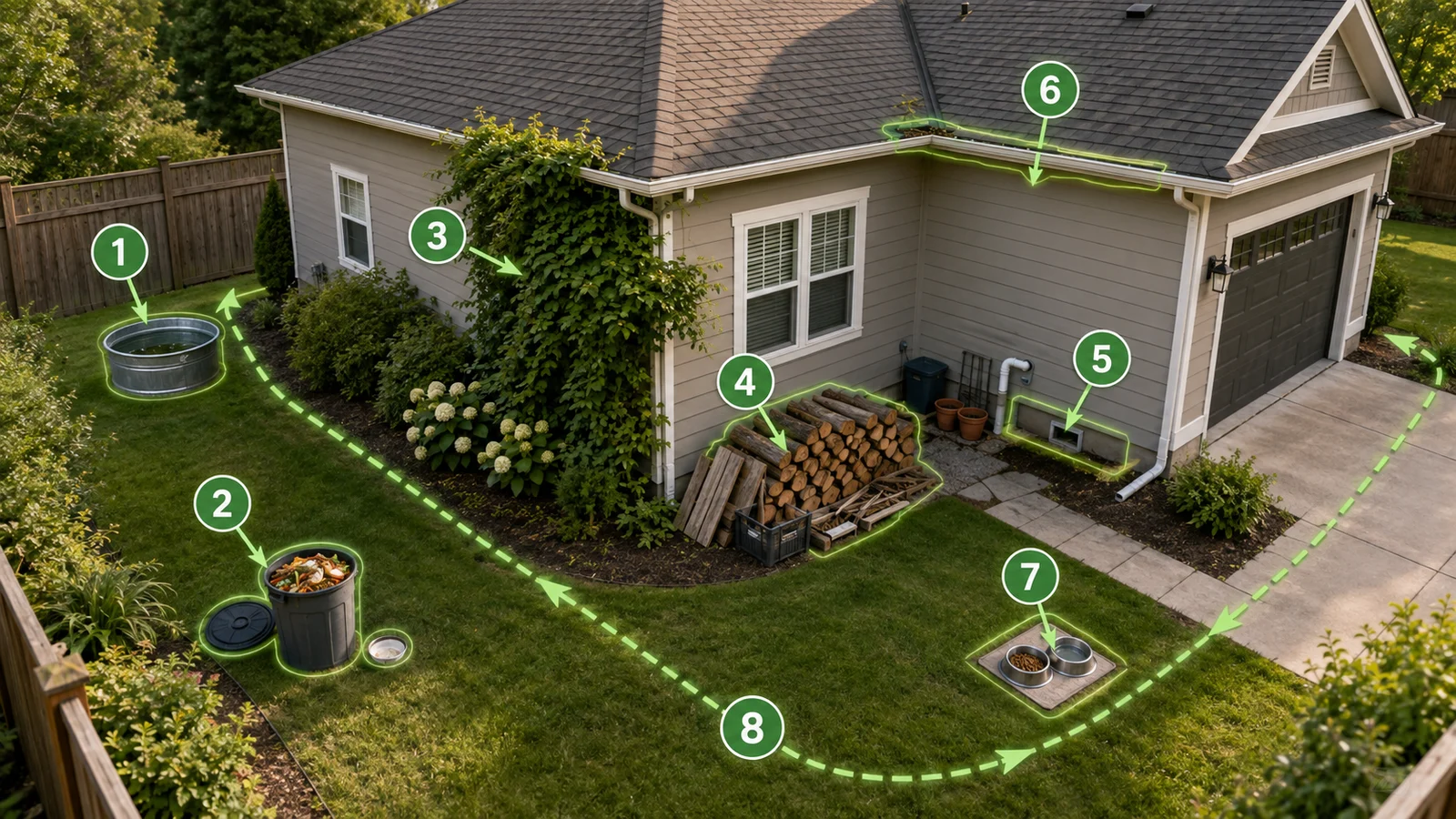
Yard pest prevention works by reducing the four conditions pests need: food, water, shelter, and entry. Small maintenance steps can reduce mosquitoes, rodents, ticks, ants, wasps, and wildlife pressure around the home.
Start here
- Standing water after rain or irrigation
- Garbage, pet food, or bird seed attracting wildlife
- Dense vegetation near walls or play areas
Highest-impact prevention steps
- Keep grass maintained and remove leaf litter from high-use areas.
- Direct drainage away from the foundation.
- Store firewood off the ground and away from the home.
- Repair gaps in sheds, crawl spaces, vents, and doors.
Why activity becomes established
Yard pest prevention works by reducing the four conditions pests need: food, water, shelter, and entry. Small maintenance steps can reduce mosquitoes, rodents, ticks, ants, wasps, and wildlife pressure around the home.
Entry points, attractants, and warning clues
Standing water after rain or irrigation
Standing water after rain or irrigation
Garbage, pet food, or bird seed attracting wildlife
Garbage, pet food, or bird seed attracting wildlife
Dense vegetation near walls or play areas
Dense vegetation near walls or play areas
Nests, mounds, tracks, burrows, or repeated pest sightings
Nests, mounds, tracks, burrows, or repeated pest sightings
Area-by-area checklist
- 1
Walk the yard weekly and remove standing water
Walk the yard weekly and remove standing water.
- 2
Secure garbage, compost, pet food, and bird seed
Secure garbage, compost, pet food, and bird seed.
- 3
Trim vegetation away from walls, rooflines, and activity areas
Trim vegetation away from walls, rooflines, and activity areas.
- 4
Inspect sheds, decks, vents, and foundation gaps for entry risk
Inspect sheds, decks, vents, and foundation gaps for entry risk.
What people commonly miss
Applying pesticides before identifying the pest or evidence
Applying pesticides before identifying the pest or evidence
Treating one symptom while moisture, food, or entry sources remain
Treating one symptom while moisture, food, or entry sources remain
Skipping monitoring after the first cleanup or treatment
Skipping monitoring after the first cleanup or treatment
Monitoring routine
- Recheck on a consistent schedule: Standing water after rain or irrigation
- Recheck on a consistent schedule: Garbage, pet food, or bird seed attracting wildlife
- Recheck on a consistent schedule: Dense vegetation near walls or play areas
Signs prevention is failing
- New, recurring, or spreading evidence: Standing water after rain or irrigation
- New, recurring, or spreading evidence: Garbage, pet food, or bird seed attracting wildlife
- New, recurring, or spreading evidence: Dense vegetation near walls or play areas
- New, recurring, or spreading evidence: Nests, mounds, tracks, burrows, or repeated pest sightings
What to do if activity appears
Professional help is useful when pests are nesting in structures, stinging insects are active, rodents are entering, or wildlife is living under decks or in attics.
- Keep grass maintained and remove leaf litter from high-use areas.
- Direct drainage away from the foundation.
- Store firewood off the ground and away from the home.
FAQ
What is the easiest first step?
Remove standing water and food sources. These changes affect several pest groups at once.
Does mulch attract pests?
Excessive mulch against the foundation can hold moisture and shelter pests. Keep it controlled and away from siding.
Found signs despite prevention?
Upload the specimen or evidence before deciding what to do next.
Identify the evidenceExplore next
Continue with verified context
Related pest profiles
Related evidence
Related guides
Reviewed guidance · Last reviewed August 2026
Based on Pest Or Not verified knowledge and authoritative pest-management references.
How we review content