How to use this evidence
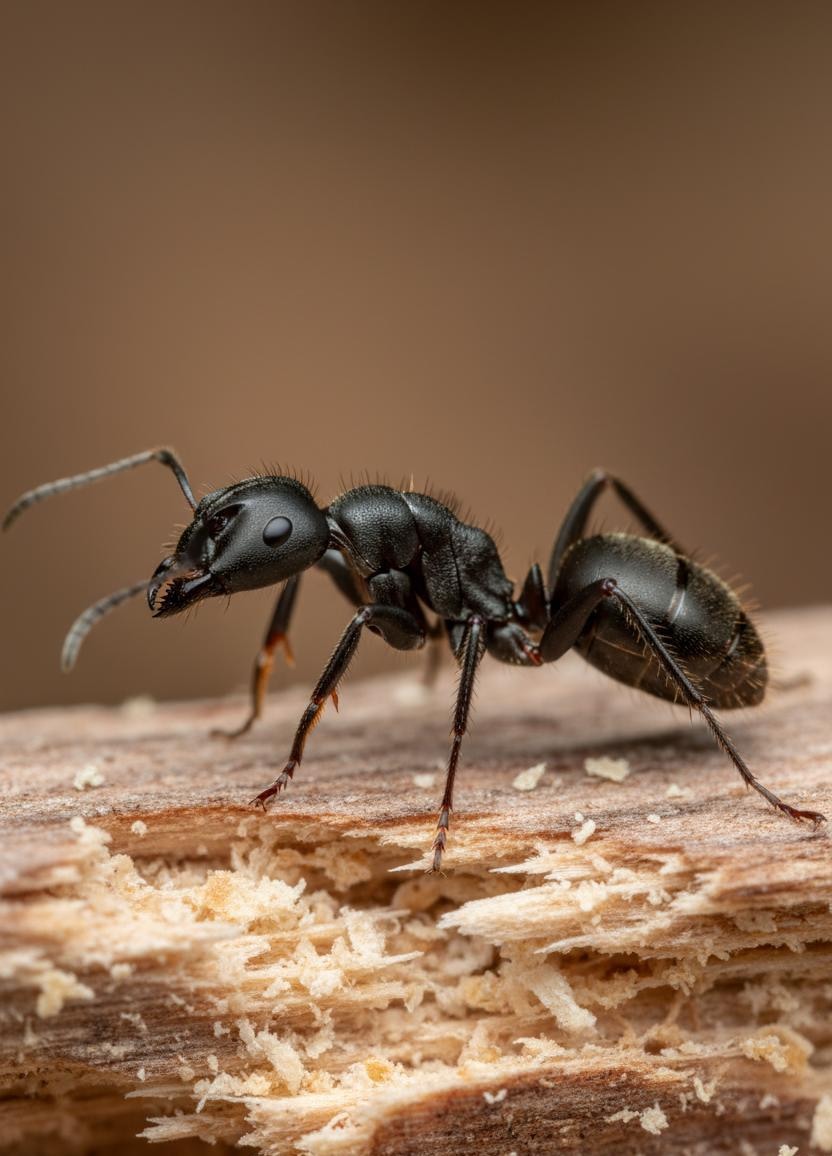
A clear photo can support a visual comparison with known pest evidence.
A photo alone cannot confirm the source or extent of an infestation. Check for matching physical evidence nearby.
What you found
Carpenter ant frass is debris pushed out as ants excavate galleries in wood. It is usually coarser than termite frass and may include insect fragments, insulation, or wood shavings.
Common places to check
- Inspect window frames and nearby hiding spots for matching evidence.
- Inspect door frames and nearby hiding spots for matching evidence.
- Inspect decks and nearby hiding spots for matching evidence.
- Inspect wall voids and nearby hiding spots for matching evidence.
- Inspect moist wood and nearby hiding spots for matching evidence.
How to identify it
What it may indicate
Structural context
Carpenter ants can expand galleries in wood softened by moisture.
Property context
Damage may worsen if the moisture source remains.
Infestation context
Frass often points to a nearby nest or satellite colony.
Recommended actions
- 1Check for leaks or damp wood near the frass
- 2Photograph the debris before cleaning
- 3Look for large ants at night
- 4Avoid sealing openings before the nest is located
Prevention and monitoring
Professional options
- Nest location and moisture assessment
- Targeted treatment of galleries and satellite colonies
- Wood repair and moisture correction recommendations
Explore pages related to Carpenter Ant Frass
Follow the cluster from this evidence page to matching pest profiles and practical guides.
Guides using this evidence
Practical treatment and prevention pages where this sign matters.
Ants
Ant Control: How to Find Trails, Nests, and Food Sources
Control ants by following trails, removing attractants, using bait correctly, and sealing entry points.
Ants
Carpenter Ant Control: Frass, Moisture, and Nest Clues
Identify carpenter ant signs, wood moisture risks, frass piles, night trails, and when structural inspection is needed.
Termites
Flying Ants vs Termites: Wings, Body Shape, and Swarm Clues
Compare flying ants and termite swarmers by wing length, waist shape, antennae, season, and where swarm evidence appears.
Ants
Carpenter Ants vs Termites: Wood Damage and Frass Differences
Compare carpenter ants and termites by frass, galleries, moisture, swarmers, mud tubes, and damaged wood patterns.
Pest profiles to compare
Likely pests connected to this evidence type.