Quick answer
How to read this evidence
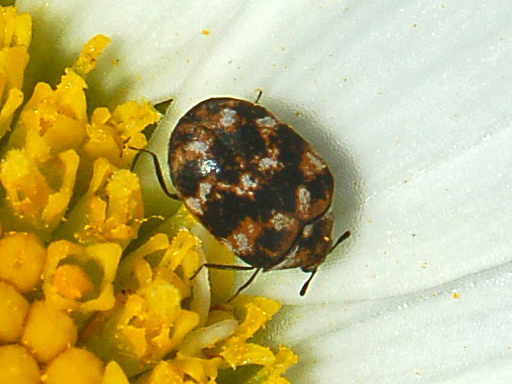
Carpet beetle larvae are small fuzzy or bristly larvae often found near wool, rugs, lint, pet hair, vents, closets, or furniture edges. They are a fabric pest sign, not a biting pest.
Confirm by checking
- Bristly larvae or brown shed skins along fabric edges
- Damage to wool, silk, feathers, rugs, or stored natural fibers
- Activity near lint, pet hair, vents, baseboards, or under furniture
- Adult carpet beetles near windows or light sources
Do not confuse with
- Clothes moth larvae are usually smoother and often leave webbing or cases
- Bed bug shed skins are flatter, bug-shaped, and found near sleeping areas
- Lint does not have legs, body segmentation, or repeated shed skins
Practical identification guidance
What this carpet beetle larvae evidence can tell you
Carpet beetle larvae are small, banded, visibly hairy larvae often found near natural-fiber fabrics, lint, hair, or dead insects.
Check these details
- Inspect carpet edges, closets, vents, stored wool, feathers, and upholstered furniture.
- Look for shed larval skins and irregular surface damage rather than webbing.
Avoid a false match
Clothes moth larvae are smoother and often leave silk tubes or webbing.
Best next step
Locate and remove the food source, then vacuum cracks and launder or isolate affected textiles.
How to use this evidence
A clear photo can support a visual comparison with known pest evidence.
A photo alone cannot confirm the source or extent of an infestation. Check for matching physical evidence nearby.
What you found
Carpet beetle larvae are the damaging stage of carpet beetles. They feed on natural fibers, hair, lint, feathers, wool, silk, and stored organic material in quiet areas.
Common places to check
- Inspect closets and nearby hiding spots for matching evidence.
- Inspect rug edges and nearby hiding spots for matching evidence.
- Inspect baseboards and nearby hiding spots for matching evidence.
- Inspect vents and nearby hiding spots for matching evidence.
- Inspect under furniture and nearby hiding spots for matching evidence.
How to identify it
What it may indicate
Property context
Larvae can damage wool, silk, feathers, rugs, clothing, and stored textiles.
Infestation context
Shed skins and larvae indicate breeding material nearby.
Recommended actions
- 1Vacuum edges, closets, and under furniture
- 2Wash or dry-clean affected fabrics
- 3Inspect wool, silk, feathers, and pet bedding
- 4Discard heavily infested debris or damaged material
Prevention and monitoring
Professional options
- Inspection for hidden source material
- Targeted treatment of cracks, closets, and storage zones
- Textile protection recommendations
FAQ
Where should I look for carpet beetle larvae?
Check rug edges, closet corners, baseboards, vents, under furniture, pet bedding, and areas with lint, hair, wool, feathers, or stored textiles.
Are carpet beetle larvae harmful to people?
They do not bite, but their hairs can irritate sensitive skin. The bigger concern is damage to wool, silk, feathers, rugs, and stored fabrics.
Explore pages related to Carpet Beetle Larvae
Follow the cluster from this evidence page to matching pest profiles and practical guides.
Guides using this evidence
Practical treatment and prevention pages where this sign matters.
Fabric & Pantry
Carpet Beetle Control: Larvae, Fabrics, and Storage Areas
Find carpet beetle larvae, protect wool and natural fibers, clean lint sources, and monitor stored items.
Fabric & Pantry
Clothes Moth Control: Protect Wool, Silk, and Stored Clothing
Identify clothes moth damage, clean infested fabrics, protect stored clothing, and reduce hidden larvae.
Fabric & Pantry
Carpet Beetle Larvae vs Bed Bugs: How to Tell Them Apart
Compare carpet beetle larvae and bed bugs by appearance, where they hide, skin reactions, fabric damage, and inspection clues.
Bed Bugs
Bed Bug Eggs vs Carpet Beetle Larvae: Bedroom Evidence Guide
Compare bed bug eggs and carpet beetle larvae in bedrooms by shape, texture, location, fabric damage, and nearby pest evidence.
Pest profiles to compare
Likely pests connected to this evidence type.