Quick answer
How to read this evidence
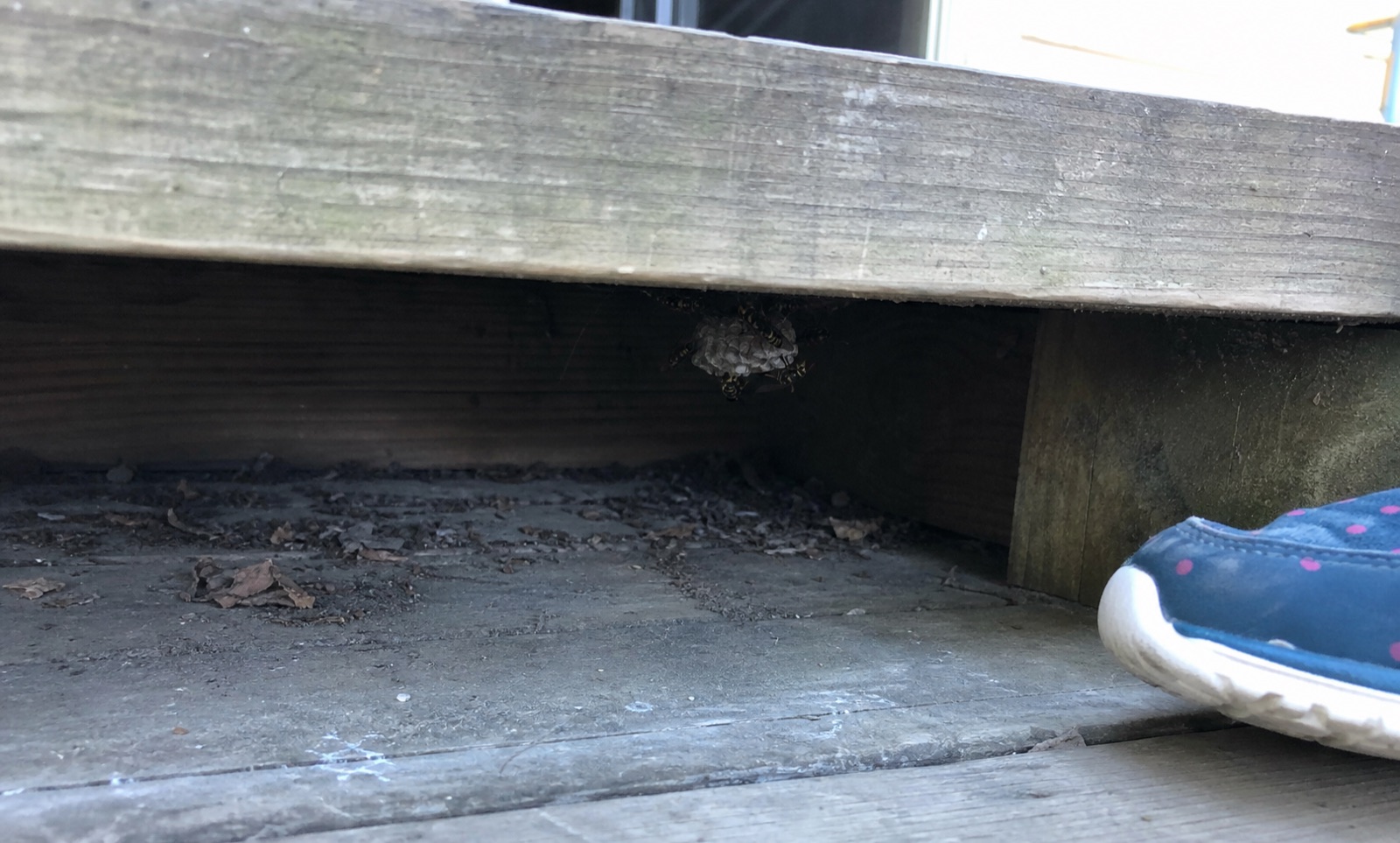
A wasp nest is usually a paper-like structure with repeated wasp traffic. The risk depends on nest type and location, but nests near doors, patios, wall voids, or ground entrances should be handled cautiously.
Confirm by checking
- Paper-like material with open cells or an enclosed shell
- Wasps entering and leaving the same point repeatedly
- Activity increasing during warm daylight hours
- Nest location near eaves, porch ceilings, trees, wall voids, or ground openings
Do not confuse with
- Bee hives usually show honey bee traffic and should be evaluated for relocation
- Mud dauber nests are mud tubes and are usually less aggressive
- Hornet and yellow jacket nests may be enclosed and more defensive
How to use this evidence
A clear photo can support a visual comparison with known pest evidence.
A photo alone cannot confirm the source or extent of an infestation. Check for matching physical evidence nearby.
What you found
Wasp nests are constructed from chewed wood fibers mixed with saliva, creating a paper-like material. Paper wasps build open umbrella-shaped nests with exposed hexagonal cells, while yellow jackets and hornets build enclosed nests with a single entrance hole. Nests near human activity pose serious sting risks.
Common places to check
- Inspect under eaves and nearby hiding spots for matching evidence.
- Inspect porch ceiling and nearby hiding spots for matching evidence.
- Inspect tree branches and nearby hiding spots for matching evidence.
- Inspect wall voids and nearby hiding spots for matching evidence.
- Inspect underground and nearby hiding spots for matching evidence.
How to identify it
What it may indicate
Health context
Multiple stings can cause severe pain, allergic reactions, and anaphylaxis. Yellow jackets are particularly aggressive.
Infestation context
A single queen starts a nest in spring; by fall the colony can reach hundreds or thousands of individuals.
Recommended actions
- 1For small open nests: use aerosol wasp spray at dusk from 3+ meters away
- 2DO NOT attempt to remove ground nests or wall void nests yourself
- 3Never block the entrance to an active nest inside a wall void
- 4If allergic to stings: do not attempt any DIY removal
Prevention and monitoring
Professional options
- Professional nest removal with protective equipment
- Insecticidal dust application for ground and wall void nests
- Nest removal and disposal to prevent re-colonization
- Property assessment for other potential nesting sites
- Preventative treatments in early spring
FAQ
Is it safe to remove a wasp nest myself?
Small open nests may be manageable from a distance at dusk, but ground nests, wall void nests, large nests, or allergy risk should be handled professionally.
What should I not do with a wasp nest in a wall?
Do not seal the entrance while the nest is active. Wasps may move deeper into the structure or enter living spaces.
Explore pages related to Wasp Nest
Follow the cluster from this evidence page to matching pest profiles and practical guides.
Guides using this evidence
Practical treatment and prevention pages where this sign matters.
Stinging Pests
Wasp Nest Safety: When Not to Remove It Yourself
Learn when a wasp nest is risky, how to identify high-danger locations, and what safe first steps to take.
Stinging Pests
Yellow Jacket Control: Ground Nests, Food Sources, and Risk
Understand yellow jacket behavior, ground nest risks, food attraction, and why many nests should not be treated DIY.
General Prevention
Yard Pest Prevention: Reduce Standing Water, Food, Shelter, and Entry
A seasonal yard pest prevention checklist for mosquitoes, rodents, ants, wasps, ticks, and nuisance wildlife.
Stinging Pests
Wasp Nest vs Yellow Jacket Nest: Location, Shape, and Safety
Compare paper wasp and yellow jacket nests by nest location, appearance, traffic patterns, and when removal is unsafe.
Pest profiles to compare
Likely pests connected to this evidence type.