Photo confirmation checklist
Use these visual checks to compare the pest, the evidence, and the likely source area before choosing a treatment path.
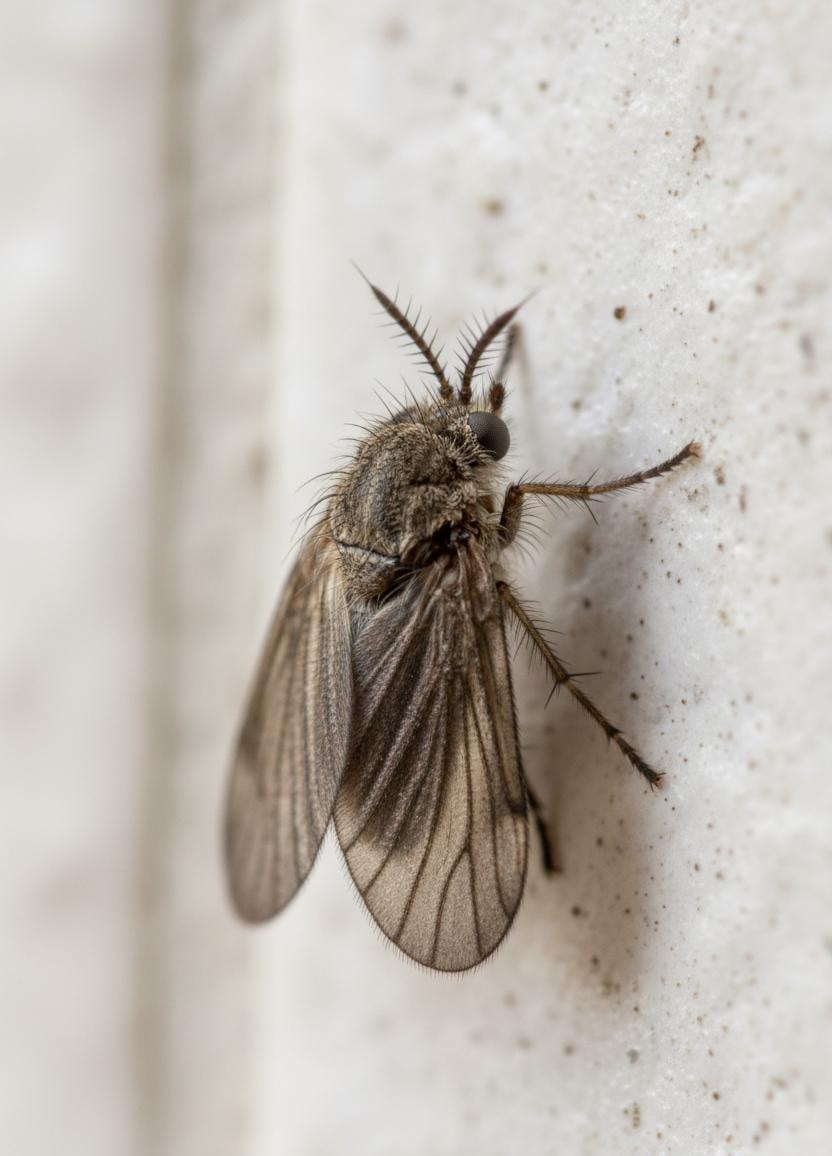
Pest profile
Drain Flies
Compare the body shape, color, size, and common hiding areas for this pest.
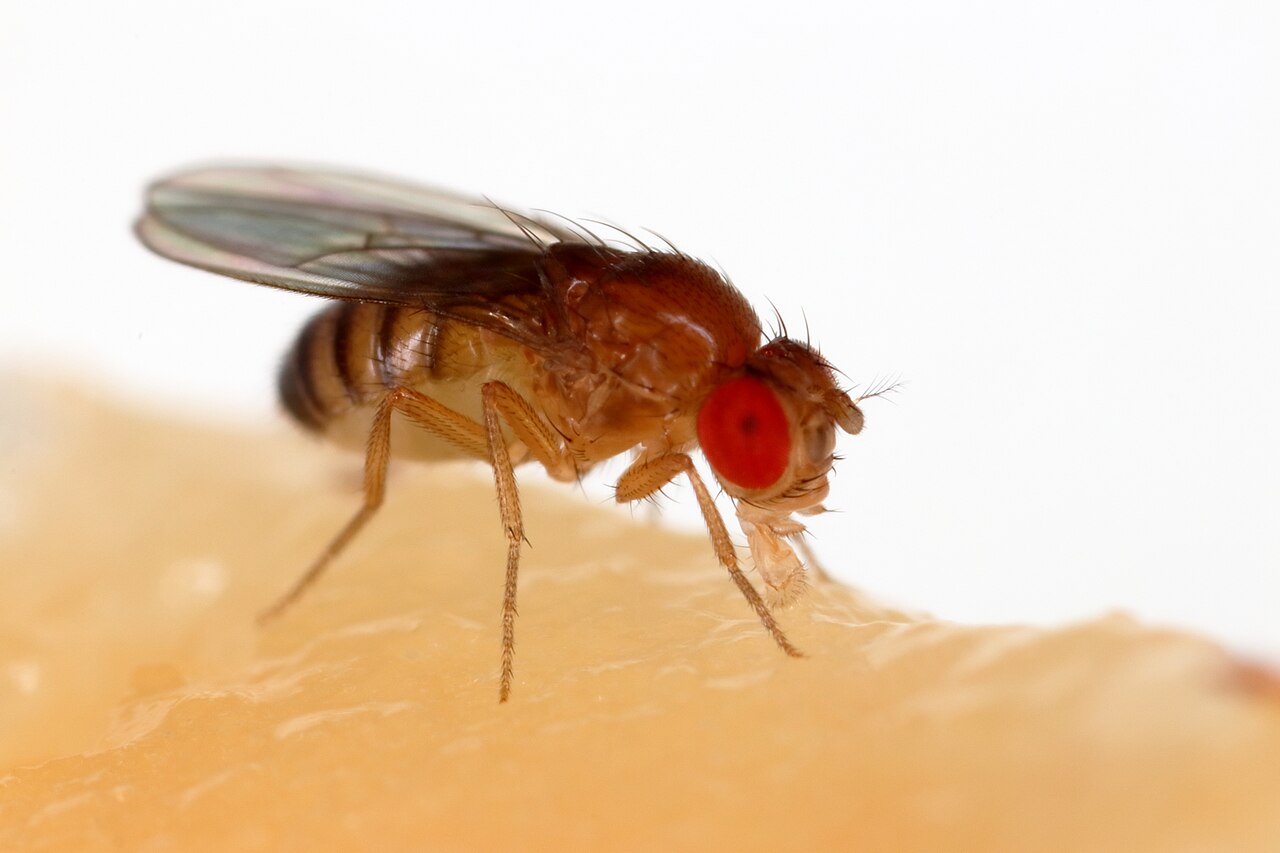
Pest profile
Fruit Flies
Compare the body shape, color, size, and common hiding areas for this pest.
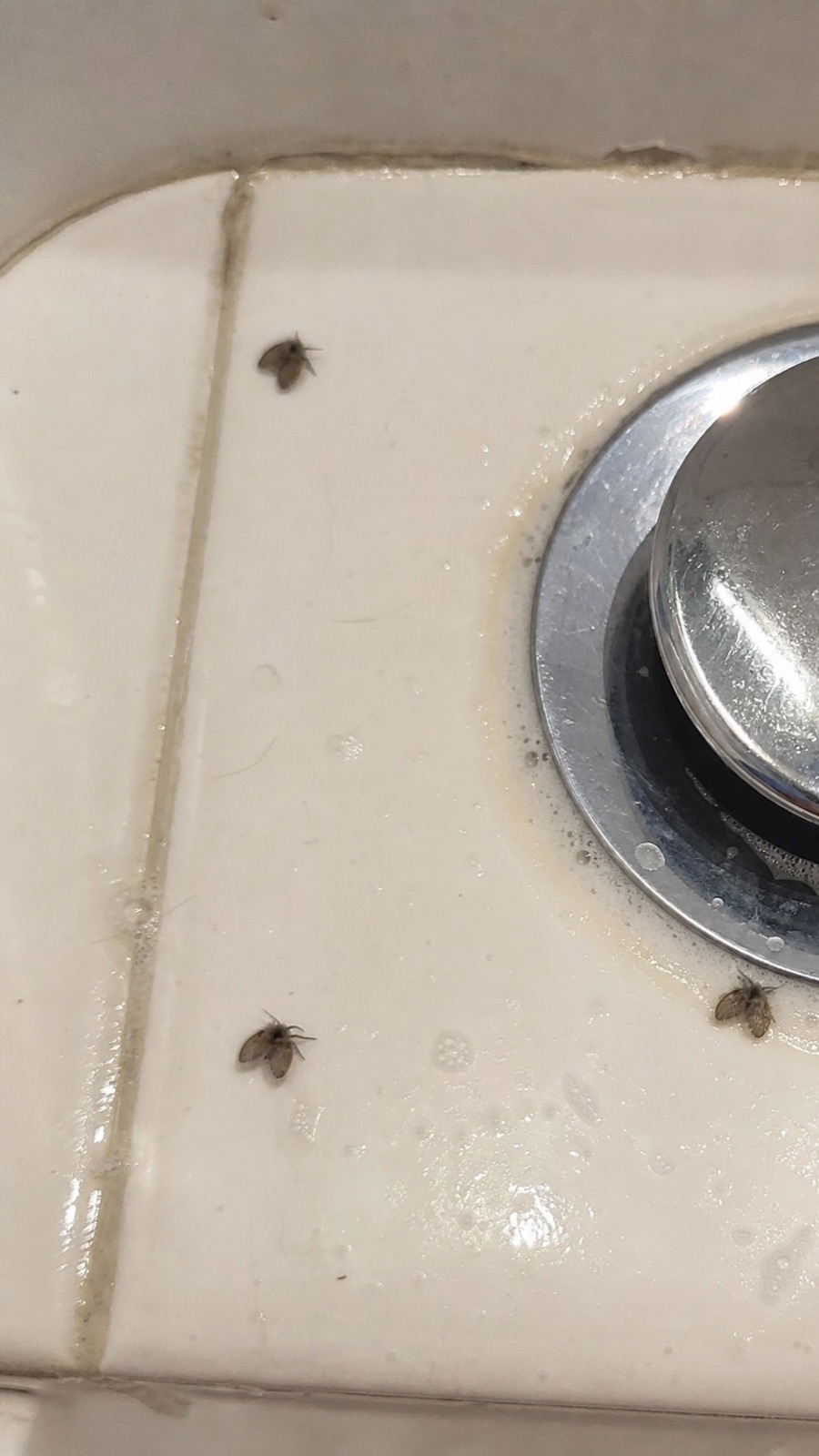
Evidence guide
Drain Fly Breeding
Use this evidence type to confirm whether the sign fits the pest problem.
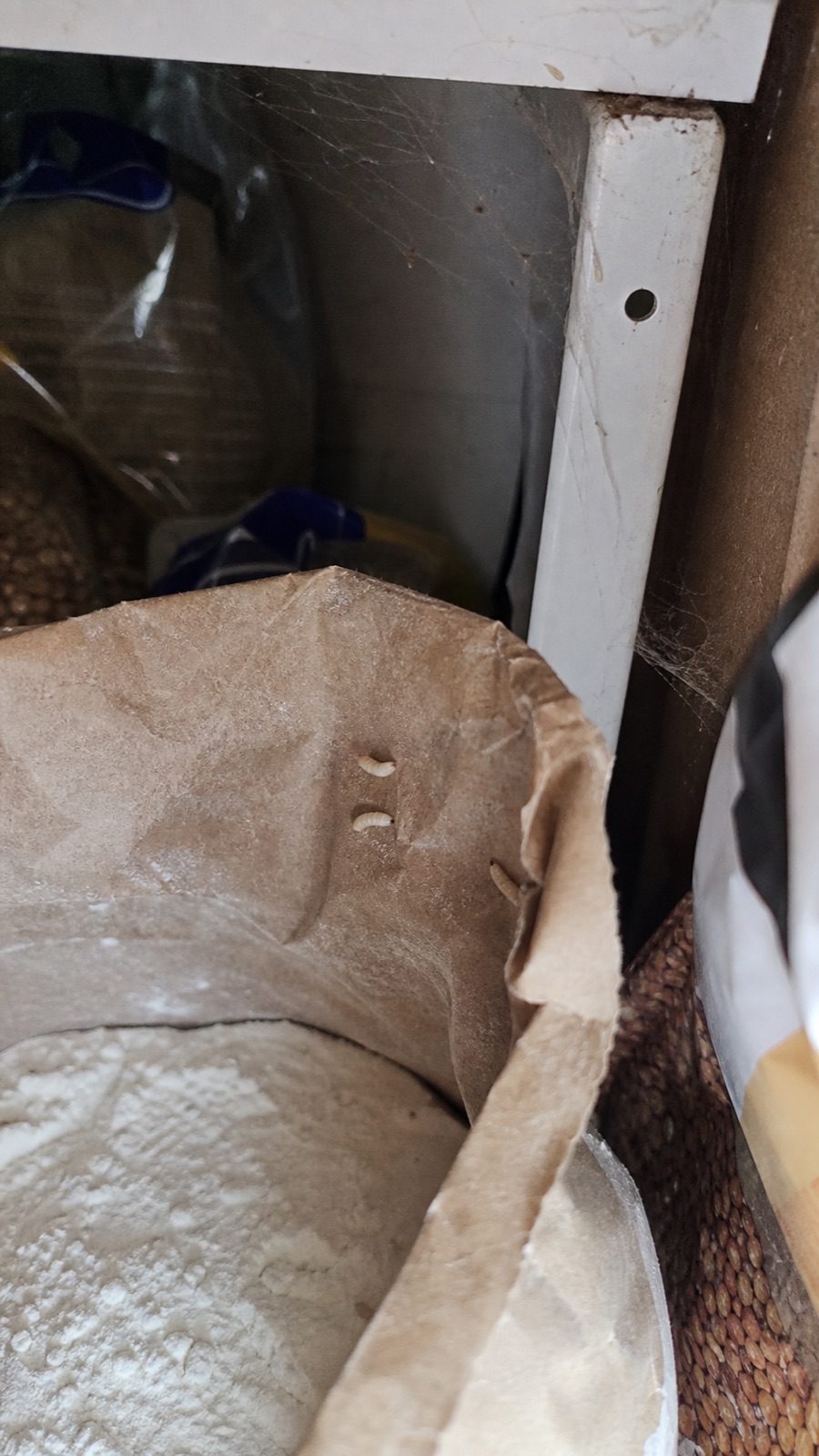
Evidence guide
Pantry Webbing
Use this evidence type to confirm whether the sign fits the pest problem.
Quick answer
What to know first
Drain flies are fuzzy, moth-like flies that rest near drains and wet buildup. Fruit flies are small tan flies that gather around ripe fruit, spills, bottles, and fermenting food residue.
Check first
- Bathroom and kitchen drains, sink overflows, floor drains, and wet buildup
- Ripe fruit, trash, recycling, bottles, compost, and sticky spills
- Where the flies rest when disturbed
Avoid this
- Spraying adult flies without removing breeding material
- Cleaning counters while ignoring drains or recycling
- Assuming all small flies come from fruit
Overview
Small flies are easiest to control when the breeding source is found. Drain flies are tied to organic buildup in drains or wet slime, while fruit flies are tied to fermenting produce, spills, recycling, and food residue.
Key signs to check
What to do now
- 1Identify where flies rest and where they reappear after cleaning.
- 2Scrub drain walls and overflows if drain flies are suspected.
- 3Remove ripe produce, trash, recycling residue, and sticky spills.
- 4Use monitoring traps only after source cleanup begins.
Prevention checklist
When to call a professional
Call a professional or plumber when flies persist from inaccessible drains, broken lines, crawl spaces, or chronic moisture.
FAQ
Will vinegar traps solve small flies?
They catch adults but do not remove breeding sources, so activity often returns.
Can drain flies come from a broken pipe?
Yes. Persistent drain fly activity can indicate hidden moisture or plumbing problems.