Quick answer
How to read this evidence
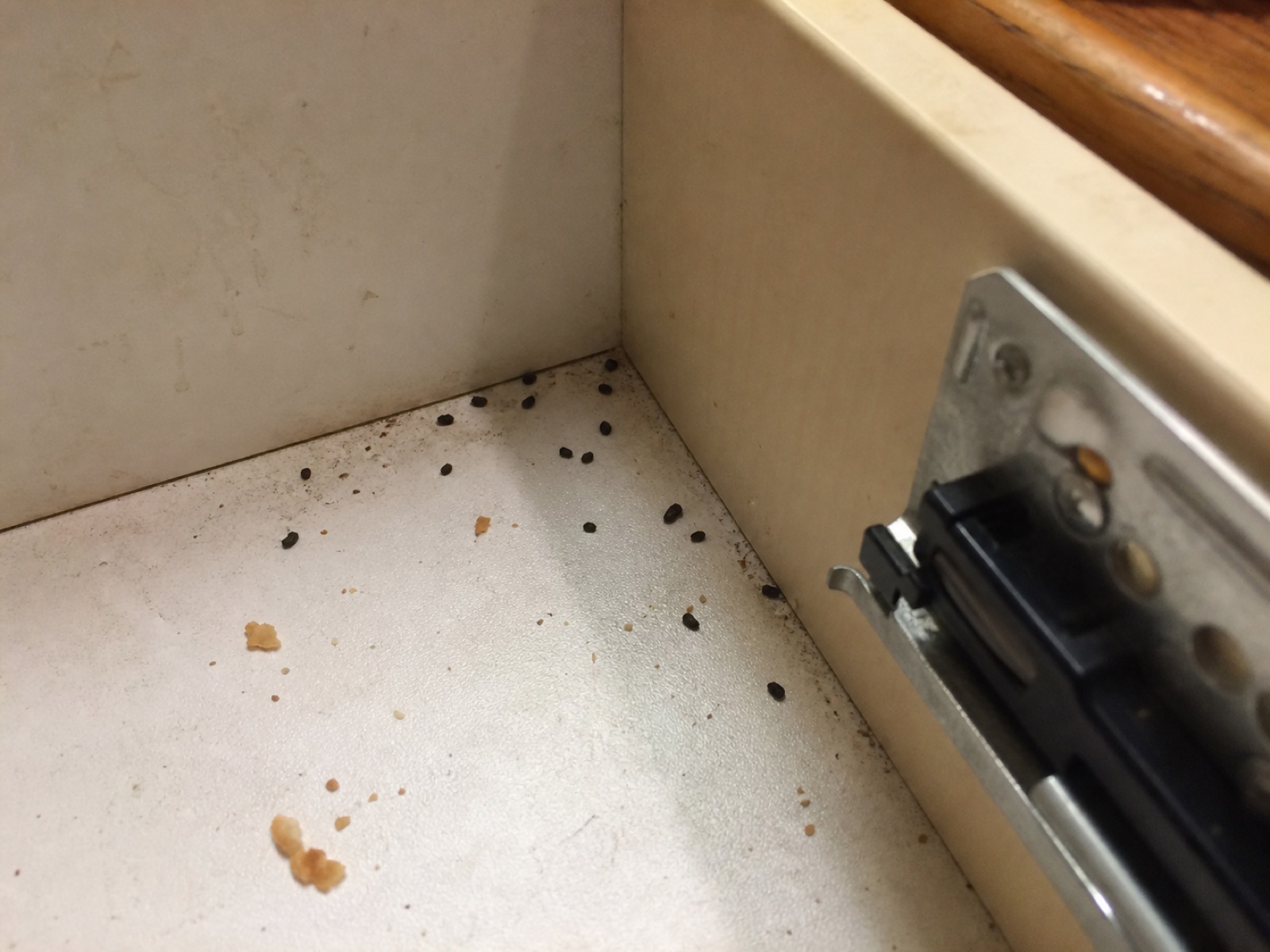
Mouse droppings are usually small, rice-sized pellets with pointed ends. If you find fresh dark pellets near food, cabinets, baseboards, or hidden edges, assume active mouse movement until proven otherwise.
Confirm by checking
- Pellets about 3-6mm long with pointed ends
- Fresh droppings that are dark, moist, or keep reappearing
- Locations along walls, pantry edges, cabinets, or under sinks
- Gnaw marks, nesting material, odor, or scratching sounds nearby
Do not confuse with
- Rat droppings are larger, blunt-ended, and more capsule-shaped
- Cockroach droppings look more like pepper, smears, or coffee grounds
- Bat guano may crumble and show shiny insect fragments
How to use this evidence
A clear photo can support a visual comparison with known pest evidence.
A photo alone cannot confirm the source or extent of an infestation. Check for matching physical evidence nearby.
What you found
Mouse droppings are small, dark pellets typically 3-6mm in length with pointed ends. They are one of the most common and reliable signs of a mouse infestation. Fresh droppings are dark and moist; older ones turn gray and crumble when touched. Finding droppings indicates active mice in the area.
Common places to check
- Inspect kitchen cabinets and nearby hiding spots for matching evidence.
- Inspect pantry and nearby hiding spots for matching evidence.
- Inspect along baseboards and nearby hiding spots for matching evidence.
- Inspect under sinks and nearby hiding spots for matching evidence.
- Inspect attic and nearby hiding spots for matching evidence.
How to identify it
What it may indicate
Health context
Carry hantavirus, salmonella, and lymphocytic choriomeningitis. Can trigger asthma and allergic reactions when dried particles become airborne.
Infestation context
The number and freshness of droppings indicate the size and activity level of the infestation.
Food context
Direct contamination of food preparation surfaces, pantry items, and stored goods.
Recommended actions
- 1Wear gloves and a mask when cleaning droppings (do not sweep or vacuum dry droppings)
- 2Disinfect the area with a bleach solution (1 part bleach to 10 parts water)
- 3Set snap traps along the walls where droppings were found
- 4Seal all entry points larger than 6mm (1/4 inch)
- 5Store food in sealed containers and eliminate food sources
Prevention and monitoring
Professional options
- Comprehensive inspection to determine infestation size and entry points
- Professional baiting and trapping program
- Exclusion work to seal all entry points
- Follow-up monitoring until elimination is confirmed
FAQ
How can I tell mouse droppings from rat droppings?
Mouse droppings are much smaller, usually rice-sized with pointed ends. Rat droppings are larger, capsule-shaped, and more blunt at the ends.
Should I vacuum mouse droppings?
No. Dry sweeping or vacuuming can make contaminated dust airborne. Wet the area with disinfectant first, then remove droppings with gloves and disposable towels.
Explore pages related to Mouse Droppings
Follow the cluster from this evidence page to matching pest profiles and practical guides.
Guides using this evidence
Practical treatment and prevention pages where this sign matters.
Rodents
Rodent Proofing: How to Seal Mice and Rats Out
A practical rodent proofing guide for entry points, food sources, trapping zones, sanitation, and monitoring.
Rodents
Mouse Control: What to Do When You Find Droppings
Step-by-step mouse control for droppings, traps, entry points, food storage, cleanup, and follow-up monitoring.
Rodents
Mouse Droppings vs Rat Droppings: Size, Shape, and Risk
Tell mouse droppings from rat droppings by size, shape, location, quantity, and the entry points you should inspect next.
Cockroaches
Cockroach Droppings vs Mouse Droppings: What the Evidence Means
Compare cockroach droppings and mouse droppings by size, shape, location, health risk, and what to inspect before cleanup.
Pest profiles to compare
Likely pests connected to this evidence type.