Quick answer
What to know first
Rat control is higher urgency than most nuisance pest work because rats can damage wiring, contaminate food, and use larger structural openings. Start by finding routes, removing attractants, and checking entry points.
Start here
- Large blunt droppings, gnaw marks, burrows, and greasy rub marks
- Garage doors, foundation gaps, utility openings, drains, and vents
- Outdoor food sources such as garbage, pet food, compost, and bird seed
Before you act
Rat control requires faster action than most nuisance pests because rats can damage wiring, contaminate food, and exploit larger structural openings. The goal is to identify travel routes, remove attractants, and close access.
- Large blunt droppings, gnaw marks, burrows, and greasy rub marks
- Garage doors, foundation gaps, utility openings, drains, and vents
- Outdoor food sources such as garbage, pet food, compost, and bird seed
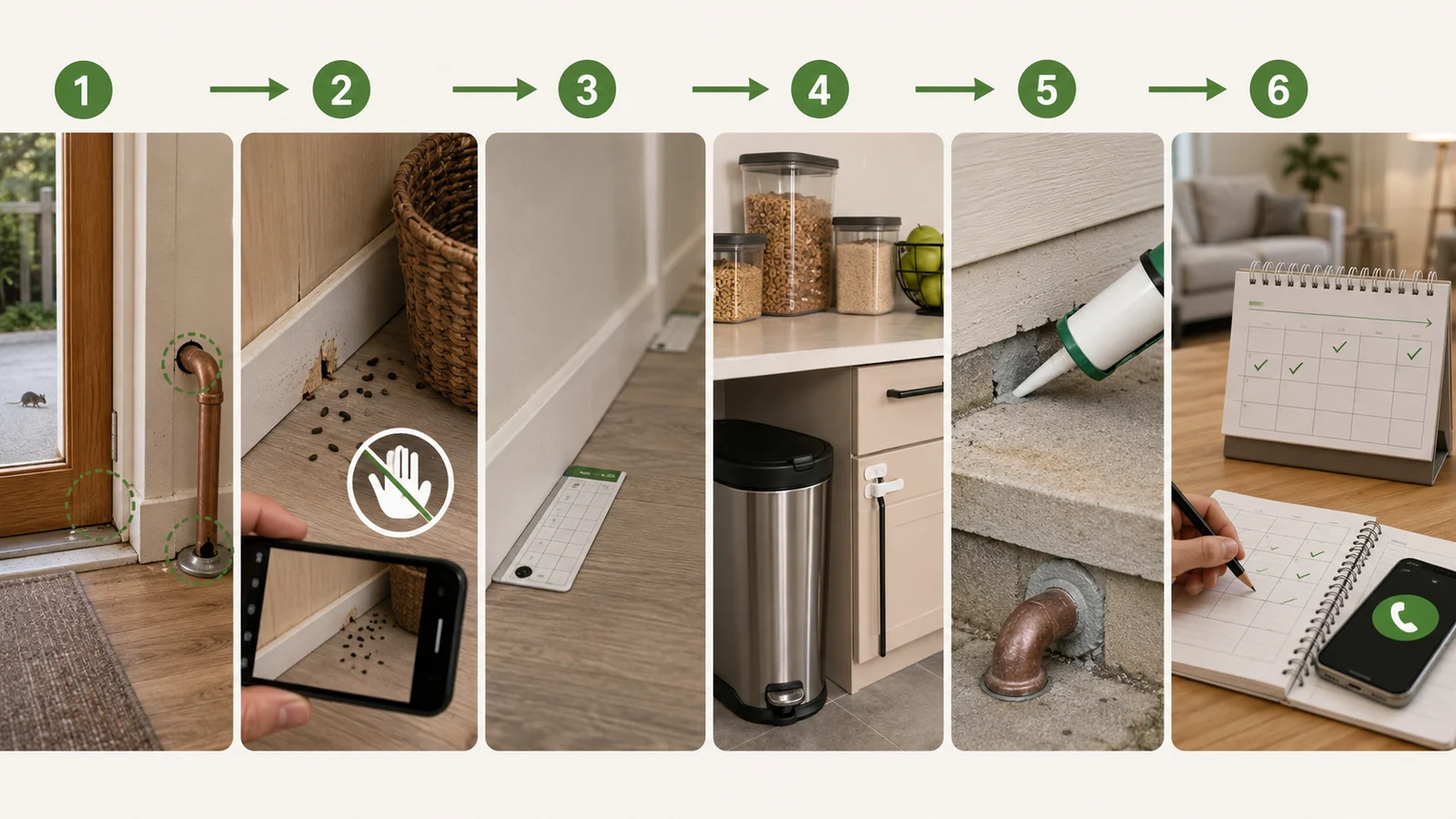
Action plan
4-Step Treatment Plan
- 1
Remove outdoor food sources, including garbage, pet food, and bird seed.
Remove outdoor food sources, including garbage, pet food, and bird seed.
- 2
Inspect foundation gaps, garage doors, vents, and utility penetrations.
Inspect foundation gaps, garage doors, vents, and utility penetrations.
- 3
Use appropriately sized traps along walls and runways
Use appropriately sized traps along walls and runways.
- 4
Avoid handling droppings or nesting material without protection
Avoid handling droppings or nesting material without protection.
What not to do
Handling droppings or nests without protection
Handling droppings or nests without protection
Leaving outdoor food sources available during trapping
Leaving outdoor food sources available during trapping
Assuming a single trap will solve an established rat route
Assuming a single trap will solve an established rat route
How to judge progress
Recheck the same locations and evidence types instead of judging the result from one quiet interval.
- Track whether this clue persists, returns, or spreads: Large blunt droppings along walls or near garbage
- Track whether this clue persists, returns, or spreads: Gnawed openings, pipes, wood, or wires
- Track whether this clue persists, returns, or spreads: Burrows near foundations, sheds, or dense vegetation
- Track whether this clue persists, returns, or spreads: Greasy rub marks along repeated pathways
Signs the treatment is not working
- Fresh evidence continues to appear in the same inspected locations.
- Activity spreads to new rooms, materials, or monitoring points.
- The suspected source remains active after the action plan has been followed and reassessed.
After treatment and reducing recurrence
- Use tight garbage lids and clean spilled waste.
- Keep vegetation and stored materials away from the foundation.
- Repair broken vents, screens, and door seals.
- Monitor after exclusion to confirm activity has stopped.
When to call a professional
Call a professional when rats are indoors, wiring may be damaged, burrows are active, or activity continues after sanitation and trapping.
Safety notes
- Confirm the pest or evidence before applying a control product.
- Use pesticides only where the product label permits, and follow the full label.
- Do not mix products or improvise heat, electrical, or chemical treatments.
FAQ
Are rats worse than mice?
Both matter, but rats are larger, stronger, and more likely to cause serious gnawing damage.
Can a rat enter through a garage door gap?
Yes. Worn door seals and side gaps are common entry points.
Not sure the pest is correctly identified?
Upload a clear photo before choosing a treatment path.
Identify from photoExplore next
Continue with verified context
Related pest profiles
Related evidence
Related guides
Reviewed guidance · Last reviewed August 2026
Based on Pest Or Not verified knowledge and authoritative pest-management references.
How we review content