Quick answer
What to know first
One dark speck, odor, shed skin, or isolated sighting does not automatically confirm an infestation. Concern becomes stronger when multiple compatible signs—such as recurring droppings, egg cases or nymphs, and monitor catches—cluster around the same food, water, warmth, or hiding area.
Start here
- Photograph the sign in place and include scale.
- Clean or mark the area, then check whether the sign returns.
- Inspect nearby protected edges and use monitors for corroboration.
What each sign may mean
Droppings or dark spotting
Pepper-like specks, ridged pellets, or smears can indicate cockroach travel or harborage, especially when they recur along edges. One speck does not prove the source.
Egg cases
A compatible egg case is stronger reproductive evidence, but empty capsules can be old and should be interpreted with location and fresh activity.
Cast skins or nymphs
Repeated nymphs or fresh cast skins near shelter suggest development nearby and are more concerning than one wandering adult.
Odor
A persistent musty odor can accompany heavier activity, but odor alone is nonspecific and may come from moisture, drains, food, or mold.
Nighttime or daytime sightings
Repeated nighttime sightings near resources support active traffic. Frequent daytime sightings can accompany crowding or disturbance, but a single sighting cannot measure infestation size.
What these signs do not prove
- A single mark does not prove cockroaches caused it.
- One adult does not establish species, nest location, or infestation size.
- Old egg cases or droppings do not prove current activity.
- Odor or skin irritation cannot identify a pest species.
- A photo without scale or location context may not separate droppings from debris.
Stronger combinations versus weak clues
Weak single clue
One dark speck, one odor, or one distant insect photo without recurrence or context.
Moderate pattern
Compatible droppings recur after cleaning in the same cabinet or appliance edge, with nighttime sightings nearby.
Stronger combination
Recurring droppings plus nymphs, egg cases, cast skins, or repeated monitor catches clustered around a protected harborage.
Common lookalikes and non-pest explanations
Food and household debris
Coffee grounds, spices, crumbs, burnt residue, ink, and degraded rubber can resemble small dark droppings.
Other pest evidence
Mouse droppings, fly spots, termite or beetle frass, and bed bug fecal marks differ in scale, shape, texture, and location.
Moisture and drain odors
Leaks, mold, food buildup, garbage, and drains can create odors that are not diagnostic of cockroaches.
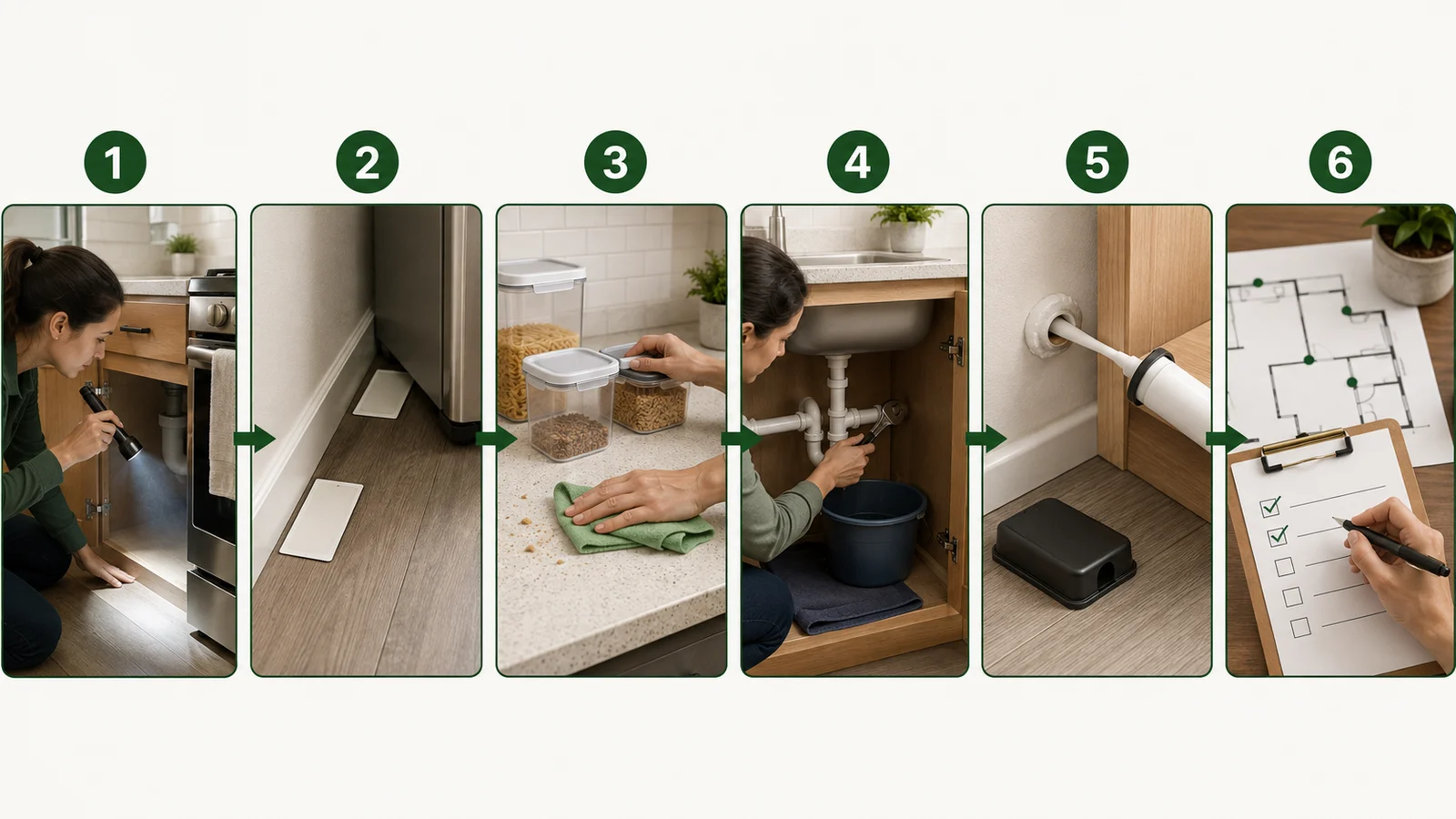
Where to inspect next
- 1
Follow protected edges
Check cabinet hinges, drawer corners, wall-floor junctions, and cracks closest to the sign.
- 2
Check food and water zones
Inspect under sinks, around bins, pantry shelving, pet-food areas, and plumbing leaks.
- 3
Check warmth and voids
Inspect behind refrigerators, ranges, dishwashers, and accessible appliance seams without opening energized equipment.
- 4
Check entry routes
Look at pipe penetrations, cabinet backs, deliveries, cardboard, and shared-wall openings.
What additional photo or evidence would help
- A sharp close-up beside a ruler or coin for scale.
- A wider photo showing the exact cabinet, appliance, or room location.
- Top and side views of an intact insect or egg case.
- A dated photo after cleaning to show whether evidence returned.
- Monitor results labeled by location and date.
When the evidence becomes more concerning
- Signs recur soon after cleaning in the same protected area.
- Nymphs, egg cases, or cast skins appear with droppings.
- Monitor catches increase or spread across rooms.
- Activity occurs in food preparation areas, multi-unit housing, or around vulnerable residents.
Recommended next step
First document and corroborate the evidence. If several compatible signs cluster in one area, identify the insect when possible and map activity before choosing control. Treatment and prevention follow the evidence; they should not replace identification.
FAQ
Does one cockroach mean infestation?
Not always, but one cockroach plus droppings, egg cases, or nymphs is stronger evidence of an infestation.
Where do German cockroaches hide first?
They often hide in tight cracks near food, water, warmth, and appliance motors.
Have a photo of this evidence?
Upload the sign, specimen, or surrounding area for an evidence-focused result.
Identify this evidenceExplore next
Continue with verified context
Related pest profiles
Related evidence
Related guides
Reviewed guidance · Last reviewed August 2026
Based on Pest Or Not verified knowledge and authoritative pest-management references.
How we review content